
When Nepal became the first South Asian nation to qualify for a Millennium Challenge Corporation (MCC) Compact in 2017, the deal was seen as a breakthrough. However, like much of Nepali politics, it soon became stuck in doubt, rumour, and a struggle between geopolitics and sovereignty.
The MCC Compact appeared to offer Nepal a transformative development opportunity, especially given that development aid is frequently tied to loans and infrastructure deficits significantly hinder economic growth. A $500 million U.S. grant, complemented by Nepal’s $197 million contribution, aimed to finance critical electricity transmission lines and road upgrades.
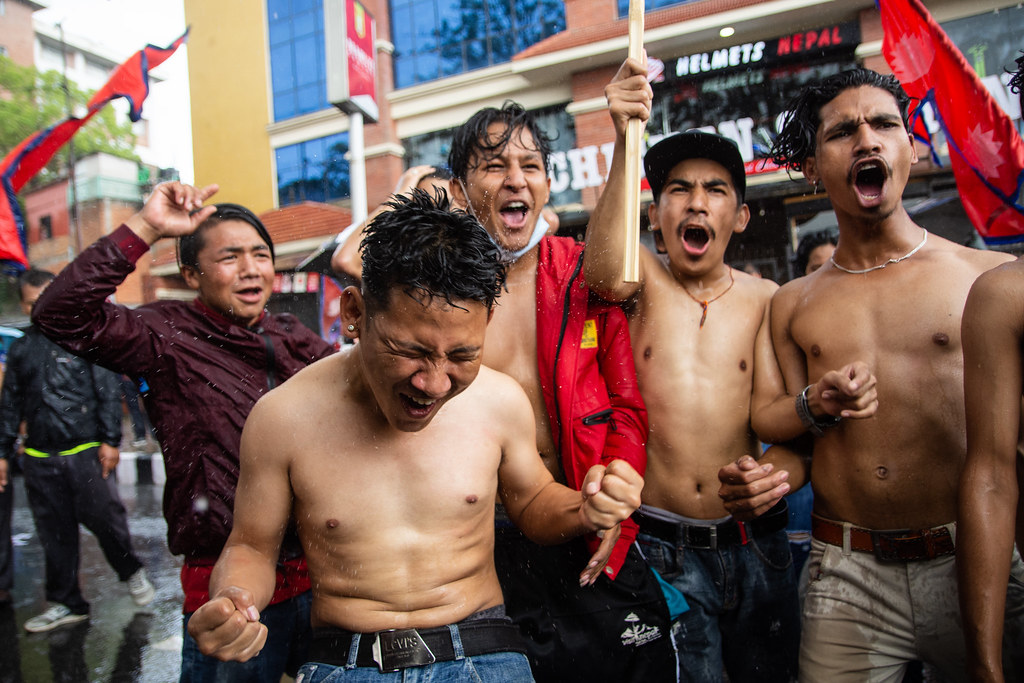
But the Compact never had a smooth start. As soon as it was signed in September 2017, scepticism spread. For some, the MCC was not just aid but an instrument of U.S. strategy and an effort to counter China’s growing influence. Concerns emerged that the Compact would override Nepal’s constitution, compromise sovereignty, or even bring U.S. military presence. By 2019, protests filled streets, with placards denouncing “American interference”.
Political indecisiveness deepened the uncertainty. The Compact stayed in Parliament until February 2022, when it was finally ratified—though only with a 12-point interpretive declaration meant to reassure that Nepal’s sovereignty would not be compromised. The declaration was a political attempt to reassure citizens that the Compact wouldn’t quietly draw Nepal into America’s geopolitical orbit.
Even then, preparations dragged. The major decision came on August 30, 2023, when the Compact formally reached its Entry into Force (EIF), the real start date when funds were unlocked and contracts could be signed. The MCC’s five-year countdown began only then, giving Nepal until August 29, 2028, to finish. Nepal still has about three years left, though with Trump’s aid freeze, bureaucratic delays, and the recent political change, the calendar is already looking tight.
Why Nepalis Remain Sceptical
The scepticism, however, has never disappeared. Even though the parliamentary ratification of 2022 came with an interpretive declaration explicitly ruling out any clause undermining sovereignty, the perception of hidden geopolitical strings never fully vanished.
For many Nepalis, the MCC is less about electricity and asphalt than about geopolitics. Its timing raised questions, signed just as the U.S.–China rivalry intensified and making it appear part of Washington’s Indo-Pacific Strategy. Critics saw Nepal at risk of being dragged into a great-power game it never asked to play.
These concerns became entangled with Nepal’s messy politics. The Nepali Congress and CPN-UML backed the deal, emphasising its economic importance. But Maoist factions and leftist nationalists branded it a Trojan horse for American influence. This mistrust is worsened by the volatility of U.S. politics itself.
Donald Trump’s first presidency had already disrupted aid programmes worldwide. Nepalis worried that if Washington could drop projects in other countries overnight, what guarantee did Nepal have?
The Promise: Roads, Power, and Connectivity
Stripped of politics, the Compact is ambitious but straightforward. It aims to build 315 kilometres of high-voltage transmission lines and three substations, enabling Nepal to move electricity from hydropower plants to consumers and across the Indian border.
Nepal generates surplus power during the rainy season but struggles with transmission, magnifying waste. The MCC plans to unlock export markets—mainly in India—turning electricity into one of Nepal’s most valuable commodities.
On the roads, the MCC will rehabilitate and maintain key highway networks. For traders, this means lower transport costs; for farmers, easier access to markets; for households, fewer hours lost to roadblocks and breakdowns.
The MCC estimates 20 million Nepalis will benefit from better electricity access and nearly a million from improved road connectivity. These are not abstract gains—they affect classrooms, hospitals, businesses, and daily life.
The Trump Factor
Just as Nepal’s projects were finally moving, politics in Washington threatened to derail them again. In January 2025, Donald Trump returned to the White House. Within days, he announced a blanket suspension of foreign aid for 90 days. MCC disbursements froze worldwide. Contracts in Nepal stalled, procurement halted, and the implementing agency—MCA-Nepal—was left in uncertainty.
Then came an even bigger shock. The Department of Government Efficiency, or DOGE, a new Trump-era creation empowered by Elon Musk, was tasked with dissolving what they considered a “wasteful bureaucracy”. It targeted long-standing aid institutions like the Millennium Challenge Corporation, arguing that they delivered poor returns for U.S. taxpayers.
This abrupt shake-up left MCC staff worldwide preparing for shutdown, and for recipient countries like Nepal, it revealed how vulnerable development projects are to shifts in U.S. domestic politics.
But Nepal caught a break. In February 2025, the Trump administration laid out exceptions for a handful of ongoing projects, including Nepal. By July, the U.S. State Department announced the continuation, relieving officials in Kathmandu who had invested political capital in keeping the Compact alive.
While Washington debated the efficiency and strategic value of its aid, Nepali planners were left in confusion, worrying not only about engineering challenges but also about whether the financial lifeline would still be available tomorrow.
Nepal is not just a passive recipient of American funding but a vulnerable partner whose projects are exposed to the unpredictability of external politics.
Post Gen Z Revolt
The September 8–9 Gen Z protest left the country’s economy and infrastructure in a fragile state, with approximately USD 2 billion in damages. Nepal’s non-life insurance companies have paid out about USD 26.1 million so far for damages linked to the protests, though total reported claims have climbed to roughly USD 166.6 million, according to the Insurance Board. This means most claims—nearly USD 140 million—are still waiting to be verified or processed.
In November, it was announced that Nepal will receive an additional USD 50 million in grant funding from the United States under the Millennium Challenge Corporation (MCC) Nepal Compact, bringing the total value of the programme to USD 747 million.
The Clock Ticks Towards 2028
Nepal’s MCC projects are officially on track. If the projects fail to finish by August 2028, Nepal would be left with half-built infrastructure, stranded costs, and a blow to its credibility as a partner for future large-scale development projects.
It would also risk Nepal’s standing with future donors and investors, leaving the country vulnerable to a potential crisis. The uncertainty has raised speculation that Beijing could step in under its Belt and Road Initiative, a prospect with its own geopolitical weight.
The MCC debate in Nepal has always been about more than roads and power lines. It reflects the fragile political culture, the country’s uneasy place between global powers, and its citizens’ deep-rooted mistrust of foreign aid.
The Compact represents something simple: an opportunity to build infrastructure that Nepal desperately needs, at no cost other than the political courage to execute it. Nepal’s challenge is less about money and more about whether it can act before the clock runs out.
Sudipa Mahato is a junior editor with Nepal Connect.