


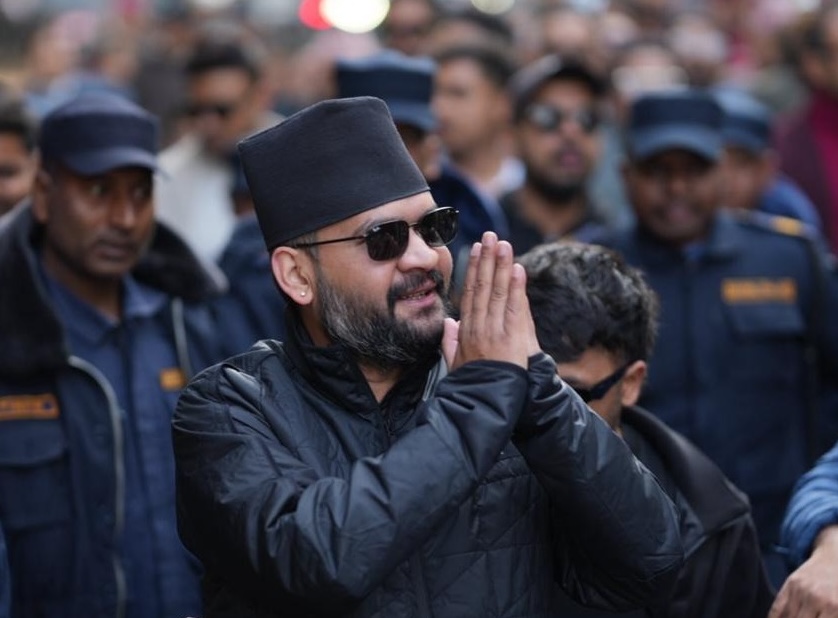

Prime Minister Balendra Shah will not undertake any foreign trips for at least one year, marking an unprecedented break from Nepal’s diplomatic tradition since the restoration of multiparty democracy in 1990. The announcement comes as India has formally opened the Kailash Mansarovar Yatra through the Lipulekh Pass, a territory Nepal claims as its own, without informing Kathmandu.
Rastriya Swantantra Party General Secretary Bhoop Dev Shah disclosed this during a Fireside interview on Kantipur Television, saying the Prime Minister intends to focus on domestic issues and the concerns of ordinary Nepalis before resuming international travel.
The decision is a sharp departure from established practice. Since 1990, Nepali prime ministers have moved quickly on foreign trips, sometimes within weeks of taking office. The record belongs to Pushpa Kamal Dahal, who travelled to China for the 2008 Olympics less than a month into his tenure. India has been the near-universal first destination, a ritual of diplomatic alignment: since 2014, five of six prime ministers made New Delhi their opening stop. Prime Minister Narendra Modi has personally extended an invitation to PM Shah, but it has not been accepted. Indian Foreign Secretary Vikram Misri is expected in Kathmandu in mid-May, and US envoy Sergio Gor concluded a visit recently. Shah has also declined meetings with visiting officials below the foreign minister rank.
Against this backdrop of deliberate restraint, the Lipulekh development sharpens the stakes. India’s Ministry of External Affairs announced that the 2026 Kailash Mansarovar Yatra will run from June through August, with 20 groups making the pilgrimage: ten through Uttarakhand via the Lipulekh Pass and ten through Sikkim via the Nathu La Pass, each carrying 50 pilgrims. The Lipulekh route cuts through the Kalapani-Lipulekh-Limpiadhura tri-junction area that Nepal considers its own territory. Kathmandu received no prior notification. The arrangement was agreed upon between India’s National Security Advisor and Chinese Foreign Minister Wang Yi in December 2024, also without Nepal’s involvement. The Yatra had been suspended since 2019 due to the pandemic and only resumed last year.
Nepal has long protested India’s presence in Kalapani, Lipulekh and Limpiadhura, and the new government now faces its first territorial pressure test from India just as Misri’s visit approaches. The Ministry of Foreign Affairs has yet to issue an official statement.
Adding to the picture of an unusual governing arrangement, RSP President Rabi Lamichhane has been the government’s principal public voice since it took office — defending its moves while PM Shah himself has not spoken publicly. General Secretary Shah has pushed back on any suggestion of tension between the two, describing their relationship as close and their decision-making as consultative.

