


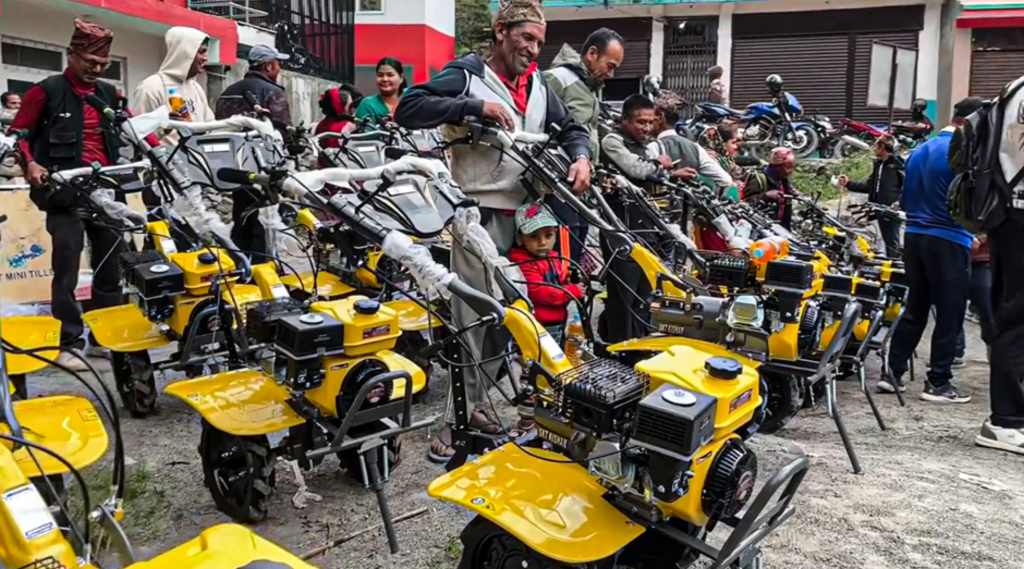


High in the hills of Baglung, a municipality better known for its hunting reserve than its harvest, Dhorpatan has quietly placed a wager on its farming future. This week, it handed mechanical plows to 48 farmers across all nine wards at half price, spending 2.4 million rupees on the bet that modern equipment can slow a quiet crisis unfolding across its fields.
The crisis is not a bad harvest. It is aging hands. Dhorpatan’s farmers have for years grown potatoes, beans and vegetables through manual cultivation, a method that has sustained households but increasingly strains a workforce that is growing older and, in many places, smaller as younger residents leave for cities. The mechanical plows the municipality is now distributing are a direct answer to that pressure: less physical labor, faster land preparation, more ground covered in less time.
Deputy Mayor Dhan Bahadur Kayat framed the programme as a bridge between Dhorpatan’s farmers and technology they have long watched from a distance. The 50 percent subsidy, he said, was the only way to make that crossing possible for commercial farmers who could not absorb the full cost.
Dhorpatan is not alone in this approach. Since federalisation handed local governments a larger role in agricultural support, ward-level equipment programmes have multiplied across Nepal’s hill municipalities. Most follow the same logic: identify a gap, subsidise a solution, evaluate later. Dhorpatan officials say they will assess this round’s effectiveness before considering further distribution.
What distinguishes Dhorpatan’s programme is less its design than its setting. This is a municipality where commercial farming is not an aspiration but an existing practice, and where the terrain makes mechanisation genuinely difficult to access. Getting a plow to a farmer in Dhorpatan is not as simple as delivering it to a road-connected plot in the Tarai. That the municipality moved at all, for all nine wards at once, is its own kind of statement.
Whether the plows alone shift anything beyond the immediate workload of 48 households depends on what follows: market connections, maintenance support, a second round. For now, Dhorpatan has made its move and is watching to see what the fields say back.