The achievements of past inclusion movements are finally being integrated into a new, mainstream national identity.
Nepal has a history of political inclusion. In 1951, the exclusive rights of the Ranas to be prime ministers of the country were stripped after the country’s first democratic uprising. Matrika Prasad Koirala of the Nepali Congress became the first commoner to serve as prime minister.
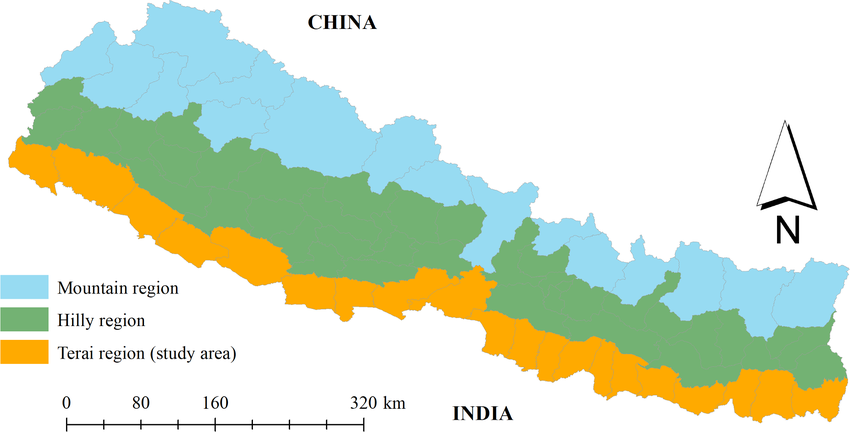
That same year, the Nepal Terai Congress was founded by Vedanand Jha. The ‘Terai’ is a geographical term referring to the plains in the south, adjoining Northern India. Its program proclaimed Hindi as a state language, preferred employing local people in public service, and aimed to make the Terai an autonomous region. At around the same time, the Kirat and Limbuwan people in the eastern hills began organising to protect their ancestral “Kipat” land rights.
Dismissing the idea of Hindi becoming a national language, the national government declared the Terai to be an area dominated by a set of mother tongues. Mathili, Bhojpuri, Awadhi, and Tharu are the most common. Most of the people in the plains speak those languages and share cultural and familial ties with Northern India.
Panchayat Era and “Madhesh” Identity
Jha later accepted the partyless Panchayat system, which focused on national solidarity under the slogan “one nation, one language, one dress.” His party later unofficially assimilated into the Nepali Congress.
The term Madhesh, besides Terai, was also used to denote the same southern plains. This word later became a buzzword in the Nepali identity movement and politics. The Panchayat “one nation” policy unintentionally facilitated the formation of the Nepal Federation of Indigenous Nationalities (NEFIN), which began uniting over 50 Janajati (indigenous) groups to protest the “Khas-Arya” hegemony on cultural and linguistic grounds.
The Sadhbhavana Party represented Madheshi interests in the parliament between 1990 and 2006. In 1991, the party won three parliamentary seats, and it remained dominant until 2008. The party advocated for citizenship and representation rights of the Madheshi people.
Maoist Insurgency: Mobilizing Grievances
Before the Maoists launched a civil war in 1996, they submitted a 40-point memorandum to the government. One of the 40 demands was the elimination of regional discrimination between the hills and the Terai.
The Maoist party then became the torchbearer of the ethnic representation agenda alongside other demands for an inclusive state. The People’s Liberation Army of the party rallied support from various ethnic groups, including the Magar, Tamang, Gurung, Rai, and Tharu janajatis, as well as Madheshis.
Bhoj Bikram Budha Magar explains it as “strategic mobilisation of ethnic grievances.” The Maoists promised “ethnic autonomy with the right to self-determination,” a promise that resonated deeply in the land of the Tharu people, in the western belt and the Kirat regions of the east. So, identity movement was not strictly limited to the hill-plains divide.
Post-2006 Revolt and Federal Proposal
The Maoist war ended in 2006. Following the Second People’s Movement that same year, Madheshi people revolted in 2007, calling for improved representation in governance. This drove Nepal towards becoming a federal state with an inclusive spirit.
The Maoist party proposed 11 autonomous federal states and two other sub-states within them, “keeping in mind the country’s ethnic composition, geographical contiguity, linguistic base, and economic viability.” In the Maoists’ understanding, the plains of Terai comprised Kochila in the east, Madhesh in the central region, and Tharuwan in the west. Seti-Mahakali and Bheri-Karnali federal states were proposed on the basis of geographical appropriateness, while Magarat, Tharuwan, Tamuwan, Newa, Tamsaling, Kirat, Limbuwan, Kochila, and Madhesh were proposed on the basis of identity.
Fragmentation of the Madhesh-Based Leadership
The Madhesh movement gave rise to a new set of regional parties, formed by prominent Madheshi leaders in the Nepali Congress and the Unified Marxists-Leninists (UML). Madheshi Janaadhikar Forum, led by Upendra Yadav and Bijay Kumar Gachhadar, was a leading Madhesh-based party in the post-2006 politics. Other prominent figures in Madhesh included Mahanta Thakur of Terai Madhesh Loktantrik Party (TaMaLoPa) and Rajendra Mahato of Sadhvavana Party.
Distinct from Maoists’ idea of three states in the plains, the agenda of the Madhesh-based party was to establish ‘Ek Madhesh, Swayatta Pradesh,’ meaning ‘One Madhesh, Autonomous State.’ But an agenda as clear as this could never form a large-scale unity among Madheshi leaders.
The Madhesh-based parties merged and split in such a way that describing the merge-split series will require a few more paragraphs. These parties allied with the Nepali Congress, the UML, and the Maoists to form governments, one after another. Madheshi leaders bagged lucrative ministries in the successive governments. In the post-2006 politics, a deputy prime minister from a Madhesh-based party was the norm.
The “One Madhesh” slogan also faced resistance from the Tharu community in the west, who claimed a distinct identity and instead demanded a separate Tharuhat province.
New Constitution and Tactical Shifts
Nepal then drafted a new constitution in 2015 after the election of two constitution-drafting assemblies. Madheshi leaders were unhappy. They held protests. This period also witnessed the tragic Tikapur incident, a violent expression of the Tharuhat movement’s demand for a separate province for the Tharu people.
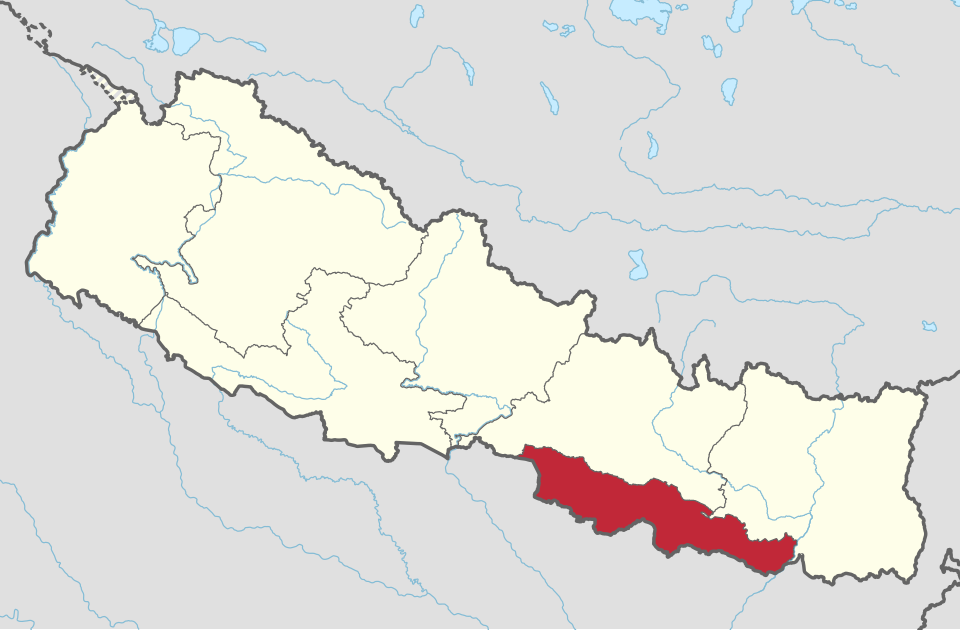
The Madhesh-centric parties’ demand for ‘One Madhesh’, stretching from the Mechi River in the east to the Mahakali River in the west, did not materialise. The 7-province model in the 2015 Constitution did not adopt the idea of an identity-based federalism. Province Number 2, which forms part of ‘One Madhesh,’ ultimately became the Madhesh Province. In the east, the decision to name Province 1 “Koshi Province” in 2023 sparked years of protests from Kirat and Limbuwan groups, demonstrating that the fire of identity politics remained unquenched outside Madhesh.
Despite insisting that elections were unacceptable unless federal boundaries were revised, the Madhesh-based parties continued to participate in elections and democratic processes under the new arrangement. After the new constitution came into force, the name Madhesh began to fade from the titles of Madhesh-based parties. These parties adopted a new strategy, positioning themselves as pro-identity and representation parties rather than solely Madhesh-based.
In June 2015, Upendra Yadav joined forces with Ashok Rai of UML to pursue a broader agenda of identity politics beyond Madhesh, forming the Federal Socialist Forum Nepal (FSFN). The Rastriya Janata Party Nepal (RJPN) and FSFN became the largest parties in Madhesh in the 2017 House elections, holding 11 and 10 seats respectively out of 32. Congress secured 6 seats, while UML was limited to just 3.
Rise of Dr CK Raut
As the Madheshi people continued to lose hope in regional leaders, Dr CK Raut, a former rocket scientist, emerged as a messiah. Raut championed a more radical secessionist agenda compared to the ‘Autonomous Madhesh’ agenda of the Madheshi parties. His ‘Alliance for Independent Madhesh’ aimed to establish a separate country for the Madhesi people. Raut softened his stance and entered party politics in 2018-19.
By the 2022 House elections, the political landscape had shifted. Raut’s rise compelled major figures from Madhesh, such as Upendra Yadav, to form an electoral alliance with the UML. Raut’s Janmat Party achieved success in Saptari district, the easternmost area of Madhesh. A wave of support for Raut echoed through the district and its surroundings. Raut defeated Yadav in Saptari-2 by a margin of 18,000 votes.
Back then, an average farmer saw Raut as a beacon of hope for the people of Madhesh, a new hero for a new era. His party even became a national party in the federal parliament while forming the government in Madhesh province. While Raut captured the central plains, the Nagarik Unmukti Party, led by Resham Chaudhary’s family, emerged as the new voice for the Tharu people in the west, further fragmenting the “inclusive” front. Despite Raut’s success, UML and Congress became the two largest parties in Madhesh province, with 9 and 8 seats respectively. FSFN and RJPN had transformed into the Janata Samajwadi Party (JSP) and the Loktantrik Samajwadi Party (LSP), with 6 and 3 seats out of 32, respectively. The comeback of the Congress and the UML marked a decline in Madhesh-based ethno-regional politics.
RSP Sweep and First Madheshi Prime Minister
Fast forward to 2026, the Rastriya Swatantra Party (RSP) swept Madhesh and won nearly two-thirds of the House majority nationwide. The party secured 30 out of 32 House seats in the province. This success has an opposing side: the ethno-regional parties of Madhesh are absent from the political scene for the first time in 35 years.
The RSP presented Madheshi-origin rapper-mayor Balen Shah as a prime ministerial candidate while also uniting Tharuhat and Kirat movement leaders. Shah is prepared to become the first prime minister of Madheshi origin in a country long dominated by the Khas people from the hills. Balen’s success clearly results from all the efforts towards inclusion over the last few decades.
RSP’s success in Madhesh was driven by ethnic sentiments, despite no explicit claim of an ethnic agenda. The decision made sense because there was probably little to no chance for an ethno-regional Madhesh-based party to secure a prime ministerial position representing the entire country. The positive aspect is that many non-Madheshis saw Balen beyond his Madheshi identity, recognising him as a successful mayor of Kathmandu with youthful energy, capable of guiding the country in a new direction.
Alongside the push from the people of Madhesh to make Shah the first Madhesi prime minister, the success of Harka Sampang’s Shram Sanskriti Party (SSP) in regions dominated by the Kirat ethnicity, turning it into a national party with 7 seats, shows that ethnic divisions will continue to influence Nepali politics but not in the same way as they did in the past.