Skills that deaf or hard-of-hearing people can easily utilise in a hearing world
Dedicated special education is not common in Nepal. The SHREE DHAULAGIRI DEAF (Res.) SECONDARY & TECs. SCHOOL for deaf and hard-of-hearing pupils in Baglung demonstrates the importance of such facilities.
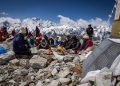
It’s early morning when a small drone hums above lines of pupils, from little children to young adults, all dressed in jogging suits or school uniforms, at the SHREE DHAULAGIRI DEAF (Res.) SECONDARY & TECs. SCHOOL for the Deaf and Hard-of-Hearing in Baglung. The atmosphere is excited. A Dutch video maker is filming today to document the proceedings in this environment, where listening to one another is taking on new forms.
This school was built and is managed by the Dhaulagiri Integrated Rural Development Centre (DIRDC) as part of an extended educational development effort in the Baglung area, which includes other schools and training facilities, masterminded by the DIRDC and financially supported by donor organisations in Europe1.
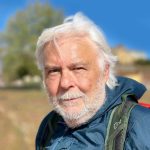
KB Rana Magar is the driving force behind this organisation, motivated by a strong ideal to help persons with disabilities, underprivileged or discriminated youngsters from his birthplace develop skills, giving them a brighter lease of life.
DIRDC is run by a much larger group of dedicated workers and volunteers, but KB is the man who started it all and still devotes all his energy to making their dreams come true.
An Activist with an Interest in Skills Training
The morning gathering on the school grounds is both playful and disciplined. The children sing hymns under teachers’ supervision, and KB sits on the main porch, inspecting the scene benignly. His son, Kishan, who joined the school’s management ranks some time ago, leans against the front wall, behind our backs, watching quietly as the scene unfolds.
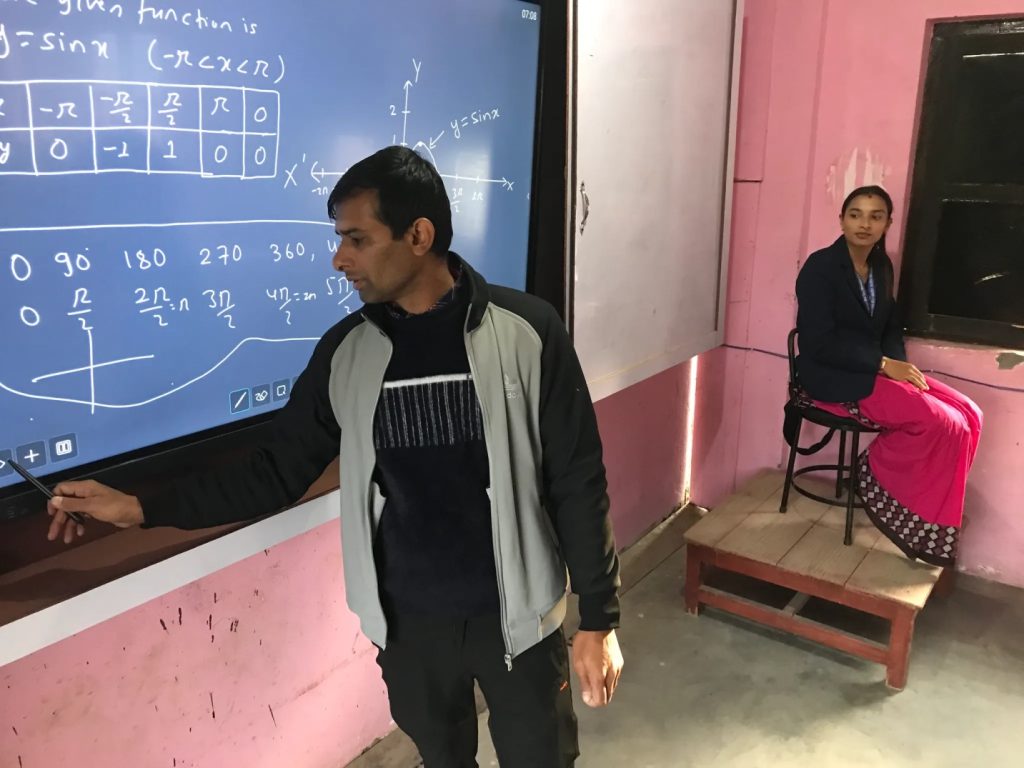
After the opening session, he escorts us into two classrooms, one for natural science and the other for IT skills. The teachers scribble formulas and terms on a smart board and recite the material the pupils must digest. So far, nothing new. But they are flanked by a sign language specialist who translates what they say into silent body language, using elegant hand gestures and telling facial expressions.
KB will later tell us how the idea of creating a school dedicated to this type of teaching was born. “I was 36 or 37 when I was approached by SHREE DHAULAGIRI DEAF (Res.) SECONDARY & TECs. SCHOOL, who knew I was an activist with an interest in skills training. He pointed out that being unable to hear means deaf people cannot listen and are therefore blocked from intellectual education. He invited me to the private lessons he gave at the time. I was amazed, as I had not fully understood the barriers that deaf people can face in daily life. They look like us! I was triggered, and I started to plot arguments to convince the government that a deaf school is really needed in a society that cares for its citizens”.
The Interaction between Hearing and the Deaf
The lessons focus on skills that deaf or hard-of-hearing people can easily utilise in a hearing world, primarily in environments where spoken communication is not necessary and written communication is sufficient. For example, writing software code can be done based on clear written instructions and is well paid too.
Recently, the school has also started accepting pupils who are not deaf but still need education, mainly because their parents can’t afford the tuition costs or because the children are orphans.
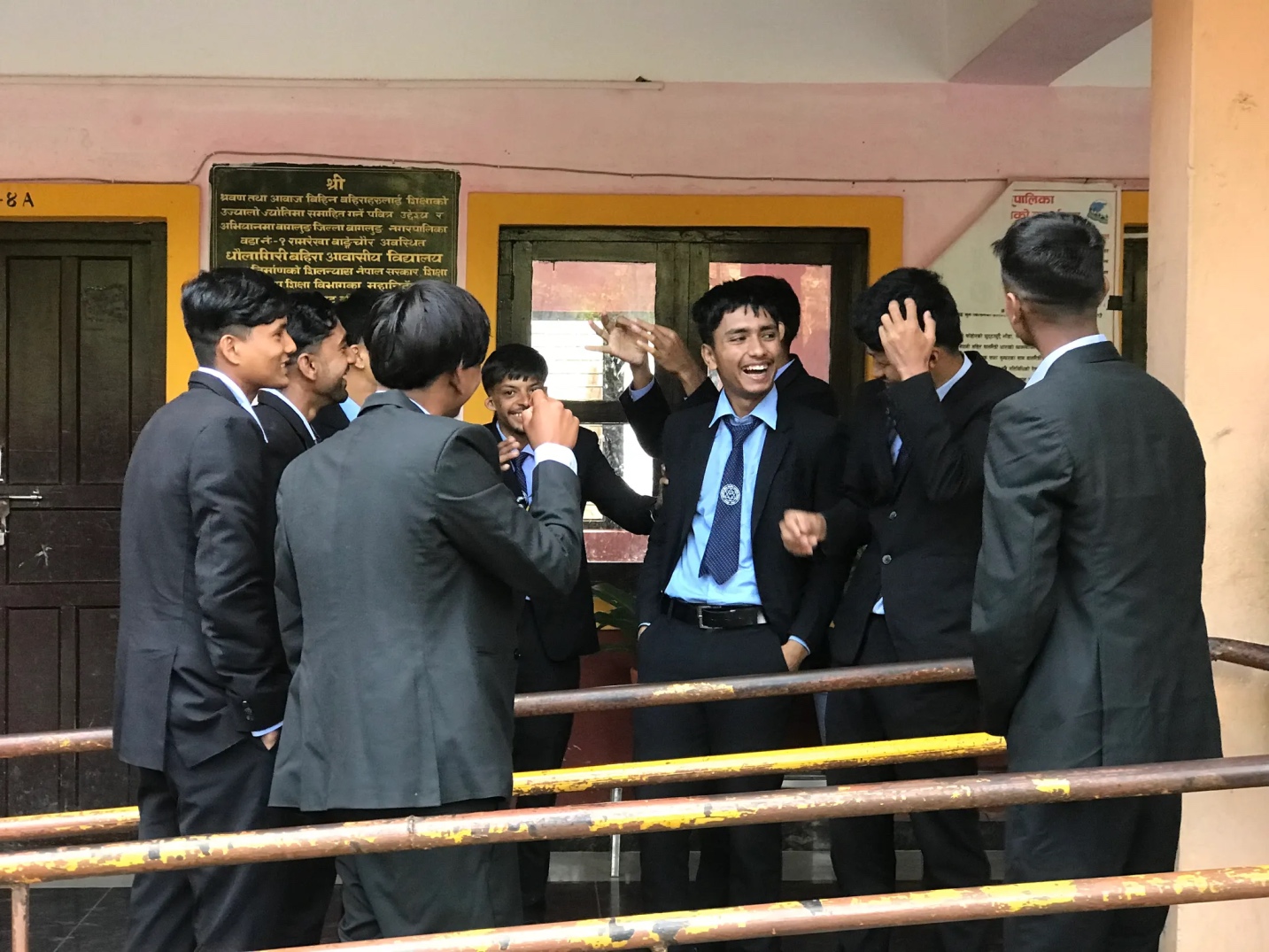
“That caused objections”, says Kishan. “‘This is our school’, some opponents said. ‘Let them go somewhere else’. But we stuck to our guns, as the interaction between hearing and deaf schoolmates helps to break down the isolation of the non-hearing enormously. They learn to deal with one another, preparing both sides for a better understanding later in life”.
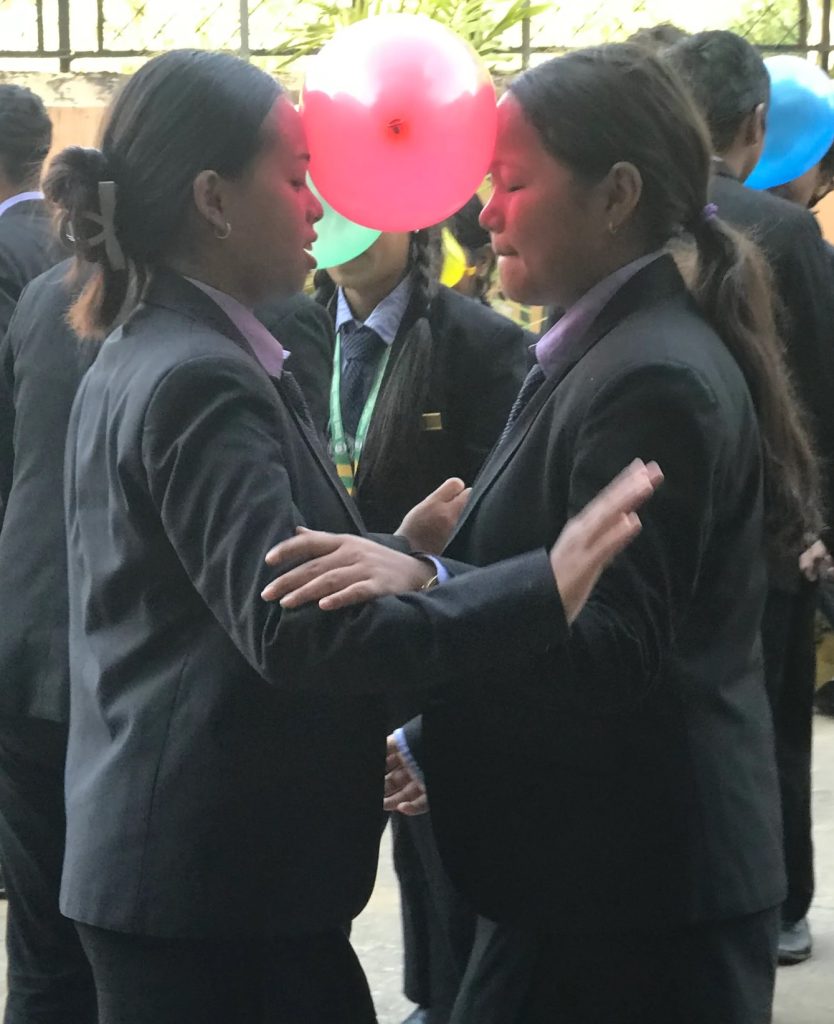
His point is proven when everyone returns to the courtyard to socialise and play an intricate, hilarious game in which two pupils must balance a balloon on their foreheads while dancing to music. The laughter and banter are familiar; this looks like any other schoolyard, and that is exactly the point.
Father and Son
Back at the DIRDC office, I spoke with KB and Kishan to gauge how their family relationships might affect their professional interactions.
KB’s undeniable energy to get things done can only be explained by a strong motivation to improve his neighbours’ living standards. “I had the chance to go to school, and I am thankful for that”. After high school, he studied political science. “Many people in rural areas are not educated at all. They are underprivileged and have no access to facilities.”
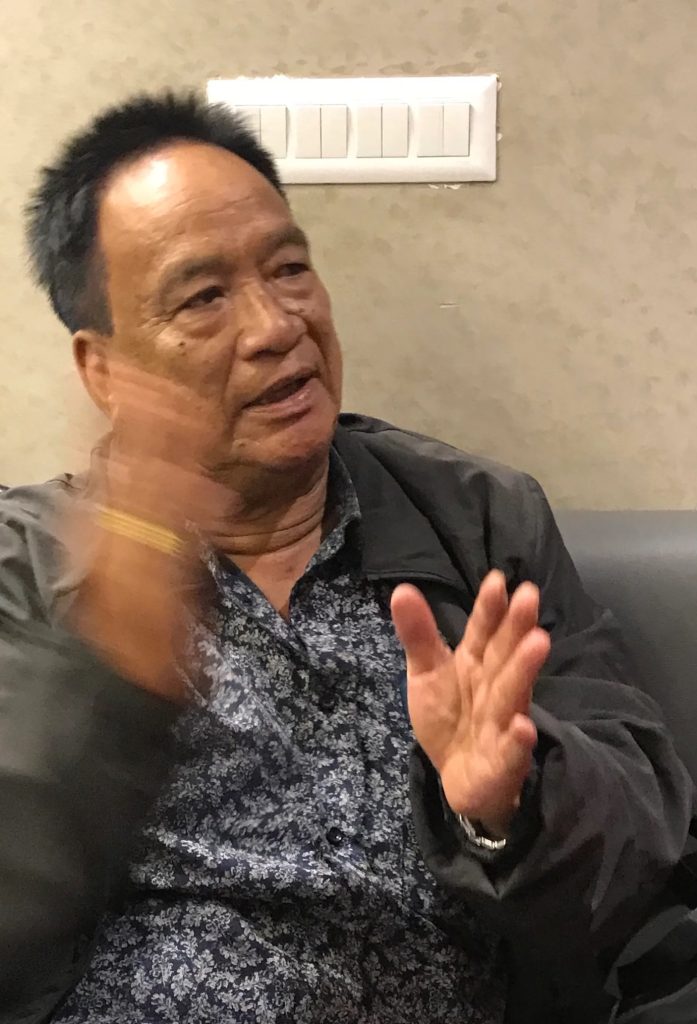

He was born into a middle-class family and spent time in India, where his father served in the army. After completing his education, he went to Kathmandu to enlist in the United Nations Development Program (UNDP) task force.
“I saw discrimination when I would visit Baglung”, he says. “That motivated me to do something about it. I fight poverty with my brains and with my heart”. From his mouth, it sounds sincere, because he strikes the beholders as a man with a social conscience. “Our household staff is from Dalit descent, but they can enter our house without restraint and touch everything. That is not according to Hindu rules, but I don’t agree. Everybody is equal”.
KB is a born leader, but being a leader is not the same as being a father. How does he see his role as a father? “I have always taught him that it is his calling, also because he’s had such a good schooling, to get engaged with Nepali in Nepal to make this a better place to live”. Kishan smiles but says nothing. He studied in Japan for years.
According to the gospel of KB, you don’t go abroad “just for a job, to make money. Of course, you must make something from being alive, I get that. But our country, where our forefatherslived, needs us too. That is how I convinced him to come back”.
“My dad is my main role model”, says Kishan. “He inspires and motivates me. But we are very different, too. Where he is a go-getter, I am much more soft-spoken, reserved and lack his drive. Being in Japan, alone, was a great experience since I had to learn to push myself”.
Kishan studied public administration but became intrigued by sign language and teaching in general when he realised “how much the pupils need the education they are getting”.
Father and son. Both are at different stages in their lives, and both draw meaning from life from being needed.
High-ranking Government Officials Who Manipulate Ministers
When asked about his views vis-à-vis the September Gen Z outburst, last year, and its potential consequences, KB says: “This was a wake-up call, which may start real development for the better. A lot depends on what the elections will bring. If enough voters take Gen Z’s anti-corruption message seriously and choose the right lawmakers, things may change. But we live in a country with many, many poor farmers who know nothing. How they will vote is an enigma. However, I sense that these people also share sympathy for what the protesters said and what they wanted to change”.
Kishan, a member of the same Gen Z group, says he was aware of something brooding among the young. “I sensed that anger was building up. Politics is a subject we take seriously.”
His dad has the last word: “Politicians are not very honest, but the higher echelons of their staff are even worse. They, at least, should be above board, but they are not. Much of the corruption is driven by high-ranking government officials who manipulate ministers and other decision-makers. Whoever is going to run this country, man or woman, must be very tough, honest and open-minded”.
Meanwhile, the Dutch filmmaker Joost Pleune is editing all the material he shot in Nepal. We expect the results later this spring and will notify our readers then.
The DIRDC exploits three major education facilities in and around Baglung:
1. The deaf school from 2017.
2. The handicapped school, SHREE RAMREKHA BASIC SHOOL (includes handicapped students), is situated next to the school for the deaf. Short description.
3. A VOCATIONAL TRAINING CENTRE, run by DIRDC, long situated in the centre of town, in a rugged, run-down facility, is now building a totally new settlement on a plot of land just outside Baglung.
They also run other socially oriented programs in different public schools as well, such as the ‘100% girls hygiene’ program, aiming to break the taboo around menstruation, which still exists in rural societies including Drinking Water. Eye care, Dental care for the school children and employment for the youths trained in DIRDC Technical School.
The deaf school continues, as well, and the DIRDC team is working hard to finalise construction of the new vocational training centre. Nepal Connect will soon share more news on the progress being made in that area.
Notes
- DIRDC is supported for various programs and projects by ONGD-FNEL in Luxembourg and Stichting Nepal in the Netherlands. See their respective websites:
– NAME: www.ongd-fnel.lu
– Stichting Nepal: www.stichtingnepal.org ↩︎