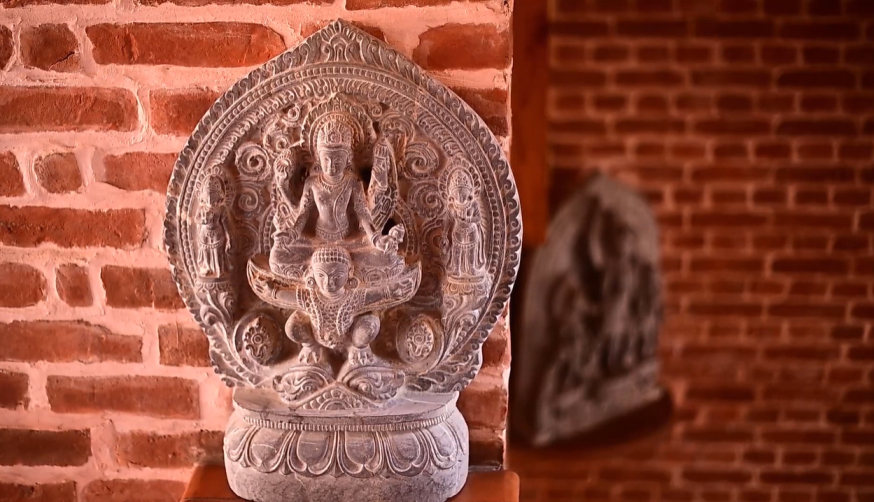

How a remarkable museum may help Nepal to repatriate vanished gods
The first stolen religious object was a Narayan statue, an ancient image of Vishnu, which disappeared in 1765 from the Bhagwati temple at Hanuman Dhoka Palace in Kathmandu. Many deities followed, their images smuggled abroad by art dealers who prioritised material gain over spiritual traditions. The brand-new Museum of Stolen Art, opening in 2026, offers a unique opportunity to repatriate them.
“The grief of those who miss their god or goddess was my inspiration,” says Rabindranath Puri, who founded this remarkable museum.
“Imagine the misery of an elderly lady who has daily revered the image of what she sees as the most positive power in her life, only for that god to be suddenly gone.”
The disappearance of the Narayan statue marks the first documented instance in Nepal’s history of a sacred object being removed from its setting. When King Prithvi Narayan Shah conquered the Kathmandu Valley in 1768, the shrine had been empty, and he replaced the missing sculpture with an image of the goddess Bhagwati.
During the Shah period, Nepal’s rulers remained deeply cautious of colonial intrusion and restricted contact with Europeans. This isolation began to ease when Nepal opened its borders to the outside world in the 1960s. Increased mobility and international demand for South Asian art created new pathways for traffickers and collectors, leading to a sharp rise in the pillaging of Nepal’s sacred artefacts.
Vandalised Saraswati
The modern-day visitor can see the impact with their own eyes. In 1984, thieves vandalised the Saraswati figure at the Pharping monastery near Patan. Saraswati is the Hindu goddess of knowledge, music, art, wisdom and speech, usually depicted as a serene female figure with four arms, often seated on a swan or a lotus.
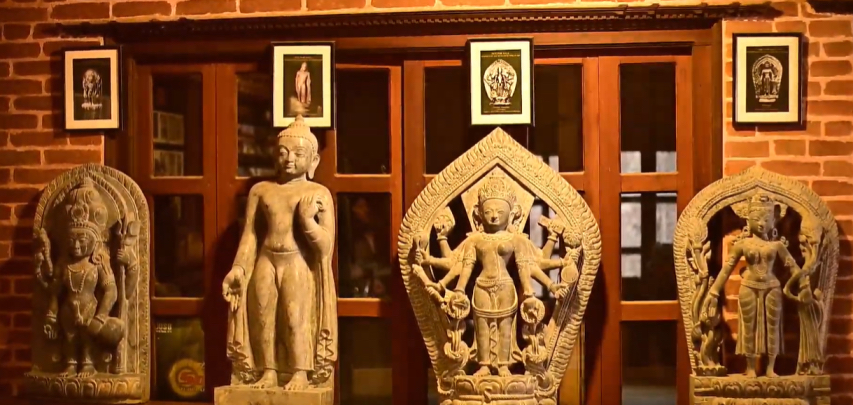
Her head was decapitated, smuggled out of the country, and sold in the international art market. For years, Saraswati’s statue remained headless. Subsequently, a replica was installed and later replaced with a more accurate version. Devotees continued their worship as if she had never been assaulted.
Meanwhile, the original head was returned to Nepal in 1999 and is now on display at the National Museum alongside other repatriated stolen deities, still separated from the body and the devotees.
Tracing Stolen Artefacts
If one wanders through the Kathmandu Valley, sacred objects still sit quietly by the roadside, worshipped by Hindus and Buddhists alike. The valley was once described as having more gods than people and more temples than houses. Over time, however, many of those gods disappeared.
Idols that once absorbed oil, flowers, worship, and devotion now appear unnaturally polished, cleansed of worshippers’ traces, displayed in isolation under museum lights.
In 1956, Nepal introduced the Ancient Monument Preservation Act, which criminalised the theft of ancient artefacts and provided for heavy fines and prison sentences. Despite these provisions, smuggling continued. By the 1980s, more than 500 sacred idols had been stolen from temples and heritage sites.
Most progress in tracing stolen artefacts comes from citizen-led initiatives. The Facebook page Lost Arts of Nepal, established in 2015, has played a critical role in identifying stolen idols in foreign collections. Its companion group, People for Lost Arts of Nepal, allows members of the public to contribute information.
Nepali immigrants have also become key actors in repatriation efforts, working alongside institutions in the United States and Europe to pressurise museums and collectors.
Non-profit organisations, such as the Nepal Heritage Recovery Campaign, are also working to reclaim the country’s stolen cultural heritage.
“In this lifetime, I may never be able to restore all the idols,” says Sanjay Adhikari, secretary of the Nepal Heritage Recovery Campaign. “But I will do my best.”
The Gap between Loss and Return
Full repatriation may never be possible. Too many idols have been lost to private collections or museum vaults abroad. Raising awareness, then, becomes as urgent as recovery itself. It is within the gap between loss and return that the Museum of Stolen Art operates.
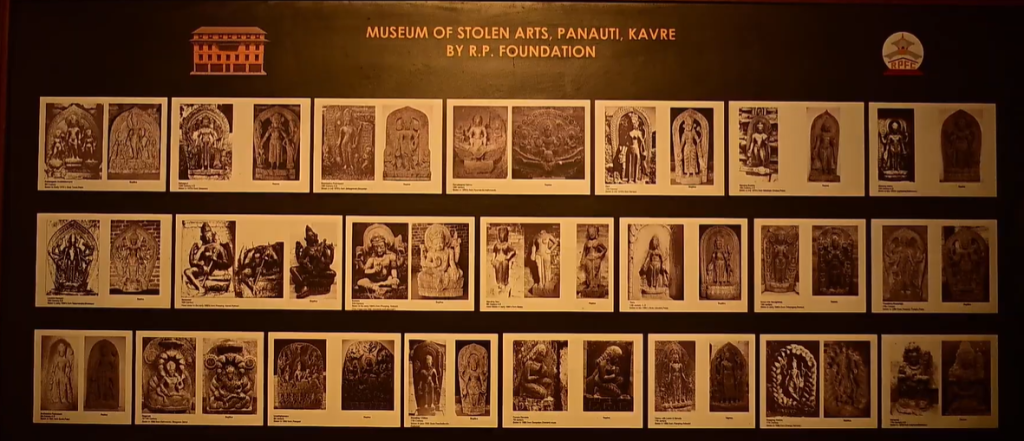
The museum will display replicas of 50 stolen stone images from Nepal. It is intended to exert social, ethical, and administrative pressure on national and international authorities to end the harmful trend of the loss of cultural heritage.
Its founder, Rabindranath Puri, a renowned Nepali cultural heritage conservationist and architect, spent more than two decades recovering stolen idols. He oversees the production of the replicas, working closely with skilled Nepali and Indian stone carvers, led by the renowned artisan Timir Nashan Ojha.
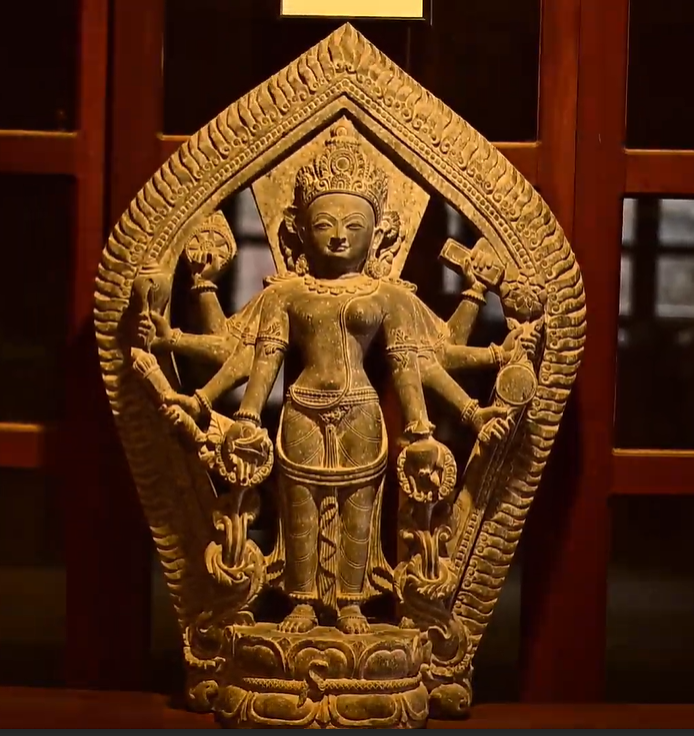
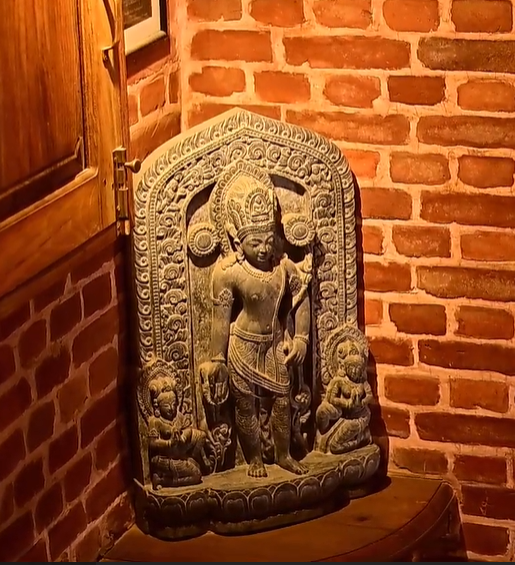
Each artefact takes between three months and a year to complete, depending on its complexity. Deciding which pieces to include in the museum was itself a long process; Puri spent more than four years researching and studying stolen heritage to make those selections. Most of the artefacts in the museum highlight losses from the 1960s to the 1980s, a period when thefts often occurred with local complicity.
The museum is envisioned as a space for replicas and the stories associated with the missing sculptures they imitate. Nearly 50 have been recreated, while the originals remain hidden in private collections or museum vaults abroad. It’s an emotive collection. Puri wants “everyone who visits the museum to cry”.
The deity’s history, the community to which it belonged, and the rupture caused by its disappearance are reflected in each replica. The replicas are currently on display at the Heritage Gallery in Bhaktapur, which is open daily from 10 am to 5 pm. Although the museum faced several delays between 2015 and 2022, it is now scheduled to be permanently housed in Panauti, with the site expected to open to the public in 2026.
True craftsmen made perfect copies of the originals. Puri hopes that the current owners of the stolen deities may consider replacing the originals with these immaculate replicas.
When artefacts are returned, they regain more than physical space; they recover their identity. Yet countless stolen deities remain locked away in storage rooms and private vaults, unlikely ever to return home.
These objects are not merely stolen art. They are stolen faith.
The tale of the vandalised Saraswati statue is only one of fifty such stories that the Museum of Stolen Art seeks to tell, stories that might otherwise have been lost. It’s an attempt to restore memory, even when restoration itself may no longer be possible.
Pratikshya Bhatta is pursuing a degree in Media Studies at Kathmandu University. She works as a Junior Editor at Nepal Connect, where her writing and editorial focus is on tradition, culture, and art.
Related Webistes