


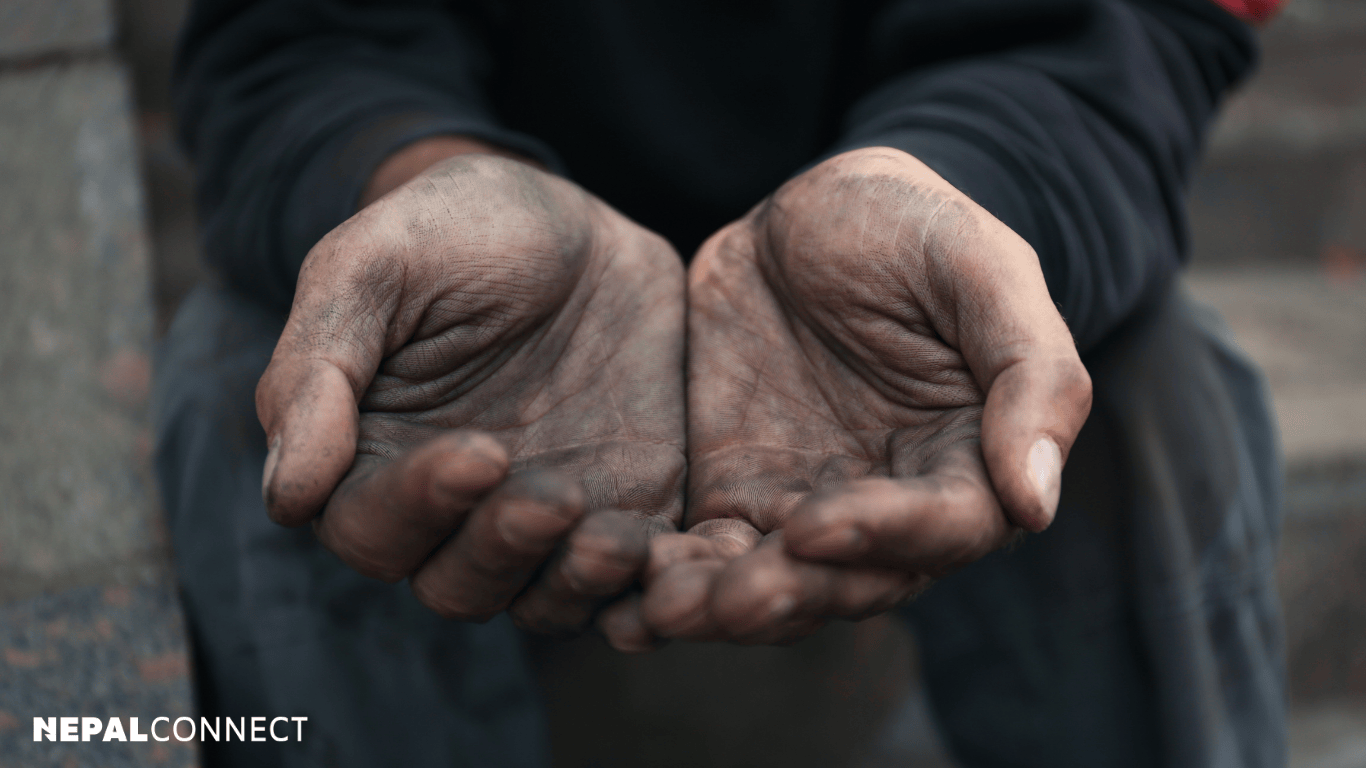


In 2022, an estimated 20.3 per cent of Nepalis lived below the poverty line. In this landscape, begging has emerged as both a survival strategy and a symptom of systemic failure. While present throughout the nation, Kathmandu has become its primary hub. The capital’s streets, temples, and tourist areas attract migrants seeking survival opportunities from across Nepal and beyond.
A 2014 municipal record estimated around 5,000 people begging in Kathmandu, a figure that has fluctuated but still signals the city’s role as a hub. According to the estimated data of Child Workers in Nepal (CWIN), there are 5,000 to 6,000 street children in Nepal; Kathmandu alone has 1,500 to 2,000 of them. 70 per cent or more of street children are boys.
However, this concentration has often led authorities to focus on removal rather than understanding. Without long-term support systems, the extracted people return to the same places because those are the only spaces where they can survive.
In July 2022, Kathmandu Metropolitan City announced a plan to make the city beggar-free. This initiative was not the first attempt to tackle the problem; in 2019, then Prime Minister KP Sharma Oli pledged to rid the streets of beggars within a year. Some of the homeless people were shifted to old-age homes, but the problem was not fully addressed.
While data on begging is inconsistent, estimates indicate thousands rely on it in urban centres such as Pokhara, Biratnagar, and Nepalgunj. The persistence of begging and homelessness even in countries with robust welfare systems, such as Finland and Japan, highlights the complexity of these issues.
A significant issue adding to the country’s begging problem is the influx of Indian beggars. Tourist hubs attract these alms seekers from India, drawn by economic hardships in rural areas. Many believe they can earn more in Nepal, especially in religious and tourist areas. For instance, Lumbini, a UNESCO World Heritage Site, welcomes visitors from the South Asian region and foreign nations as well.
The growing number of beggars also strains local resources. Public areas, temples, and other places experience increased litter and disturbances due to the presence of beggars. Local authorities and security personnel face struggles to manage large crowds and to maintain public safety.
In areas like Durbar Square, the dynamics are clear. Tourists are often approached by children selling small goods like pens and postcards, but behind these interactions is a system where adults profit from the exploitation of young people. In these cases, begging is not only an act of desperation but has become a part of an informal economy that exploits those who have the least power.
Past crackdowns show a repeated pattern. Authorities remove people temporarily, detain them, or deport foreign nationals without addressing why they are there in the first place. In some cases, individuals who claimed to be victims of disasters were apprehended for presenting fabricated stories. These actions may reduce visible congestion for a moment, but they do not solve the conditions that force people to the streets.
Kathmandu Mayor Balen Shah’s recent municipal drives have created tension in the city. Street vendors, landless families, and people who beg for a living say municipal police took their belongings or destroyed their temporary shelters without giving them any alternatives.
The government has started new steps to address begging. It has increased patrols and security in major tourist hubs. It is also working with local groups and NGOs to offer training and job opportunities, so people do not have to rely on begging.
Yet, these policies target street vendors, landless residents, and beggars. Poor urban communities, including Dalit and Indigenous groups, say they were mistreated during the recent campaigns and were not given support for housing or other ways to earn a living.
According to the Central Bureau of Statistics, in 2018, over 34,000 street businesses supported more than 45,000 people, mainly the people living in poverty in Kathmandu. The city’s actions against street vendors and the demolition of settlements without providing alternatives have exacerbated the hardship for these communities.
The Begging Prohibition Act, enacted in Nepal on April 11, 1962, forbids begging and the encouragement of begging by children under 16. A revised Criminal Code and Criminal Procedures Code, implemented in August 2018, further prohibits begging in public areas, with penalties ranging from one month to one year of imprisonment.
Kathmandu is also home to communities displaced by past natural disasters, including the 2015 earthquake, though the broader homelessness crisis deserves its own dedicated examination.
In the Bagmati Corridor and the riverbanks, settlements built by landless people over more than a decade have repeatedly come under threat. In November 2022, authorities attempted to bulldoze one such settlement. Tension and clashes quickly sparked between residents and police. These confrontations often show the vulnerabilities of such communities at the intersection of poverty, environmental pressure, and urban expansion.
Addressing begging in Nepal requires comprehensive solutions beyond enforcement, including social support, shelters, rehabilitation, cross-border coordination, and community monitoring to protect children.
Any solution must prioritise human dignity. Those who beg are victims of poverty, displacement, disability, exploitation, or trauma, not the cause of social disorder. To create sustainable change for the capital and the country, we must first understand their circumstances through research and empathy.
Sudipa Mahato is a junior editor with Nepal Connect.