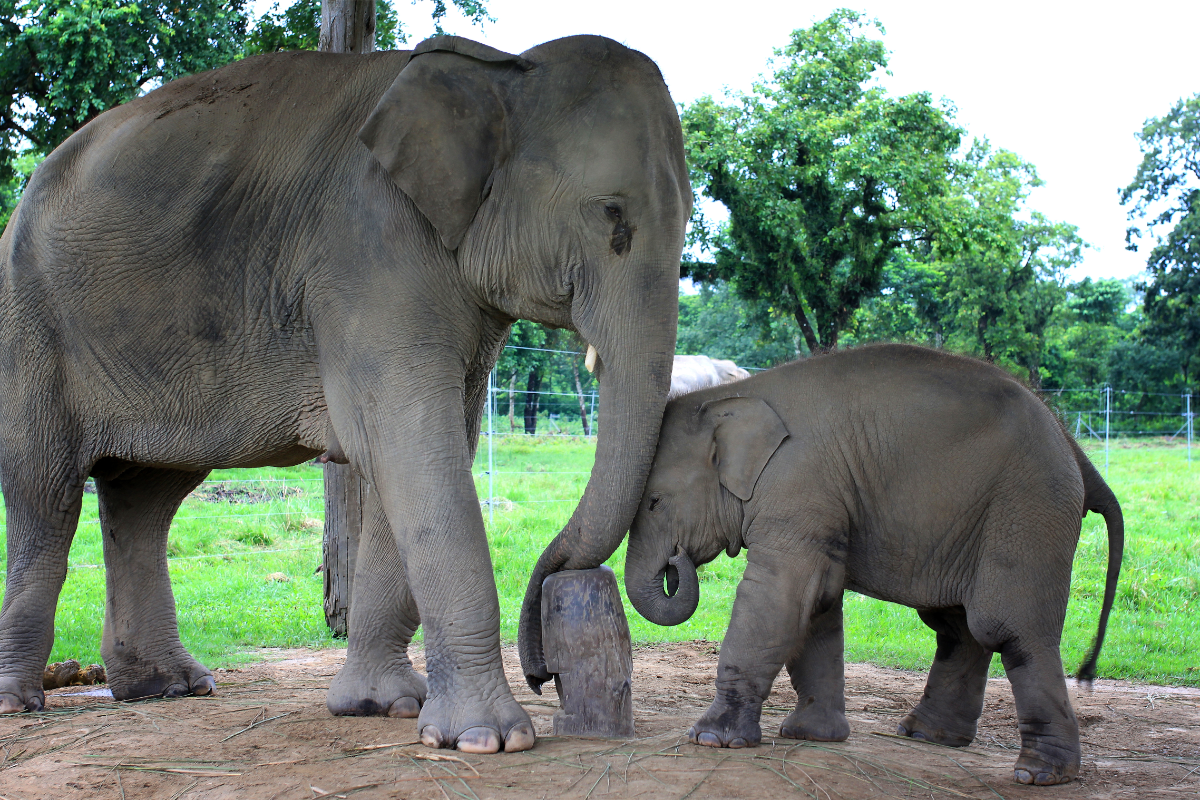

In southern Nepal, elephants shape everyday life around Sauraha, the gateway to Chitwan National Park. After decades of guiding tourists through lush forests, they have become icons of the region’s tourism identity. Rangers also rely on them to patrol protected areas where vehicles cannot reach. Yet these same animals—once symbols of conservation and culture—now sit at the centre of a growing global debate over captivity, tourism, and animal welfare.
Once widespread across Asia, the Asian elephant (Elephas maximus) roamed freely from Iran’s shores through the Indian subcontinent and into Southeast Asia. Historically, they occupied nearly nine million square kilometres of habitat.
Today, only fragments of that range remain. Asian elephants survive in just 13 countries—about 5 per cent of their historical habitat. In 1986, after decades of habitat loss and population decline, the IUCN classified the species as endangered.
Despite their shrinking numbers, elephants continue to shape the ecosystems they inhabit. Conservationists describe them as “ecosystem engineers” for their role in reshaping forests—pushing over trees, dispersing seeds, and opening up dense vegetation, all of which contribute to forest regeneration.
In Nepal, wild Asian elephants inhabit the eastern and western Tarai. Around 230 roam free, while nearly 180 live under human care, many in and around Sauraha. Their presence reflects a long history of coexistence in the region.
Each year, an estimated 150 elephants move between India and Nepal through forest corridors linking conservation areas across the border. These seasonal migrations support genetic diversity within herds. However, as elephants pass near villages and farmland, encounters with humans become more frequent.
Sauraha’s Working Elephants
A study titled Demographic and Health Status of Captive Elephants around Chitwan National Park, Nepal, recorded 97 elephants living under human care in the area. Around 60 belonged to private tourism businesses, 31 were managed by the government, and six were under the National Trust for Nature Conservation.
Many government-owned elephants are associated with the Khorsor Elephant Breeding Center or nearby shelters. Most begin working at around 15 years of age and can remain active into their late 50s.
Their daily routines are structured—morning walks through the forest, bathing in the Rapti River, scheduled feeding, and tourist rides. An elephant can consume between 150 and 250 kilograms of food each day. Monthly care costs range from $560 to $1,120, covering feed, veterinary services, and mahout wages.
What began as a popular tourist activity has increasingly drawn criticism. In the past, a single elephant could carry up to six tourists for two to three hours at a time. As awareness around animal welfare has grown, many operators have reduced the number of riders to one or two per elephant.
The financial stakes remain high. An adult elephant can cost between $75,000 and $112,500, making them a significant investment within the tourism economy.
The Rise and Fall of Elephant Polo
Global criticism of elephant tourism has intensified in recent years, raising questions about how captive elephants are treated. For many local communities, however, elephants are not just attractions but working animals and companions, tied to generational livelihoods.
Sauraha’s annual elephant festival once showcased this relationship, with elephant polo as its main attraction. Introduced in Nepal in 1982, the sport involved riders guiding elephants with the help of mahouts.
Over time, the event drew international attention, including celebrity participation. However, animal rights groups—particularly PETA Asia—campaigned against the sport, calling it cruel. Their advocacy led to a four-year suspension of the tournament.
In December 2025, elephant polo briefly returned but was met with renewed criticism and public backlash. Welfare groups argued that the sport placed unnecessary stress on elephants and relied on strict control during matches.
The controversy reflects a broader shift in how animals are viewed in tourism. Experiences once marketed as exotic are now increasingly scrutinised for their ethical implications.
Between Captivity and Conservation
A 2022 study by Gautam and Koju raised several concerns about the welfare of captive elephants. Observations of 78 elephants found that only about 8 per cent were allowed to rest without chains. Most spent the majority of their time restrained.
Some operators are now experimenting with alternatives. At Sapana Village Lodge, elephants are allowed to roam within fenced forested areas rather than being kept chained. According to staff, this reduces stress and encourages more natural behaviour.
Health issues remain a concern. Studies have documented cases of tuberculosis, parasitic infections, and foot problems among captive elephants. Limited movement, controlled diets, and close human contact may contribute to these conditions.
At the same time, elephants continue to play a role in conservation. Government-owned elephants are used in anti-poaching patrols within protected areas. Their ability to move quietly through dense forests makes them essential for monitoring wildlife in terrain inaccessible to vehicles.
The Khorsor Elephant Breeding Center, established in 1985 near Chitwan National Park, supports these efforts. Initially housing 20 elephants brought from India, Thailand, and Myanmar, the centre has since expanded through breeding.
Elephants reproduce slowly, with a gestation period of 22 to 24 months—the longest among land mammals. Conservationists argue that breeding programmes help maintain a stable population of trained elephants for forest management and research.
Post-Pandemic Realities
The COVID-19 pandemic exposed the fragility of Sauraha’s elephant-based tourism economy. As international travel halted, lodges and operators faced immediate financial strain.
Before the pandemic, Sauraha had around 65 privately owned elephants. That number dropped to 32 during the shutdown, as some owners sold their animals to buyers in India due to rising care costs.
Elephants require significant daily resources, regardless of tourist arrivals. Without income, mahouts—many of whom inherit the profession through generations—faced uncertain futures.
Since then, a shift in tourism practices has begun to emerge. Instead of rides, there is a growing emphasis on observation-based experiences. Visitors can now watch elephants bathe, visit breeding centres, or walk alongside them without riding.
In Sauraha, elephants stand at the intersection of tradition, conservation, and livelihood. Their future depends on how local communities, policymakers, and tourists choose to engage with them.
As global attitudes toward animal welfare evolve, the challenge lies in reshaping long-standing practices while recognising the deep cultural and economic ties that bind people and elephants in this region.