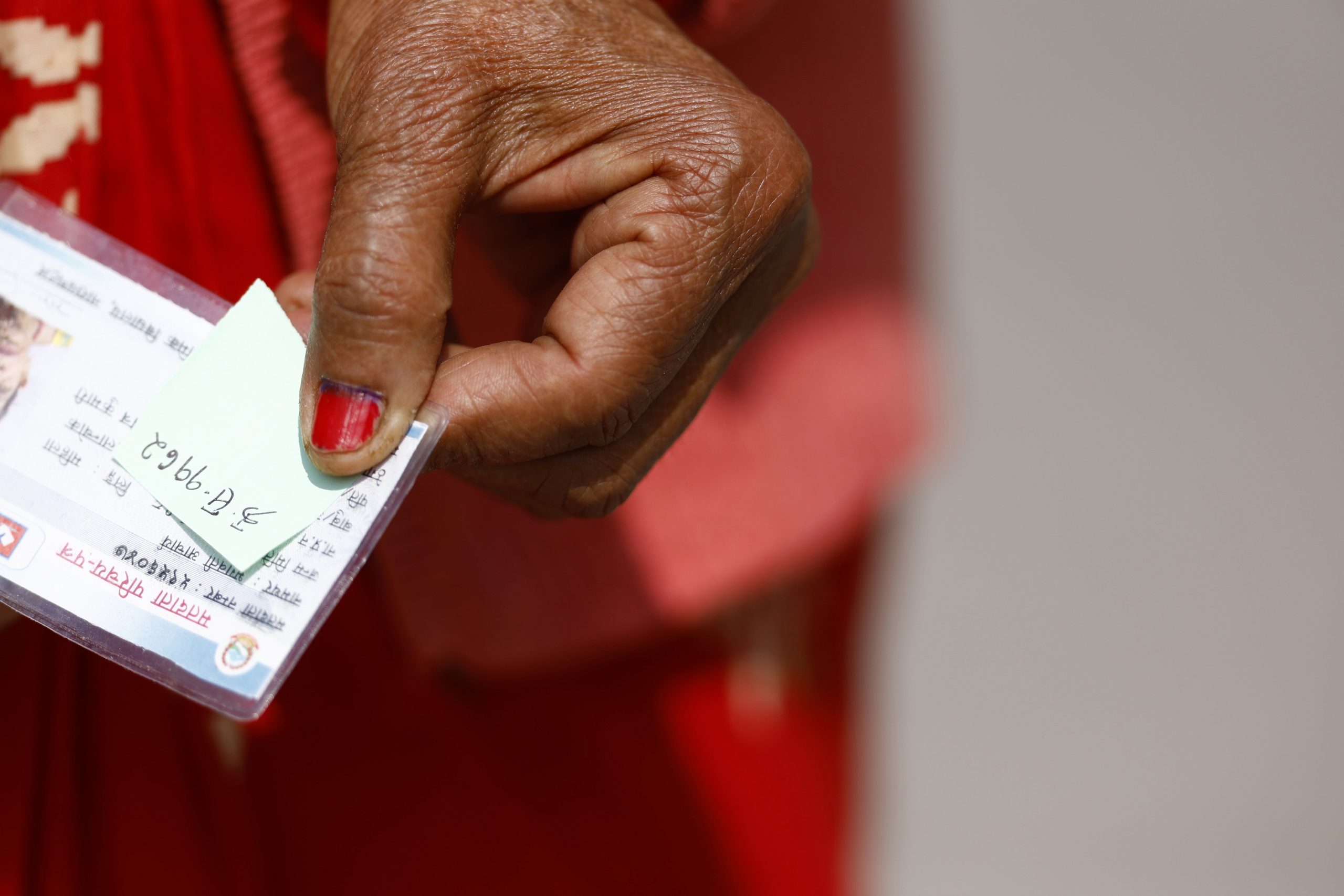

Nepal’s March election did more than reshuffle representation—it signalled a shift in how voters are making political choices.
Candidates with strong administrative track records and visible contributions were defeated, while newer political faces gained ground. Figures such as Kulman Ghising, Renu Dahal, and Govinda Bhattarai experienced this firsthand.
This raises a central question: are voters prioritising party identity and broader political sentiment over individual performance?
A Pattern Repeating
Following the decade-long Nepalese Civil War, the Communist Party of Nepal (Maoist Centre) entered mainstream politics with significant public backing.
In the 2008 Constituent Assembly elections, the Maoists secured around 38 percent of seats, becoming the largest party. This victory was not simply about policy or governance experience. It was driven by public frustration with traditional elites, a demand for structural change, and the party’s positioning as an outsider challenging an unequal system.
A similar pattern is visible in the rise of the Rastriya Swatantra Party (RSP). In both cases, electoral success reflects anti-establishment sentiment, where voting becomes a way to express dissatisfaction with the status quo.
The Maoists’ transition from insurgency to governance, however, was not smooth. Internal divisions, governance challenges, and difficulties adapting to institutions weakened their position over time. By the 2013 elections, their influence had declined significantly, as public expectations were not fully met.
This offers a caution. Rapid political ascent without institutional grounding can weaken trust. For newer forces like the RSP, electoral success driven by frustration must translate into outcomes. Mobilising dissatisfaction is easier than sustaining it.
Party Over Performance
In the 2022 general elections, the RSP secured over 10 percent of the proportional representation vote and won 20 seats in the House of Representatives, becoming the fourth-largest party despite being newly formed.
At the same time, long-established parties such as the Nepali Congress and the Communist Party of Nepal (Unified Marxist–Leninist) saw fragmented mandates, leading to coalition governments. Voter turnout remained around 61 percent, but the composition of the electorate is shifting.
A growing number of first-time and younger voters—particularly those who came of age after the promulgation of the Constitution—are shaping outcomes. They are less influenced by historical struggles and more focused on present concerns such as employment, governance, corruption, and service delivery. Party loyalty is weakening, and voters are more willing to shift between elections.
The defeats of high-profile candidates reflect this shift.
Kulman Ghising, widely credited with ending up to 18 hours of daily load-shedding during his tenure at the Nepal Electricity Authority, built a public image around efficiency and results. His electoral loss suggests that technocratic credibility does not necessarily translate into political capital.
Renu Dahal, former mayor of Bharatpur Metropolitan City, oversaw nearly a decade of urban development, infrastructure expansion, and administrative continuity. Despite these contributions, her political standing has been shaped as much by party affiliation as by her record in office.
Govinda Bhattarai, a senior figure within the Nepali Congress often referred to as the “waterman”, has contributed to development through numerous drinking water projects, along with work in roads and education. Yet his experience and track record did not ensure electoral success.
When candidates are seen as part of an establishment that has underperformed, individual achievements carry less weight. Elections become less about rewarding past work and more about rejecting perceived systemic failure.
This creates a paradox: strong candidates can lose not because they failed, but because of the political associations they represent.
What Comes Next
The media has played a role in shaping this shift. Digital platforms accelerate the spread of political narratives and shape public perception more quickly than traditional forms of engagement. Newer parties, not tied to long-standing public perceptions, benefit from this environment.
As Sudarshan Dahal, a media and political communications expert and professor at Kathmandu University, notes, “Mediatisation of politics might have been a major determinant in the March election turnout. Society is becoming more isolated and mediatised. Those who are well-versed in handling media may have a better chance across sectors, including politics.”
He adds, “Media creates and shapes perception, and how it was utilised this election season may have been a major determinant.”
Rapid political success also brings high expectations. If those expectations are not met, public support can fade just as quickly.
For the RSP, the challenge is to move beyond anti-establishment positioning and deliver tangible outcomes. This includes policy clarity, internal stability, and the ability to function within Nepal’s federal structure.
Nepal’s political history shows that electoral waves are not new. What is changing is the speed and intensity of shifting voter sentiment.
When candidates with proven track records lose, it reflects more than individual rejection. It points to a shift in how citizens engage with politics. Elections are becoming less about rewarding performance and more about expressing dissatisfaction.
The question is no longer about who brings results, but whether the system itself can deliver them.
Until that question is answered, party-driven waves are likely to continue outweighing individual performance.