



A 1500-year legacy of water engineering revived
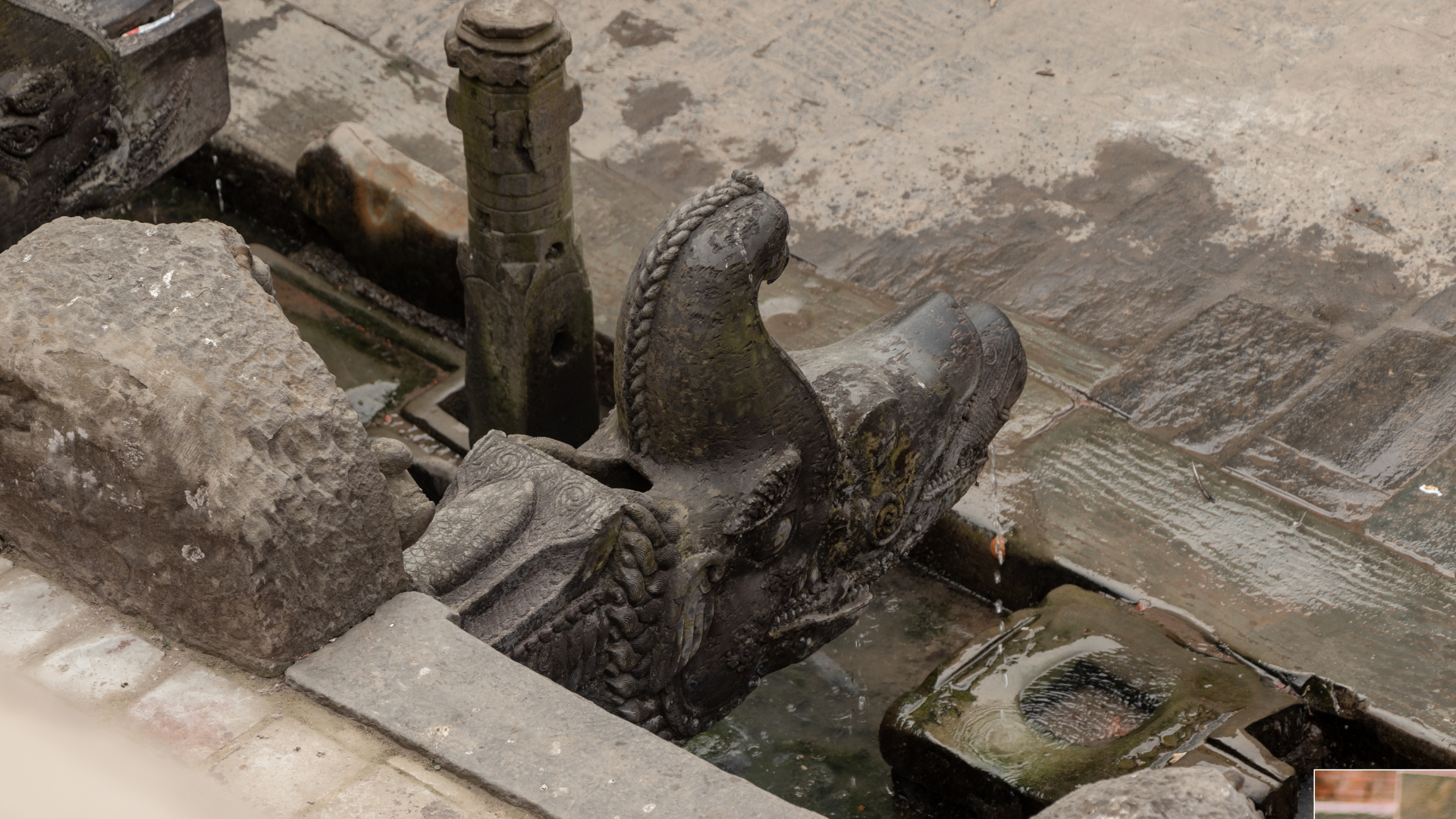
Walking through the older quarters of town, one encounters numerous waterspouts crafted since the Middle Ages. They feature intricate carvings that embody the history, culture and craftmanship of the Kathmandu Valley.
Stone spouts1 or ‘hitis’ have supplied the cities in the valley with water for centuries. They were established when Nepali rulers regarded water as a sacred communal commodity and were integrated into daily life: people gathered at hitis to fetch drinking water, wash clothes, and perform ritual offerings.
A Complete Water System
The oldest spouts date back to the 6th century. In those days, the city layout was based on the Mandala system of three concentric circles representing the inhabited, agricultural, and natural zones. Functional fountains still deliver spring water through underground canals, working like gravity-fed taps. Each is a complete water system: a highland spring feeds a sunken pond, and underground pipes transport the water, which surfaces through an ornate stone outlet often shaped like a mythical naga2.
They served as public utilities maintained by communal trusts3, supplying water for drinking, household chores, and religious purification. The system allowed cities to operate for centuries with minimal maintenance. Today, this craftsmanship endures: for example, the Manga Hiti in Patan still flows from its intricately carved spout, a 1500-year legacy of water engineering.
However, unplanned urbanisation and neglect have caused many spouts to dry up or be buried. A survey in 2029 identified 573 spouts in the valley, of which 224 were functioning, 255 were out of order, and 94 had been lost.
“People don’t use hitis as often anymore because it’s simply more convenient to have water inside their homes than rely on communal sources,” says Radhika Shakya, a resident of Patan.
Nonetheless, restored spouts can supply fresh water to over 200 homes, demonstrating that they can still help supplement scarce water sources.
Growing Water Stress
The daily water demand in the Kathmandu Valley ranges from about 400 to 500 million litres per day, while the supply is only 90 to 140 litres per day, creating a significant shortfall. As modern taps increasingly run dry, residents are beginning to revisit traditional spouts that still function. Many of these are the sole water source for the urban poor. They have regained importance and continue to supply water for cooking, laundry, and small businesses in areas where piped water is unreliable or too costly. Revitalising the wider water network could be advantageous: restoring historic ponds and canals would recharge groundwater and raise groundwater levels, which are sinking at an alarming rate.
Growing water stress has sparked a revival movement. Local groups, NGOs, and even international donors now restore ancient spouts as part of living heritage. In Patan, the Alko Hiti (15th century) was polluted and nearly dry until villagers cleaned it up, some 20 years ago4. Today, it flows year-round, supplying water to approximately 250 homes. Similarly, grassroots surveys in Patan and Kathmandu by organisations such as Chiva Chaitya assess the condition of local hitis to prepare appropriate maintenance plans.
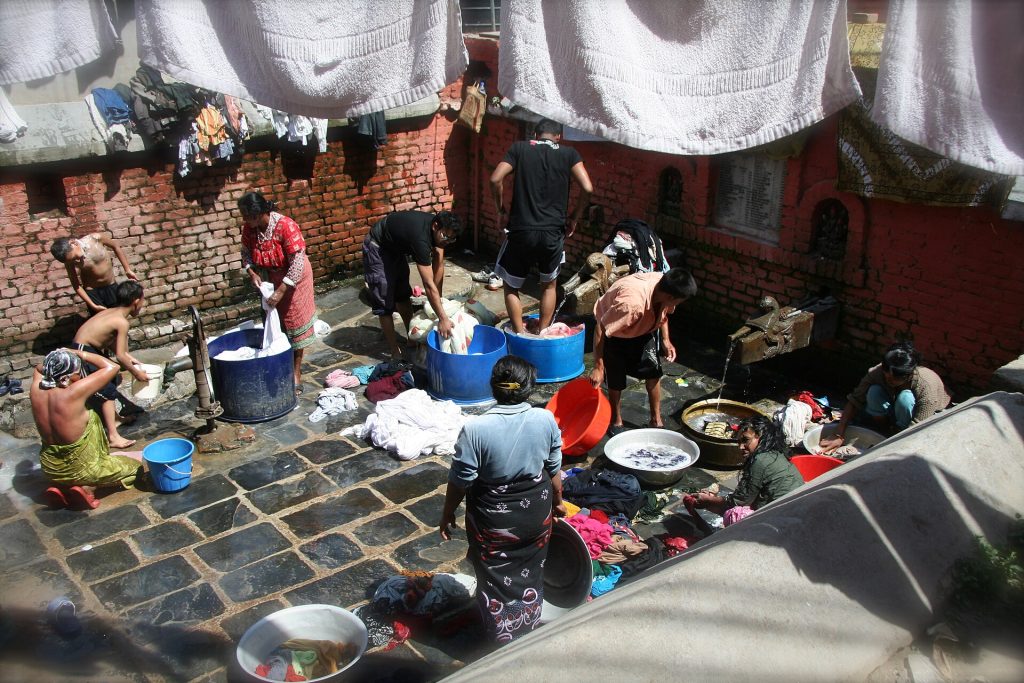
On a larger scale, the US Ambassadors Fund and the World Monuments Fund supported the Yenga Hiti project (Kathmandu)—restoring its flow after 50 years in 2025. The Yenga project is part of a broader “Hitis of Kathmandu Valley” rehabilitation initiative aiming to restore at least three spouts and train heritage professionals.
Alongside technical restoration, cultural outreach is shifting perceptions. A three-day Hiti Art exhibition at Patan Museum united artists and historians to highlight the environmental and social significance of spouts. Media and local leaders reinforce the message that hits remain relevant. Activists like Miss Nepal Earth, Supriya Shrestha, have coordinated neighbourhood efforts (e.g., at Dhobi Chaur) to restore public spouts for the traditional laundry community, viewing them as a catalyst for a “massive movement” towards community-based water conservation.
Integrating Tradition into Future Resilience
Today’s champions of history highlight that these ancient waterworks provide economical, sustainable solutions. Unlike modern pipes with short lifespans, properly constructed hitis can function for thousands of years with minimal maintenance.
By reviving these springs and canals through rainwater harvesting and recharge wells, the valley blends traditional knowledge with modern planning. The outcome is a hybrid approach: decentralised, locally managed hiti systems enhance the city’s water supply, especially for the most vulnerable residents.
Each restored hiti thus advances two Kathmandu Valley sites that showcase human ingenuity in harnessing subsurface flows. In an era of climate uncertainty and growing populations, these thousand-year-old fountains remind Nepal that ancient infrastructure can still offer solutions for the future.
Notes

