


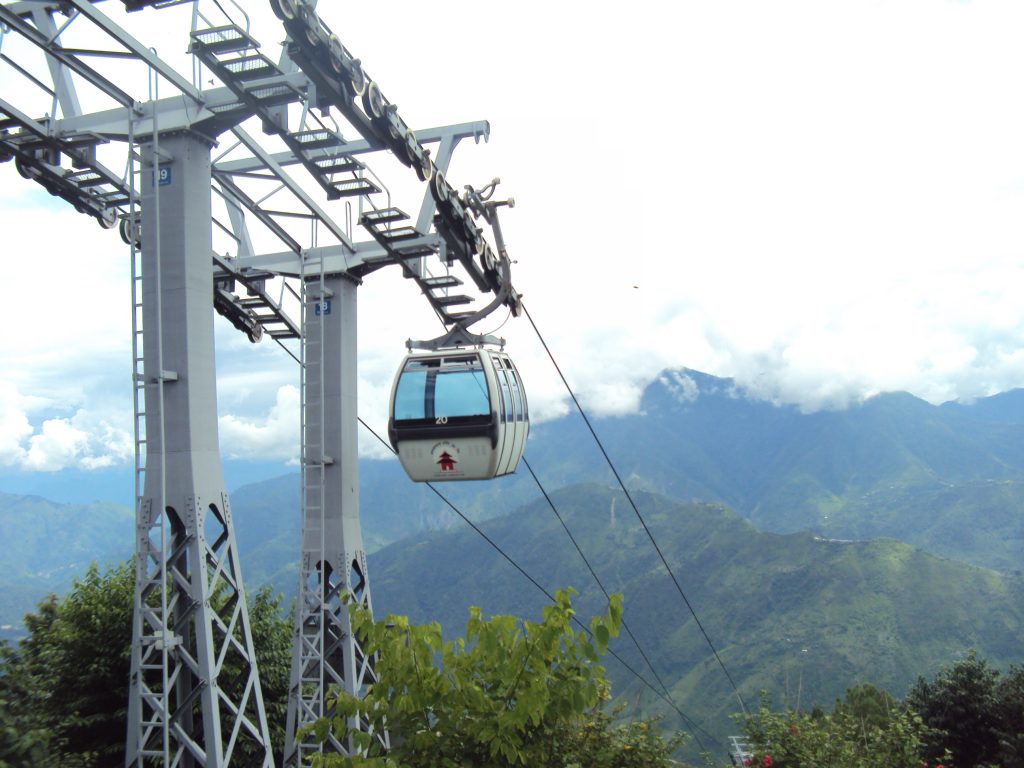


Religious fervour and tourist leisure go hand in hand, since a cable car makes it easy to access a temple with both historical and modern significance.
The Manakamana Temple sits on a ridge about 1300 metres high, above the Trishuli and Marshyangdi rivers. On clear days, the horizon opens to reveal Annapurna, Manaslu, and Himalchuli in the distance. It sounds like the kind of place that should feel calm and removed. It does not, but that does not spoil the experience.
The temple area is loud, crowded, and in constant motion. Incense is lit in one corner, while some crack coconuts as an offering and others bring goats for sacrifice. The bell rings without pause. Vendors call out prices for flowers and coconuts. People move in lines that form and dissolve quickly. The space feels compressed, but not in a bad way. It feels vibrant with activity, as if something is always happening.
Visitors arrive from Kathmandu, Hetauda, and Chitwan, or even from across the Indian border, either with clear religious intent, carrying offerings and moving with purpose, or treating the trip as a casual day out, stopping for photos, food, and the view.
The day-trippers are a relatively new phenomenon. Before the Manakamana Cable Car opened in 1998, reaching the temple required a long uphill walk, which deterred tourists from visiting the shrine. But the cable car has made access much easier for anyone who wants to avoid an arduous climb.
A Short Ride With a Long View
This cable car was Nepal’s first commercial cable car service. What used to take three hours or more was reduced to a ten-minute ride. Visitor numbers increased sharply, and the temple became accessible to people who might never have attempted the climb. The surrounding area adapted just as quickly. Shops expanded, services grew, and Manakamana settled into a steady mix of pilgrimage and tourism.
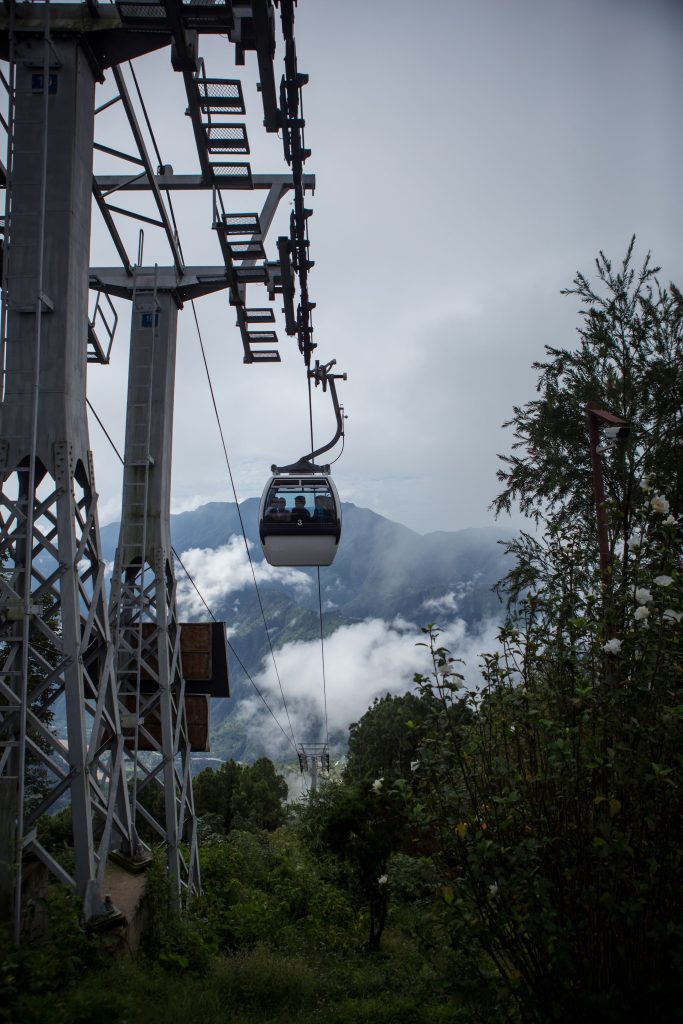
Beyond transport, the company behind the cable car has also contributed to the local community. After the 2015 earthquake, it helped deliver essential supplies to the area. A portion of ticket sales is also directed towards local development in nearby rural municipalities, linking the cable car’s success to the surrounding region.
The ride to the site is brief and pleasant. The cabin lifts off and quickly climbs, leaving the base station behind. The Trishuli River lies far below, cutting through the valley, while the surrounding hills spread in layers. The effort of climbing the hill is gone, but the sense of arrival remains, just delivered differently.
Divine Gatherings
A well-known version of the temple’s origins dates it to the 17th century, during the reign of King Ram Shah of Gorkha. His spouse, the queen, was believed to be an incarnation of Durga Bhawani and would leave the palace at night to attend divine gatherings. When her identity was revealed, the king died suddenly, says the story, and the queen followed him in death, promising to return.
The tale continues with a farmer, Lakhan Thapa Magar, who discovers a stone that bleeds milk and blood when struck. Aware of the queen’s divine nature, he recognises the stone as a sign and establishes a temple at the site. The priests serving the temple are drawn from the Magar community, a role passed down through generations.
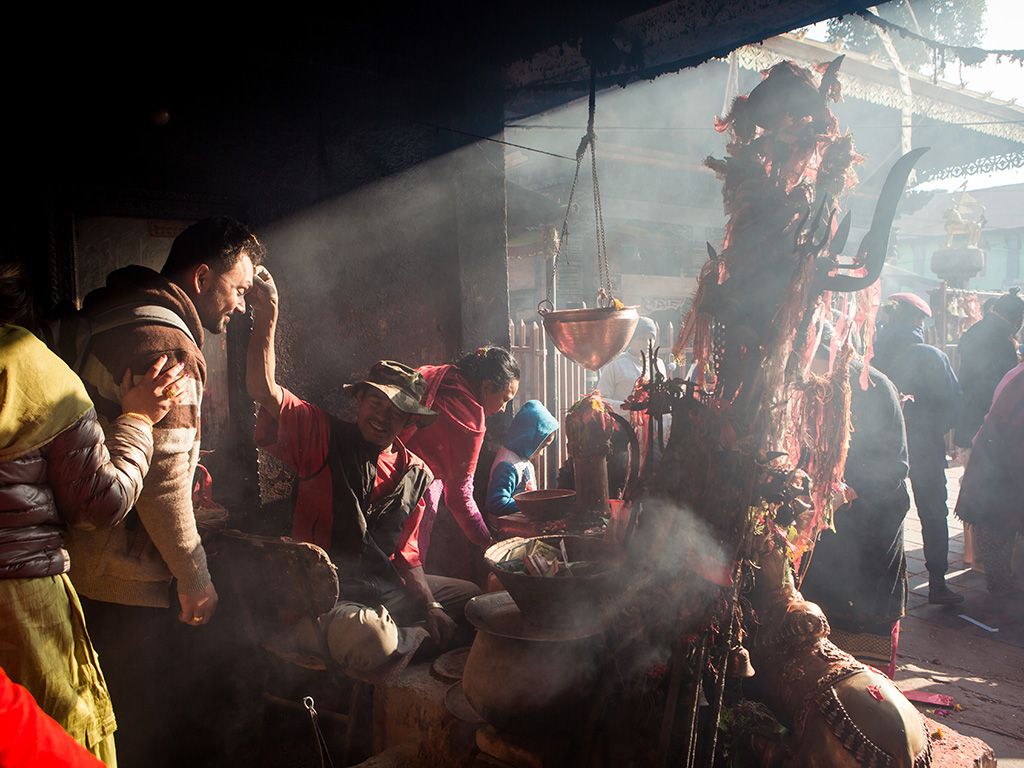
The temple’s reputation as a place where wishes are granted stems directly from this belief. People arrive with specific intentions, and that sense of purpose shapes how they move through the space. Even in a crowded setting, the focus does not entirely disappear.
The 2015 earthquake damaged the temple, but it has since been rebuilt with support from local communities. The structure seen today is newer, yet the belief associated with it remains unchanged.
Between a Day Trip and a Pilgrimage
Manakamana is a religious site of deep cultural significance, yet it also offers a nice day trip. The cable car makes that balance possible. People arrive, move through the system, spend time at the top, and return. The entire cycle can be completed within a few hours. But it does not feel rushed.
What stands out is how naturally different expectations coexist. A person making a serious religious offering stands a few steps away from someone focused on photographing the view. Families treat it as a shared outing, while others approach it as a personal ritual.