
At Everest Base Camp, the stories usually come from climbers. This time, they are being recorded for the world to hear.
Everest Live, a podcast broadcast from the base of Mount Everest, describes itself as “the world’s highest newsroom”. The show follows the climbing season as it unfolds, reporting from within the camp rather than from a distance.
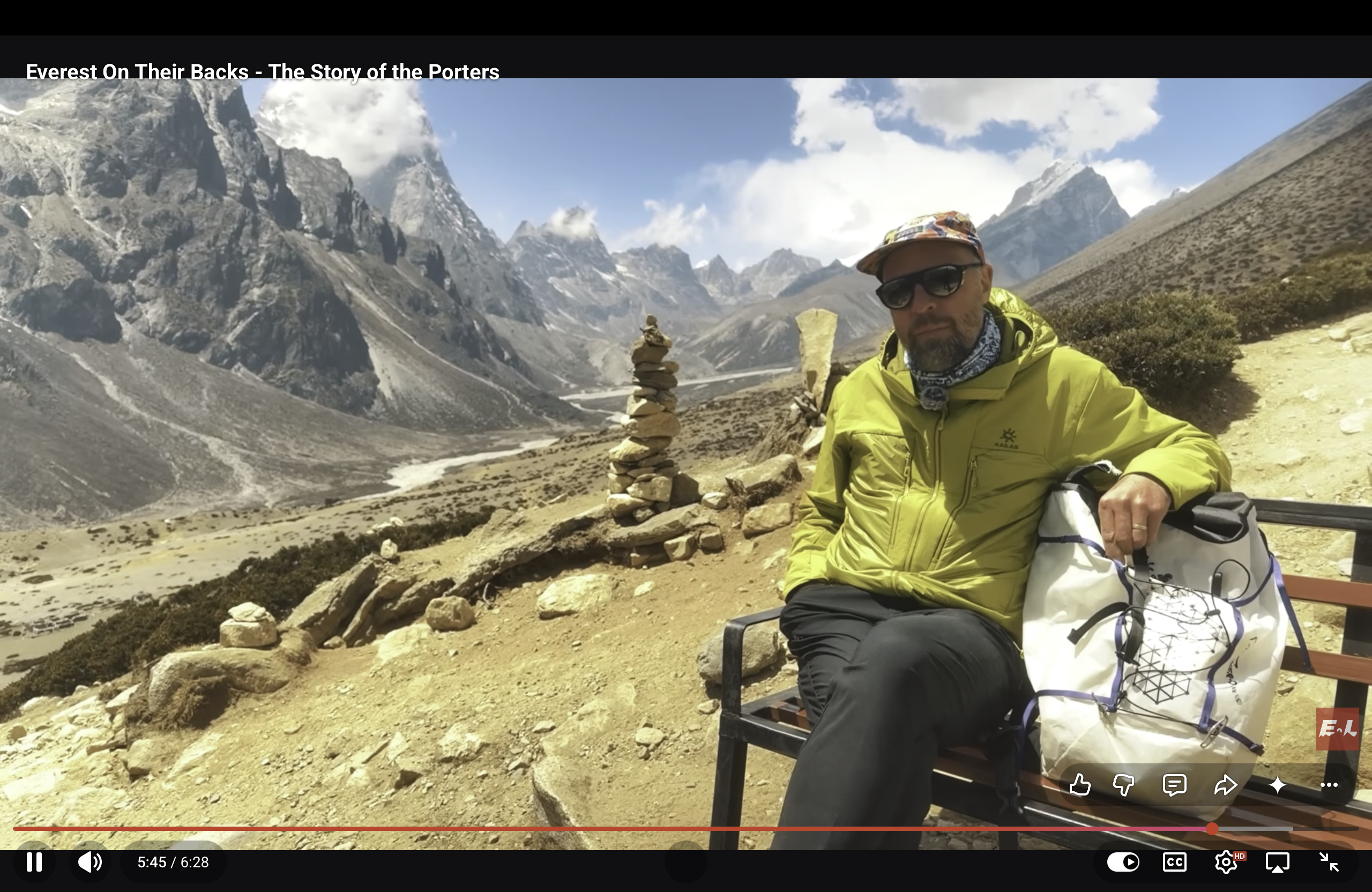
At the centre of it is Ben Ayers, a journalist who has spent years working around Nepal’s mountaineering world. For him, Everest Live is not just about being there. It is about getting the story right.
“There’s just a huge global interest in Everest,” he says. “Every season, there’s a huge media moment when the Everest climbing season starts.”
The problem, in his view, is what happens next.
Ayers expresses frustration regarding media coverage, which led to the initiation of Everest Live. “The journalists [who] tend to cover Everest just generally tend to get it wrong,” he says. “They don’t have a lot of understanding of Nepali culture or the nuances or the politics of what’s happening on the mountain.”
Before Everest Live, Ayers had already built a relationship with the region. Early on, he worked on an initiative focused on improving conditions for porters, many of whom faced dangerous workloads with little support. That experience stayed with him and shaped how he saw the industry.
Over time, he realised he could bring those concerns into his journalism. “I kind of realised that I could do two things at once,” he says. The result was Everest Live in 2025, a platform that tries to report on the mountain with more context and less distortion.
The team behind it is small. Ayers works with a business partner, a couple of camera operators, and part-time support handling editing and scheduling. Like most modern media projects, it runs across laptops and time zones. “We all just work from wherever we are,” he says. “Everybody just does their job independently, and we all just work together in that way.”
What the World Gets Wrong About Everest
If Everest Live has a clear mission, it is correcting the way Everest is understood. Its identity lies in the limbo between perception and reality.
“I think that a lot of people, especially abroad, only hear that Everest is garbage or that it’s crowded and littered with dead bodies,” he says. “Those are the stories that make the media.”
They are not entirely wrong, but they are not the full picture either.
“The truth is the people who are climbing Everest are very passionate people,” he says. “And the industry is doing its best to work in very difficult conditions.”
One of the biggest misconceptions, he argues, is that Everest is getting worse. In some ways, the opposite is true. Waste management has improved, with strict rules requiring climbers to bring down more than they carry up. Large-scale clean-up efforts continue each season, even if they rarely make international headlines.
“It’s actually getting cleaner every year,” he says. “There are hundreds of tonnes of waste being brought off the mountain every year, but that’s a story that people don’t cover.”
At the same time, Everest Live does not present a polished version of the mountain. It keeps returning to the uneven realities within the industry. High-altitude guides have seen improvements in training and certification, but porters, especially those working below base camp, have not seen the same level of change.
A Season in Flux
Part of what makes Everest difficult to report on is that it never stays the same. The 2026 climbing season has already been delayed by nearly two weeks after a massive, unstable ice wall blocked the route through the Khumbu Icefall, leaving hundreds of climbers stuck at base camp.
“The thing about Everest is that every year it changes,” Ayers says. “It’s constantly evolving and innovating.”
That change is visible in who runs expeditions. Where foreign operators once dominated, Nepali companies now lead much of the industry. Technology is also shifting how climbing works, from drone mapping in dangerous sections to new logistical systems across the mountain.
Even before climbers begin their summit attempts, each season develops its own tension. This year, dangerous conditions in the Khumbu Icefall have delayed route fixing, creating pressure on teams waiting to move upward.
“It’s already been a big media cycle,” Ayers says, noting that attention often builds before the first climber even leaves base camp.
Why Everest Live Matters
Everest has never lacked attention. What it lacks is perspective.
Instead of appearing only when something goes wrong, it follows the entire season. It captures the waiting, the uncertainty, and the quieter details that rarely make headlines.
For Ayers, the goal is not just to report but to shift perspective. “If we can accomplish what we want to, we’re going to be able to shine light on both the positive parts of the industry and the parts that need improvement,” he says.
That balance is crucial to the project. Everest Live does not try to romanticise the mountain, but it does resist reducing it to a single narrative. In a place that is constantly being talked about from afar, it brings the story closer to where it is actually happening.
This year, as climbers finally begin moving after weeks of waiting, that perspective feels especially relevant. At times, who reaches the top is less significant than everything that happens before they even leave base camp.