


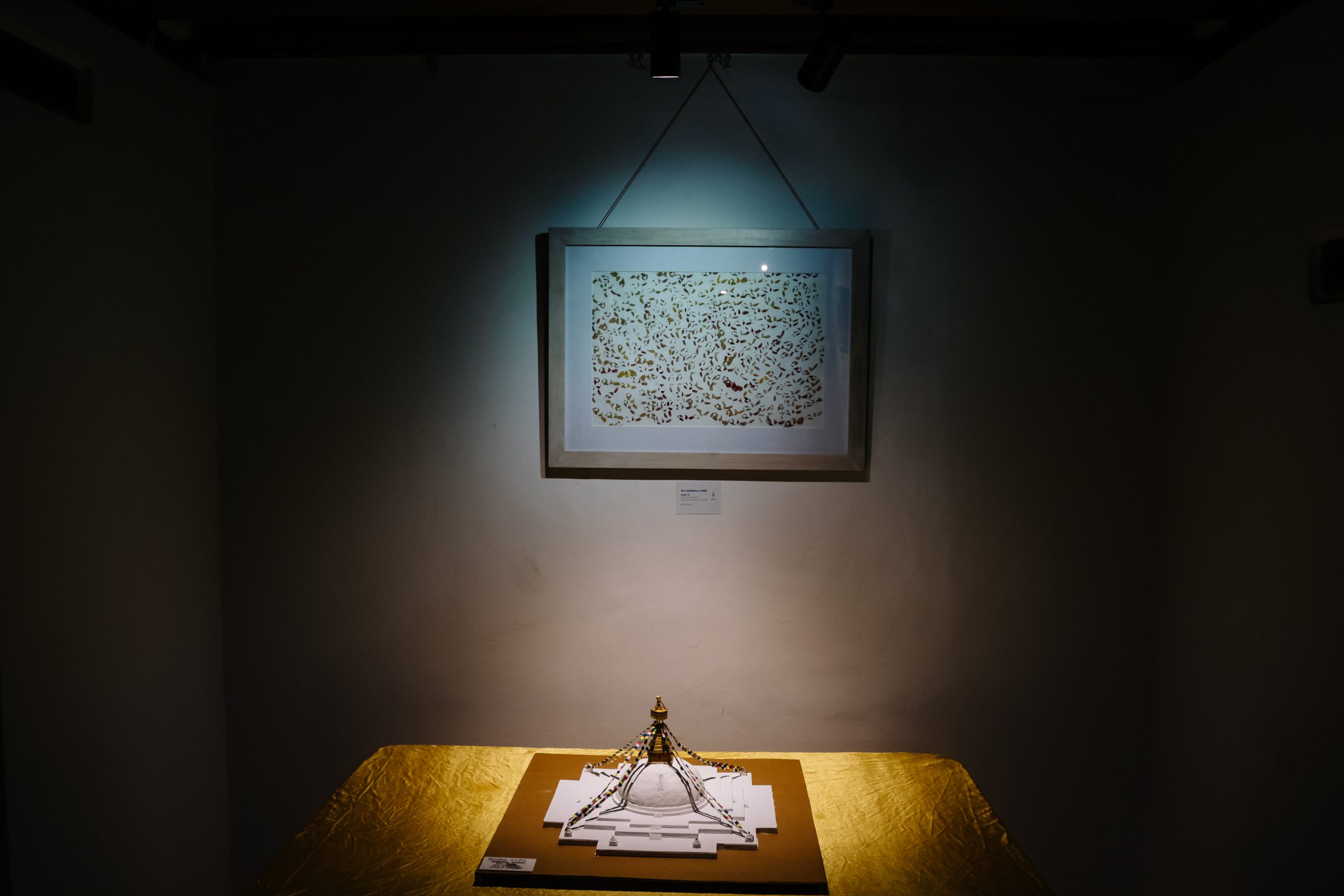


The imposing structures of Patan Durbar Square keep me company as I plod across the heritage site, armed with a bottle of chilled mineral water and an umbrella to fend off the worst of the summer heat. Ahead, a motley crew of students, tourists and art aficionados gather, drawn towards the west wing of the Patan Museum, where an exhibition awaits.
Low wooden arches, narrow passageways and steep staircases all add to the character of the space. Visitors are greeted by numerous artworks in the dimly lit annexe, while a light breeze courses through the ancient, cross-ventilated building, offering welcome relief from the heat outside.
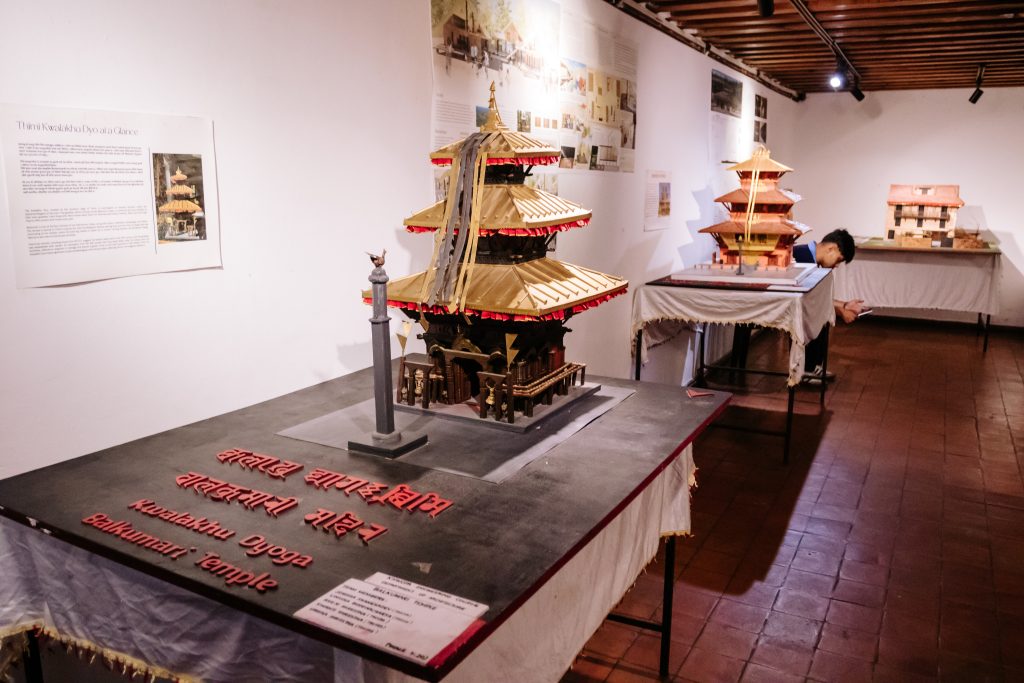
I settle into a leisurely pace, taking in everything on display. The space houses an impressive array of architectural models, meticulously presented alongside blueprints, statements of intent and short notes for visitors to linger and ruminate. Each model draws inspiration from a different architectural style and cultural ethos: local Newari structures, traditional thatched-roof houses, minimalist Japanese café concepts and Buddhist stupas. The students are genuinely eager to engage, enthusiastically unpacking the thinking behind their models and the painstaking hours poured into each piece, while occasionally turning self-critical when comparing their work to that of their peers.
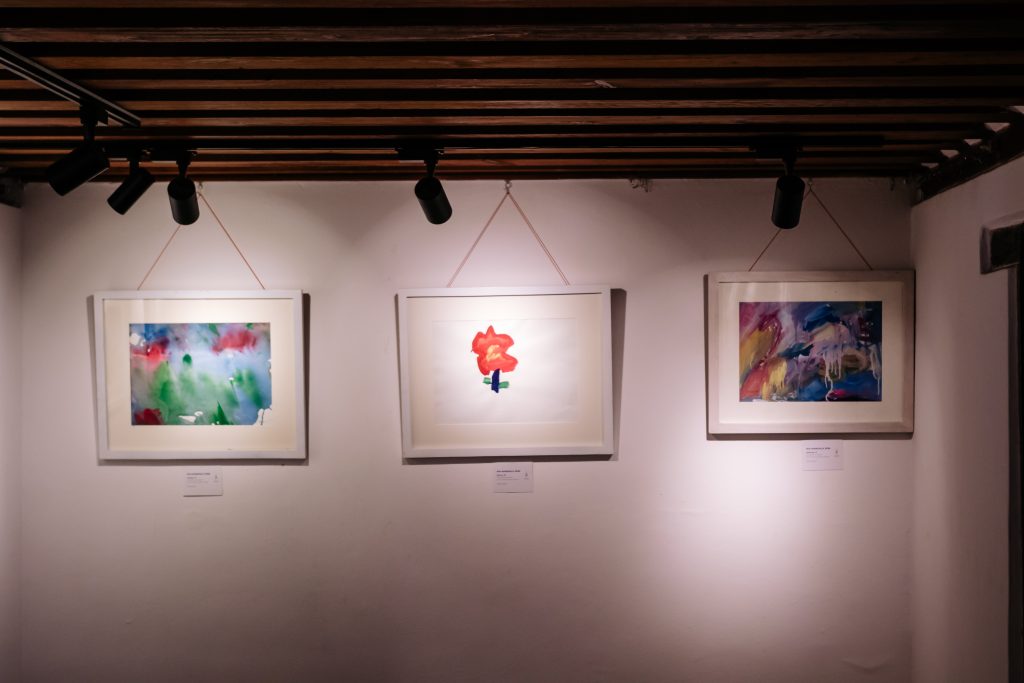
My attention then drifts towards the artworks made by artists with autism. A cursory glance is enough to draw you in with the colours, textures and abstraction. Then slowly, as the eye settles and the noise of first impression softens, the work holds you. Warm and cool hues in a heady mix, movements memorialised in repetitive strokes, streaks of multi-coloured candour create an immersive whole. In a series of architectural sketches by Krit, there is patience in the lines and a quiet imagination that transforms familiar buildings into deeply personal landscapes. The details reveal intention; colour choices begin to feel deliberate, almost conversational. And the mind, now more patient, begins to ask its questions softly: what lies beneath the visual language, why this particular emotional register, what is being held back or revealed?
Among the many offerings, a solitary flower catches my eye: crimson petals around a yellow centre atop a blue stalk (yes, blue, not green) and two tiny green leaves. Simple in form, yet the piece has me enraptured. I find myself reminiscing: the wee years of learning cursive handwriting, summer holidays of pure unadulterated joy, the familiar aroma of freshly baked goods from the local bakery, days of carefree abandon untarnished by the reality of adulthood. This solitary flower feels like a quiet tribute to innocence and the enchantment of childhood.
The exhibition feels less like a curated display and more like a sustained act of observing. Working with Autism Care Nepal Society, Aakar Foundation Nepal uses this exhibition not merely to advocate for autistic individuals but to invite visitors into the creative world of the artists themselves. The idea moves beyond mere accommodation towards something more lasting: an infrastructure of belonging, where autistic individuals can be meaningfully engaged as creators, contributors and collaborators. Perhaps the exhibition itself becomes a vehicle for ideas and non-conformity, part of a larger gesture, an insistence that difference is not peripheral to cultural production but central to its vitality.