Creating employment and entrepreneurial skills for durable change
Near the village of Sauraha in Chitwan District, a small group of women makes soap. They measure oils, mix ingredients, pour batches into moulds, cut bars by hand, and package the finished product. The brand name ‘Haami’ means ‘we’ in Nepali, underscoring collectivity and shared effort. What it does not immediately show is the layered social context in which this work takes place or the limits of what such a project can realistically achieve.
The studio is supported by the Netherlands-based foundation ‘6 Degrees Network for Women’ (6DNFW). Its core aim is to enable women with limited economic opportunities to earn income independently, thereby improving their social status and their ability to support themselves and their families. Soap-making is a structured effort to create stable work where few opportunities previously existed.
A shared interest in women’s economic empowerment
6DNFW was established in 2017 by Debbie Middendorp from the Netherlands and Gita Pelinck, born in Nepal and raised in the Netherlands. The two met several years earlier while working in Singapore and discovered a shared interest in women’s economic empowerment. Their organisation operates on the belief that employment, rather than short-term aid or training alone, provides a more durable basis for change.
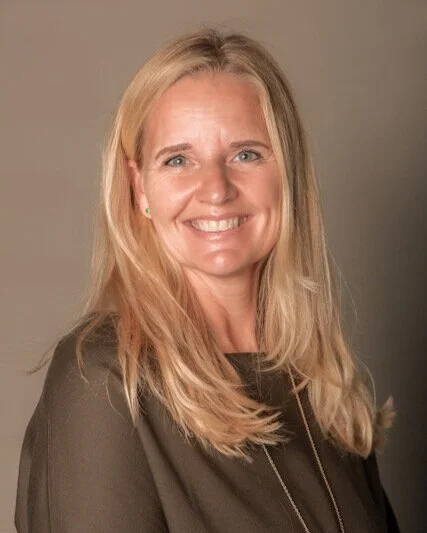
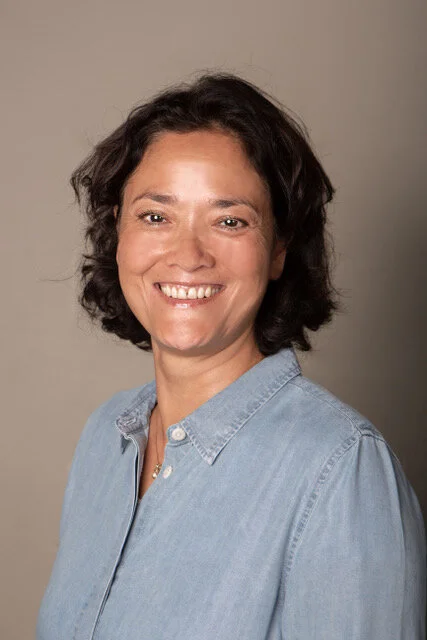
The 6DNFW’s mission is to Inspire – Empower – Connect, and it aims to empower Musahar women by connecting them to stable financial opportunities.
“We want to give socially disadvantaged women in Nepal the opportunity to transform their lives sustainably through employment, skills, and entrepreneurship,” said Debbie Middendorp. Gita Pelinck added, “Instead of just providing training, we decided to set up concrete, small-scale, accessible businesses where women can get started themselves. This led to two promising projects: an eco-farm and a soap studio.”
During the COVID-19 pandemic, the foundation reassessed its approach and began establishing small enterprises that enabled women to earn a regular income while learning on the job.
6DNFW describes its role as catalytic. It raises funds, provides technical and managerial expertise, and supports early-stage operations. In theory, this support is temporary. In practice, withdrawing without destabilising the business is a persistent challenge for the project.
Extreme caste-based discrimination
The women employed at Haami are primarily from the Musahar community, one of the most marginalised Dalit groups, concentrated largely in the eastern and central Tarai. The term ‘Musahar’ is rooted in stigma, derived from a word meaning ‘rat-eater’.
Historically landless and excluded from formal power structures, the Musahar face extreme caste-based discrimination that shapes nearly every aspect of life, from access to education and public services to employment and housing. Many families survive on irregular daily-wage labour in agriculture, construction, or domestic work, often under exploitative conditions, including bonded labour. Literacy rates remain significantly below the national average, life expectancy is lower, and political representation is minimal.
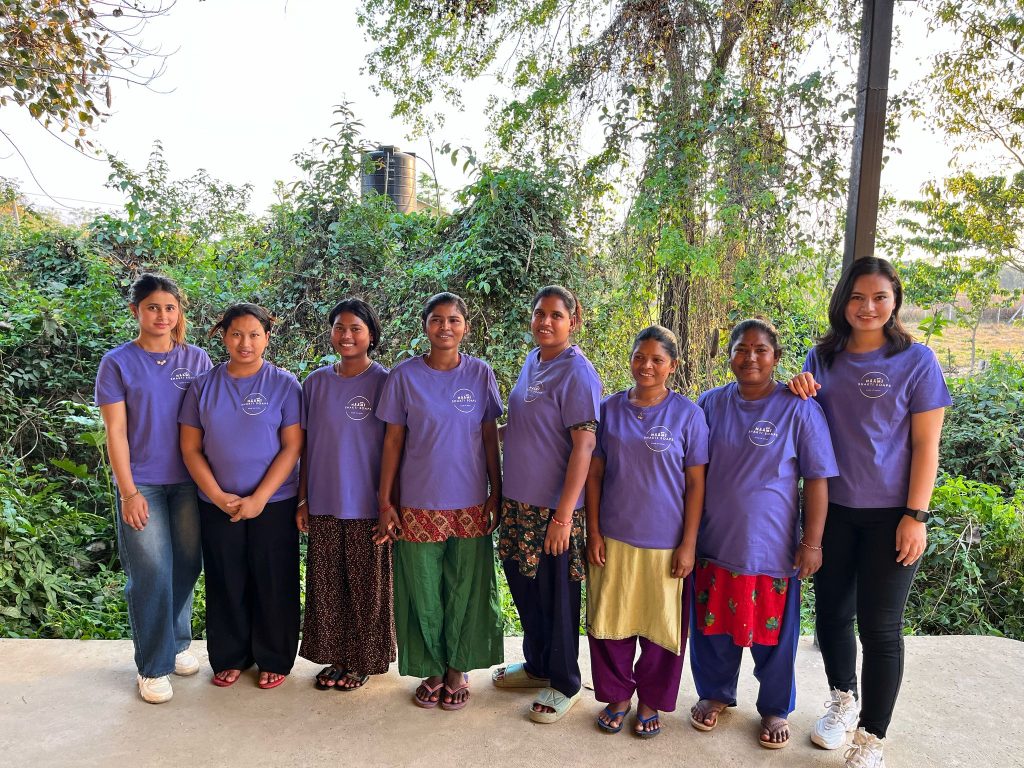
6DNFW’s decision to work with Dalit women is both socially and practically motivated. Even a modest but predictable income can have a measurable impact on household stability. At the same time, choosing the most excluded group increases the complexity of running a business. Many of the women involved have limited formal schooling and little or no experience of structured workplaces, financial administration, or customer interaction.
Building trust has therefore been central to the project. This has required consistency, patience, and the visible reliability of on-time wage payments. The power imbalance between an internationally connected organisation and women who have historically been excluded from institutions persists, even when intentions are supportive.
Soap allows for differentiation
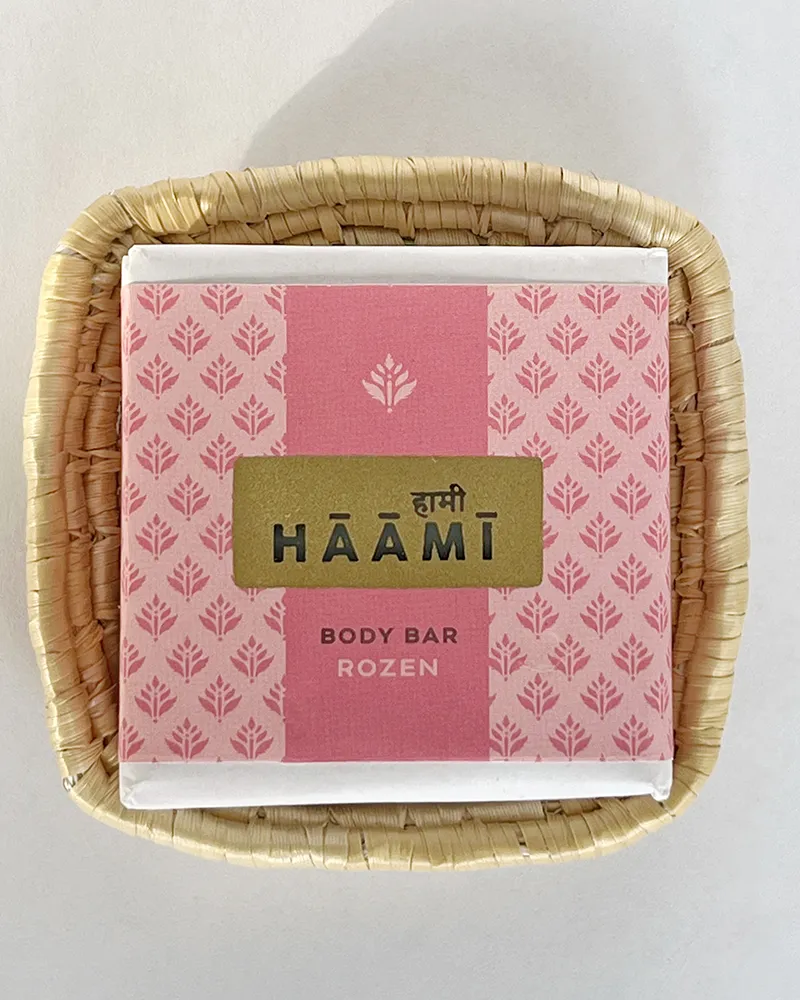
Soap is often framed in development discourse as an accessible product, yet the market is competitive. Nepal has low-cost industrial soaps, established domestic brands, and imported products. Artisanal soap occupies a narrow segment serving hotels, gift buyers, NGOs, and export consumers.
6DNFW selected soap because it allows differentiation. Haami soaps are cold-processed, made in small batches, and use natural ingredients such as lemongrass, jasmine, honey, and coffee. An experienced biochemist was brought in to train the women, and production standards were designed to meet export requirements, including EU certification.
This positioning enables higher prices than those of mass-market soap, but it also creates dependence on niche demand. Hospitality clients are sensitive to economic downturns. Export sales depend on logistics, branding, and consumer preferences that are far removed from rural Nepal. Profit margins are limited, and scaling production without sacrificing quality remains difficult.
The women working at the soap studio have learnt more than soap-making. Training has covered basic bookkeeping, hygiene standards, inventory management, teamwork, and quality control. Sales, branding, and international distribution are largely handled by 6DNFW and its commercial arm, 6° Ventures, which sells Haami products in the Netherlands.
This raises questions about entrepreneurship. Although the studio is formally owned by a community member and leadership roles exist, strategic decisions on pricing, export markets, and growth are still driven from outside. For now, most participants are skilled workers rather than independent business owners.
Language and cultural differences add to the difficulty. Concepts such as branding or long-term market strategy do not translate easily into the daily realities of women whose primary concerns have long been food security and social survival. As a result, training has been gradual and practical rather than theoretical.
Buyer feedback has been positive
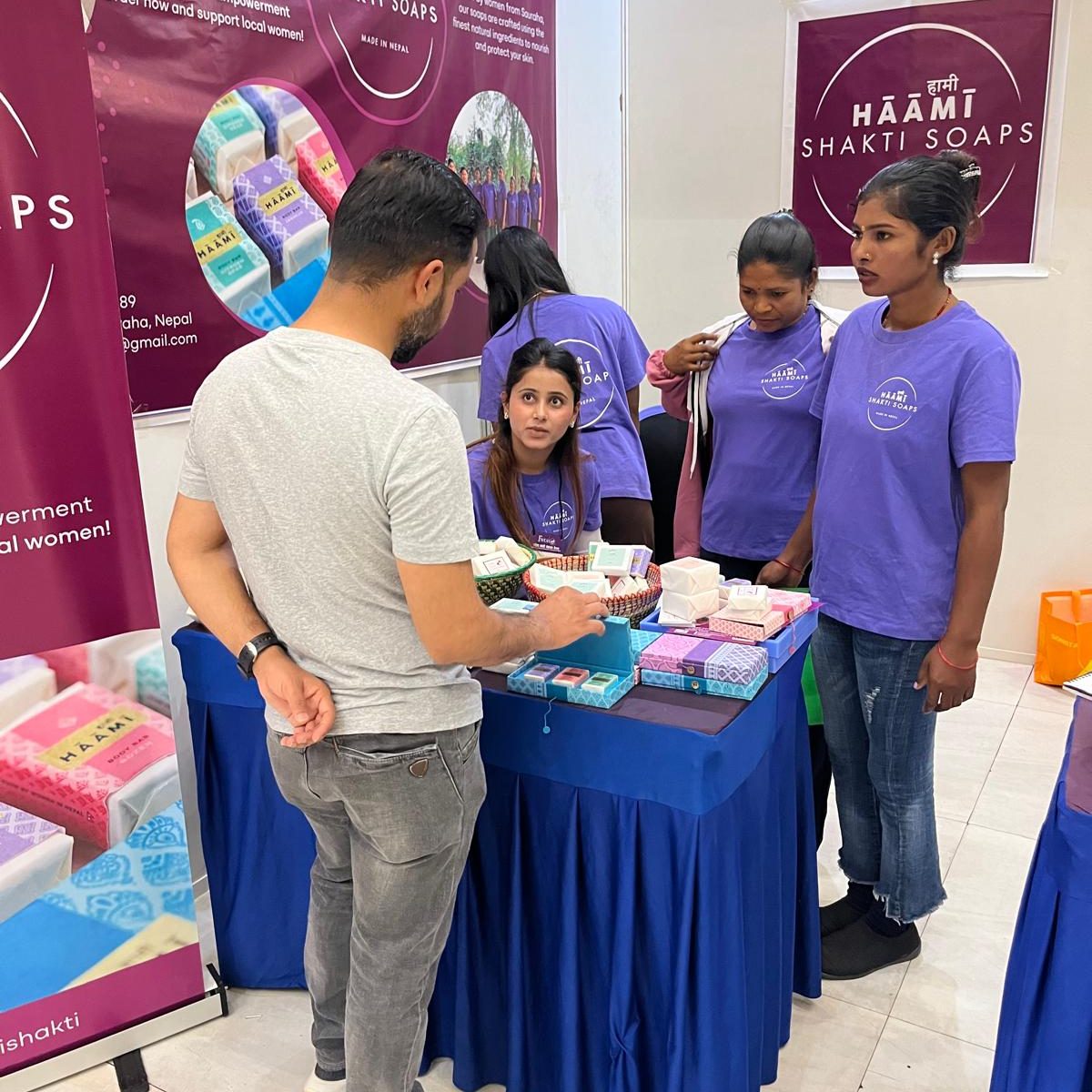
Through the 6DNFW, the soap studio has a platform to market its products outside Nepal under the Haami brand via the Haami website: https://haami.nl/. The EU-certified soaps are also available at various markets and events in the Netherlands. The soap business currently employs seven women, keeping production small but consistent. Soaps are sold locally to NGOs and institutions and internationally through Dutch markets, pop-up stores, and selected retail outlets. Packaging is done in-house, while labels and packaging materials are sourced from local partners.
Product quality is generally high, and buyer feedback has been positive. However, sales volumes remain modest, and the business is not yet fully self-sustaining. Continued access to international markets is essential to financial viability.
Promotion relies heavily on ethical consumption narratives. This strategy is effective, but it also risks framing women primarily through their vulnerability rather than their labour. One ongoing issue is how to sell the product on its own merits without reducing the makers to a marketing story.
6DNFW presents itself as a startup partner rather than a permanent manager. To move towards independence, the organisation focuses on mentoring local leadership, documenting processes, and gradually shifting operational responsibility. The aim is stability rather than rapid growth.
Whether this transition succeeds depends on factors beyond the studio. Health issues, family pressures, social resistance, and market volatility pose risks. Progress is fragile, and setbacks are likely.
A needed change
For the women involved, the impact of the soap studio is real but limited. Regular income contributes to food security, children’s education, and greater respect within their communities.
At the same time, caste discrimination remains deeply embedded. A small enterprise cannot dismantle structural inequality, but it can create space for different futures to become possible, albeit gradually.
Haami soap is not a revolutionary narrative. It is a small business operating at the intersection of global ethical markets and local caste realities. Its significance lies in the everyday fact that a group of Dalit women now have regular, paid, and recognised work. That change may be modest, but in a context of long-standing exclusion, it is meaningful.
Sudipa Mahato is a junior editor at Nepal Connect.