A one-woman show
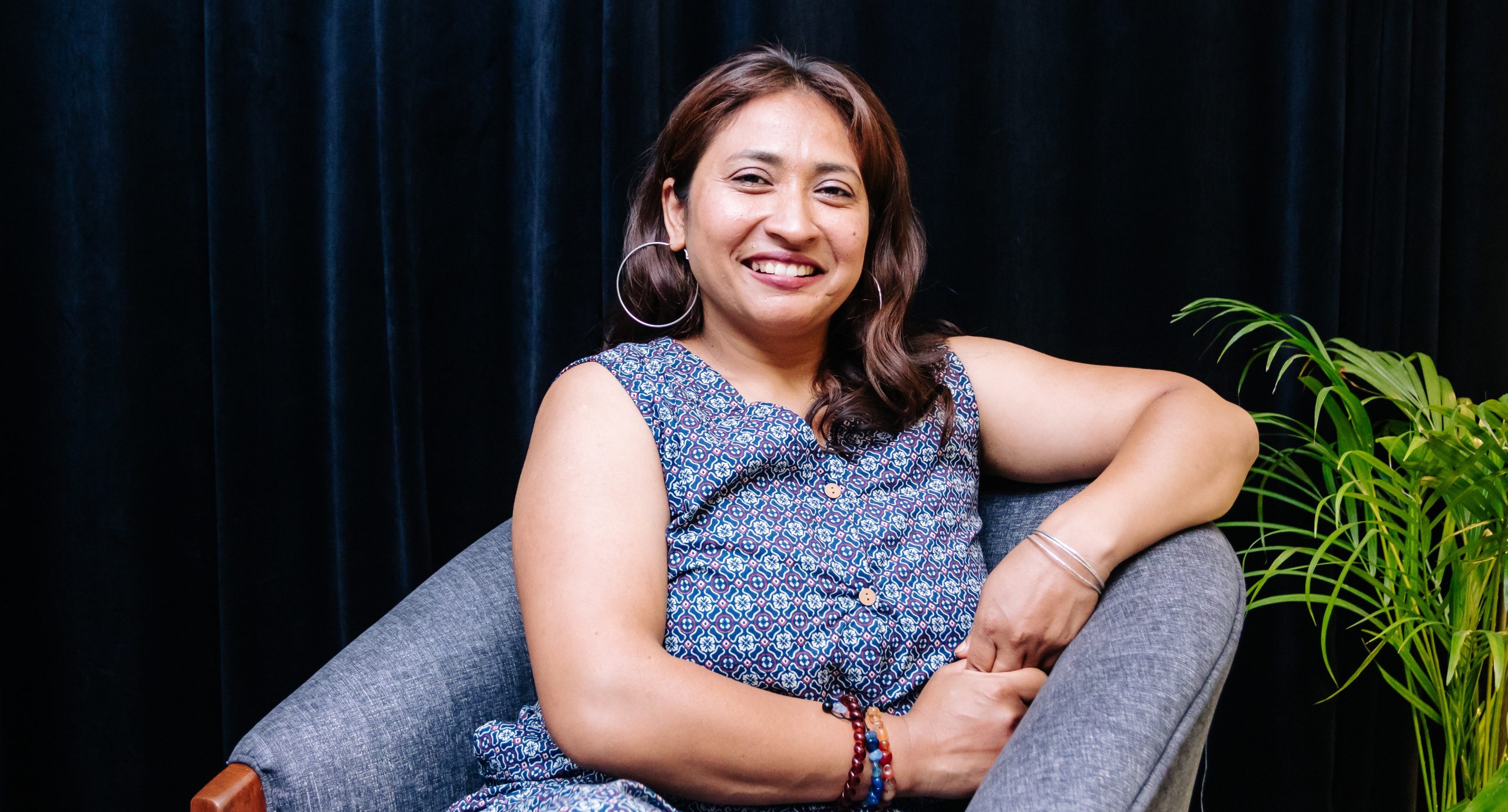
The only way to overcome a serious physical handicap is to treat your situation as normal and to persuade others that you can do what you want and even excel in your chosen endeavours. Says Nirmala, the expert: “You can freak out, feeling totally purposeless, or you can embrace a big purpose and make it come true”.
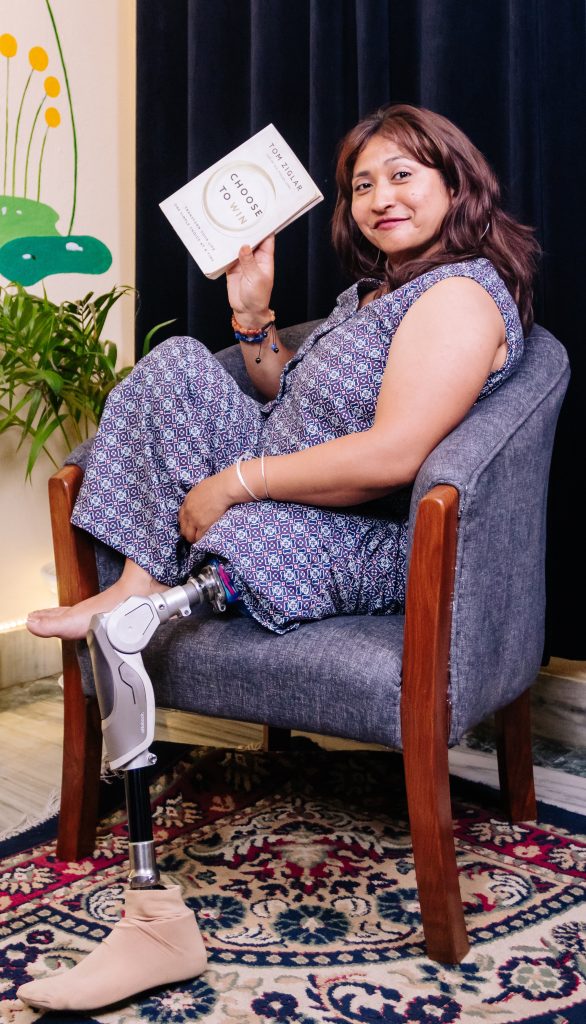
Climbing the steep stairs to our office in Sanepa must be challenging for someone who uses an artificial leg. But Nirmala is all smiles when she reaches the third floor. “This is nothing compared to what I must do soon,” she says, referring to an upcoming trek on foot to the base camp of the highest mountain in the world.
Learning to Live with Loss
Settling in, she enthusiastically describes how she is adapting to her new state-of-the-art prosthesis, which allows her to walk as freely as anyone else. We are about to see how she turns what are generally perceived as disabilities into demonstrations of the skills she excels at.
Serious misfortune befell her twice while she was still a toddler, as she lost both her
loved ones and the lower part of her left leg in car accidents. She underwent surgery at the HRDC hospital in Banepa, Kavre.
By the age of eight, she was an orphan and an amputee, though she didn’t fully grasp the severity of the situation. “I had no idea how bad things were. I was going with the flow, as kids do. In fact, I was a happy, good-humoured child”.
After her treatment at the HRDC, she ended up in a children’s home, the Hope Centre, in Kathmandu, where she spent over ten years of her childhood with other kids who became her adopted brothers and sisters.
There was no professional psychological assistance, but the centre provided general guidance, shelter, food, education, and a social environment with children in similar circumstances, whom she befriended. “It was a good deal”.
However, young people in such a setting can also be volatile, with emotions that flare. At the end of the day, she was alone, carrying the burden of living without parental support, with a serious disability, and surrounded by companions facing their own worries. She was traumatised but not ready to accept her condition as a trap from which she could not escape. “You can freak out, feeling totally purposeless, or you can embrace a big purpose and make that come true”.
What kept her going in her teens was a deep desire “to make a change” without knowing what that change would involve. An unclassified desire, yet a tangible ambition, nonetheless.
Far from Home
After finishing high school at eighteen, she enrolled in a three-year diploma course offered by New Futures Nepal to become a health assistant (HA), or, as the villagers in rural areas say, ‘a small doctor’.
With her HA diploma in hand, she joined Impact Nepal, competing against 16 men for the position. She was eventually shortlisted as one of the top three candidates and sent to the Terai, far from her comfort zone.
Establishing herself in this new environment proved to be difficult. “Normally, I adapt easily”, she says, “but getting used to living in the south was difficult. The people spoke another language and ridiculed me when I tried to speak Hindi. They ate other food, very spicy, and had no clean water to drink”.
She solved the clean water supply by arranging for large 20-litre bottles to be shipped from Kathmandu, and made a real effort to blend in, but could not help feeling unaccepted, remaining a stranger in the eyes of those around her. “I wanted to be accepted so badly and not seen as being an amputee. That bothered me immensely”.
Her initial approach was to try hiding the problem, as she did not want to be seen as a disabled woman. A mission impossible. How do you hide a metal leg? But she tried to convince herself that it could work. “I felt strong and lonely at the same time”.
Finding Strength on the Court
While working in Terai as a Health Assistant, she wanted to enrol in a bachelor’s in general education in health care and completed her firstyear. But during practical exams, her teacher told her she wouldn’t be able to play sports or take physical education and refused to give her marks. The basis for the refusal was that, being handicapped, she could not participate in the obligatory sports activities. She felt blocked and confused. “I felt helpless and cried a lot”. Later, she reapplied for her bachelor’s in English and Rural Development.
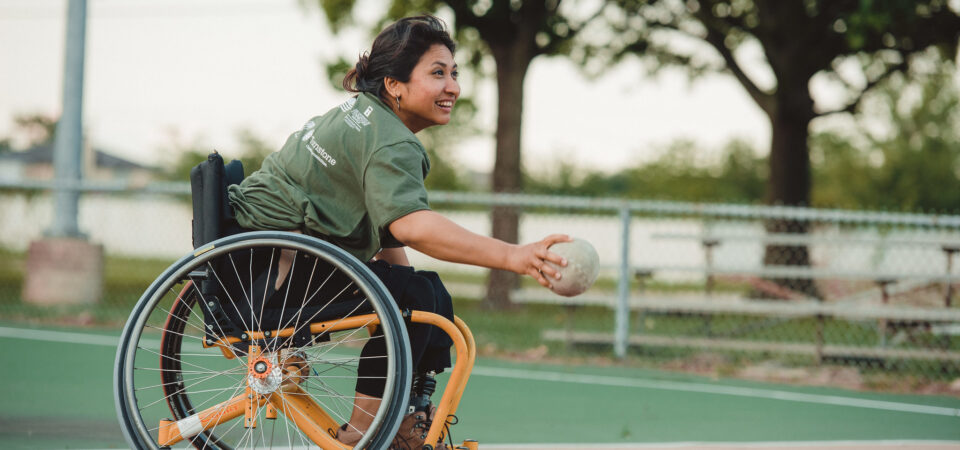
Then she joined a basketball team for players with physical challenges and realised that she was, indeed, a natural athlete despite her disability. “All of a sudden, I met so many disabled sportspeople who found comfort in playing with a ball. I loved the speed and sense of adventure that came into my life”.
Besides being an excellent basketball player, she proved to be a formidable powerlifter. Her star was rising. She started travelling around Nepal and went to compete at the 2018 Asian Para Games in Indonesia. “That was my first international flight”.
This marked the beginning of a new chapter in her life: that of a successful sports personality and a woman driven by purpose. “What I like about it”, she says, “is that focusing completely on the physical side creates a blissful emptiness in my head. I can stop thinking about all these other things that used to bother me. It is the biggest and the best meditation you can imagine, pushing me to realise that this is my identity”.
This feeling of having found a purpose was reinforced during a 35-day trip to the US, where Nirmala was immersed in the States’ local, semi-professional, and very well-organised disabled sports community.
She was impressed by the maturity and inclusivity of organisations such as the U.S. Olympic & Paralympic Committee (USOPC), which are firmly embedded in the sports world and in society.
The Central Theme of Her Life
“My perspective shifted”, says Nirmala. “It’s all so well-rooted in the environment. The thinking behind it is so rich. What have they accomplished that we haven’t even tried yet? It triggered ideas about doing ‘something’ in Nepal towards inclusive parasports, towards taking others in my country along on this journey”.
Inclusion, read: being accepted, has become the central theme of her life, helping her find genuine meaning. The great ambition she had been searching for finally came knocking at her door.
But having found her mission does not provide immediate handles to realise it. Nepal simply lacks the infrastructure that’s common to the US. Disabled sports and inclusivity are both new ideas in Nepal.
Rather than exploring the option of creating a parasport umbrella for Nepal, which could have been a viable path, she has chosen to keep things close to her and set up the Nirmala Foundation, which will focus on mobility, education and health.
Being the spontaneous, bubbly personality that she is, Nirmala has been building her ‘brand’ around activities and qualities she views as inclusive symbols: an amputee runway, a disabled beauty queen contest, and her attempt at scaling Mount Everest, albeit only to its base. Out-of-the-box events that attract attention and may spark off more traditional formats. Recently, her foundation held an amputee football tournament in which both men and women played together due to a lack of players. The tournament is part of an initiative to form Nepal’s first-ever women’s amputee football team. They practice every Saturday in preparation for the upcoming FIFA World Amputee Cup.
“We started practising during Christmas. No one was ready to show their legs at first. But the more they played, the more comfortable they became with themselves. Everyone started enjoying it, making TikToks, and feeling confident showing their bodies”, says Nirmala.
“This is the main objective of my foundation”.
Just as she herself has come to terms with her body and stopped hiding her prosthesis, she wants other amputees to feel comfortable in their own skin and freely show their talents to the world.
“I would hardly ever part with it”, she confesses. “I would even keep it on in the bedroom. But now, I can let go and leave it off when I don’tneed it or when it makes no sense to wear it”.
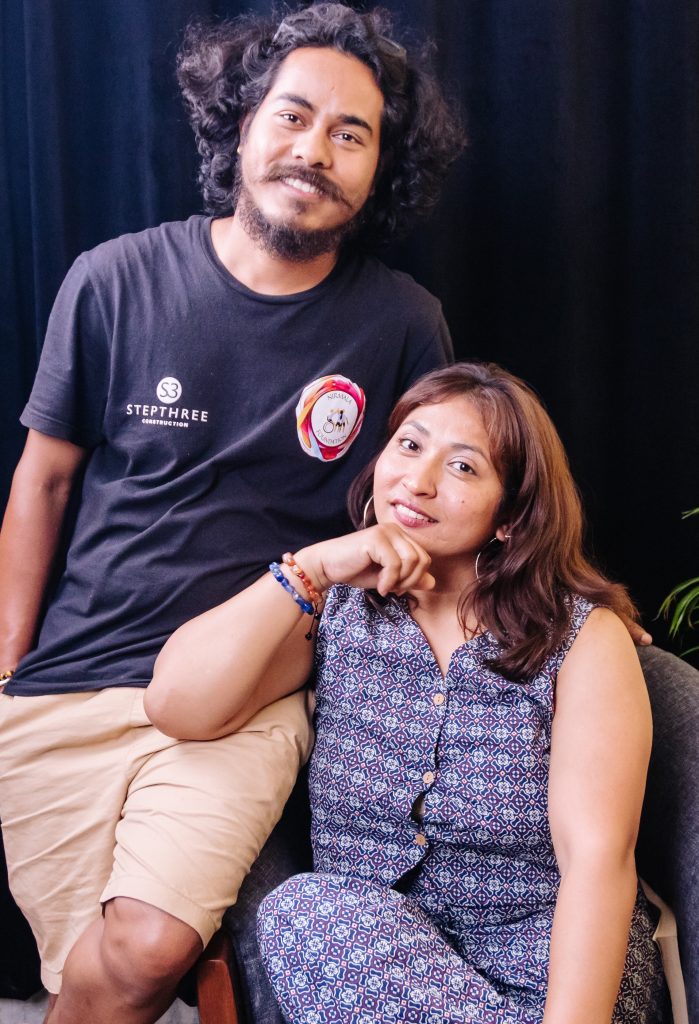
“One thing that motivates me to keep pushing myself is when a girl told me that my 35-day solo trip had encouraged her to finally learn how to ride a scooter”.
Asked about her advice to those who must deal with a handicap or disability like hers, she replies without any hesitation: “Do not dwell on what you have lost but focus on what you have got”.
The Hope Centre is supported by New Futures Nepal and built to earthquake-resistant specifications, which proved invaluable during the 2015 earthquake. It also features renewable water and irrigation systems, solar panels, and sufficient land for growing crops.
Website: https://newfuturesnepal.org/
HRDC Nepal (Hospital and Rehabilitation Centre for Disabled Children) is a specialised hospital in Nepal that focuses on treating and rehabilitating children with physical disabilities. It was established in 1985 and is currently located in Banepa, Kavre.
Website: https://www.hrdcnepal.org/
The Nirmala Foundation strives to create a world where every individual, regardless of ability, can live with dignity, purpose, and equality. It’s dedicated to dismantling barriers, breaking stereotypes, and empowering individuals with disabilities to lead fulfilling lives.
Website: https://nirmalafoundation.org.np/