
Support independent and reliable information and inspiration
about the development of Nepal at €10, €20, €30 per month

Advertisement

WORK IN PROGRESS

  • Login
  • Register
SUBSCRIBE
NepalConnect
  • DIGEST
    • CURRENT AFFAIRS
    • DEVELOPMENT
    • DISCOVERY & TRAVEL
    • IN-DEPTH
  • FEATURES
  • LIBRARY
  • TRAVEL DESK
  • DIRECTORY
No Result
View All Result
  • DEVELOPMENT
  • CURRENT AFFAIRS
  • TRAVEL & DISCOVER
  • IN-DEPTH
NepalConnect
  • DIGEST
    • CURRENT AFFAIRS
    • DEVELOPMENT
    • DISCOVERY & TRAVEL
    • IN-DEPTH
  • FEATURES
  • LIBRARY
  • TRAVEL DESK
  • DIRECTORY
No Result
View All Result
NepalConnect
No Result
View All Result
Home UPDATE
42 Glacial Lakes in Nepal at High Risk of Bursting

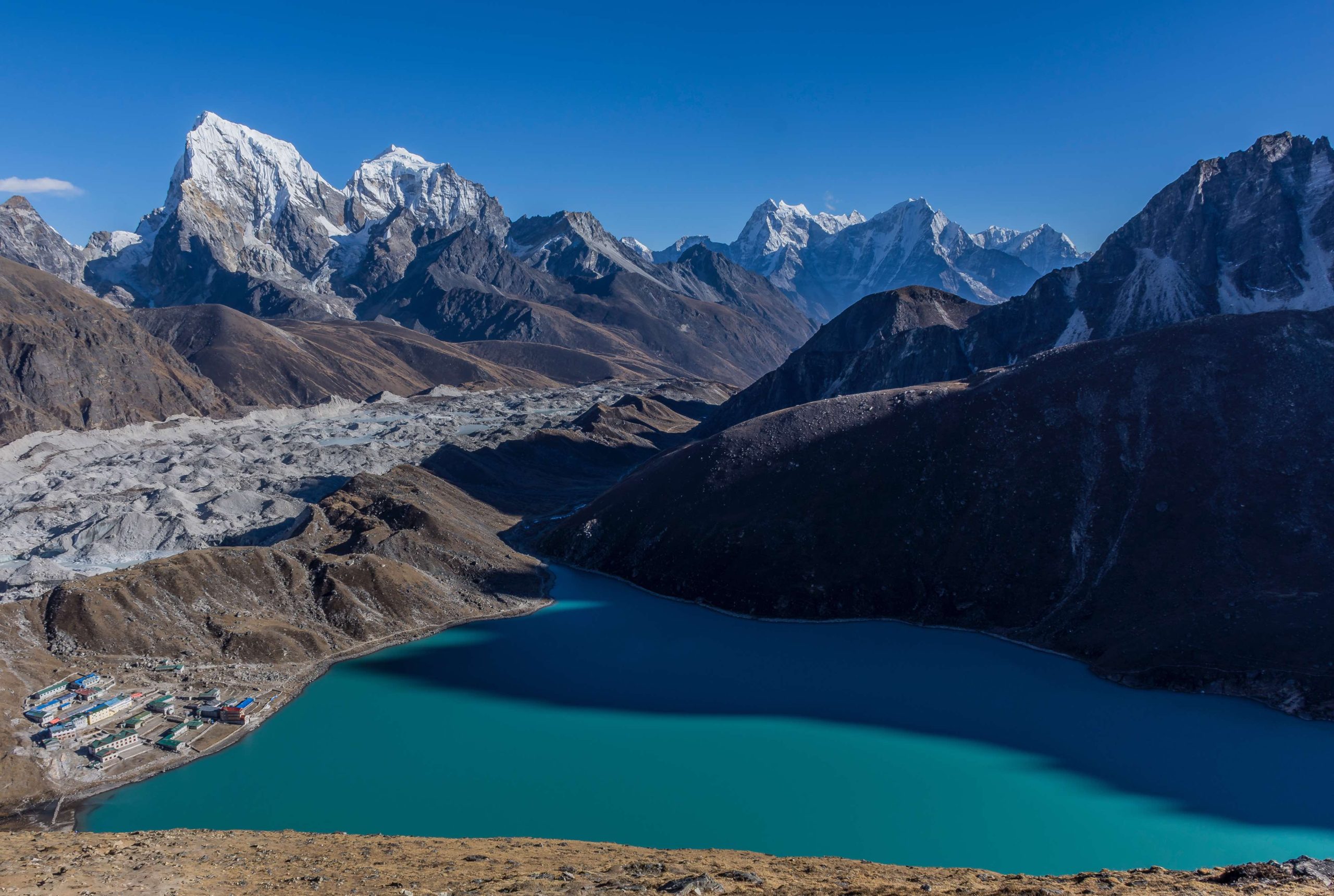
Gokyo Lake in 2019. Photo: Nir Gurung/Wikimedia Commons

42 Glacial Lakes in Nepal at High Risk of Bursting

Pratikshya Bhattaby Pratikshya Bhatta
November 23, 2025
in UPDATE
0

The International Centre for Integrated Mountain Development (ICIMOD) has warned that over 40 glacial lakes in Nepal are at high risk of bursting. The issue was declared by ICIMOD expert Sharad Kumar Joshi during a discussion held in Kandbari, Sankhuwasabha.  

The authorities have warned that, if any of these lakes burst, a sudden flood could sweep through villages downstream, putting thousands of lives at risk.  All these lakes are in Koshi Province, making it the most vulnerable region. 

Glacial lakes form when ice melts and water collect at the base of glaciers. Due to rising temperatures, glaciers are melting faster, causing lakes to expand and weaken natural barriers. Nepal currently has 2,069 glacial lakes, but experts say 42 of them are now in critical condition. 

Among the most concerning locations, Tallopokhari (Thulo Pokhari) in the lower Barun region of Sankhuwasabha is one of them. The lake is almost three kilometres in length and approximately 206 metres deep. It is located on top of settlements in the Arun valley, which exposes communities to the risk of flooding in case of the moraine dam failure of the lake 

Within Sankhuwasabha, four glacial lakes-including those in the Bhotkhola and Makalu, are also categorised as high-risk. Additionally, a large pond situated in lower Barun is included.  The other 13 glacial lakes originating from the Tibet region could pose a threat to northern areas. The government and the Department of Hydrology and Meteorology, together with the UNDP Nepal, are in the process of preparing risk-reduction strategies. 

Experts have suggested increased satellite monitoring, frequent field checks, and early warning systems. They have also advocated controlled drainage and spillway constructions in the most hazardous lakes 

Women, children and older people are usually the hardest hit when floods strike. The specialists remark that the reason is a lack of early warning access and fewer resources to recover. To address this, ICIMOD has started awareness and preparedness programmes aimed at empowering vulnerable groups and helping communities respond faster during disasters.  

For now, villages beneath Tallopokhari and other flagged lakes remain under watch.  The challenge for Nepal is to turn warnings into fast, practical protection for the people. 

Tags: Climate Change in NepalHimalayaHimalayan Climate

Related Posts

UN Special Rapporteur on Minority Issues Visits Nepal 

UN Special Rapporteur on Minority Issues Visits Nepal 

December 7, 2025
62
NPR 500 Thousand Cash Transaction Limit from January 15  

NPR 500 Thousand Cash Transaction Limit from January 15  

December 7, 2025
81
Hopeful foreign investments in the first month of the new fiscal year

Washington Discussions Explore New U.S. Investment Prospects in Nepal

December 5, 2025
53
Pratikshya Bhatta

Pratikshya Bhatta

Leave a Reply Cancel reply

Your email address will not be published. Required fields are marked *

Nepal Connect
SECTIONS
  • Digest
  • Features
  • Library
  • Travel Desk
  • Directory
NEPAL CONNECT
  • Mission
  • Colophon
  • Profile
  • Foundation
  • Executive organization
  • Ambassadors
  • Workshops
PARTICIPATION
  • Volunteer/ Intern
  • Research
  • Guest writer
  • Work With Us
  • Test Readers
  • Study Group
SUPPORT
  • Nepal Patrons
  • Project Support
  • Support Journalism
ACCOUNT
  • Sign Up
  • Subscribe
  • Manage My Account
  • Directory
  • Gift Subscriptions
  • Group Subscriptions
  • Gift Articles
  • Email Newsletters
  • Email Alerts
  • Advertiser
  • Customer Service
  • Directory Deal
  • Contact Us
  • Terms & Policy
  • Site Map
FOLLOW US

Welcome Back!

Sign In with Facebook
Sign In with Google
OR

Login to your account below

Forgotten Password? Sign Up

Create New Account!

Sign Up with Facebook
Sign Up with Google
OR

Fill the forms below to register

All fields are required. Log In

Retrieve your password

Please enter your username or email address to reset your password.

Log In
  • Login
  • Sign Up
  • DIGEST
    • DEVELOPMENT
    • CURRENT AFFAIRS
    • DISCOVERY TRAVEL
    • IN-DEPTH
  • FEATURES
  • LIBRARY
  • TRAVEL DESK
  • DIRECTORY
  • MISSION
  • COLOPHON
  • PROFILE
    • Participation
    • Support
    • Accounts
    • Advertisers
    • Contacts us
  • FOUNDATION
  • EXECUTIVE ORGANIZATION
  • AMBASSADORS
  • WORKSHOPS
  • VOLUNTEER/ INTERN
  • RESEARCH
  • GUEST WRITER
  • WORK WITH US
  • TEST READERS

Copyright © 2023 NepalConnect. All rights reserved.