


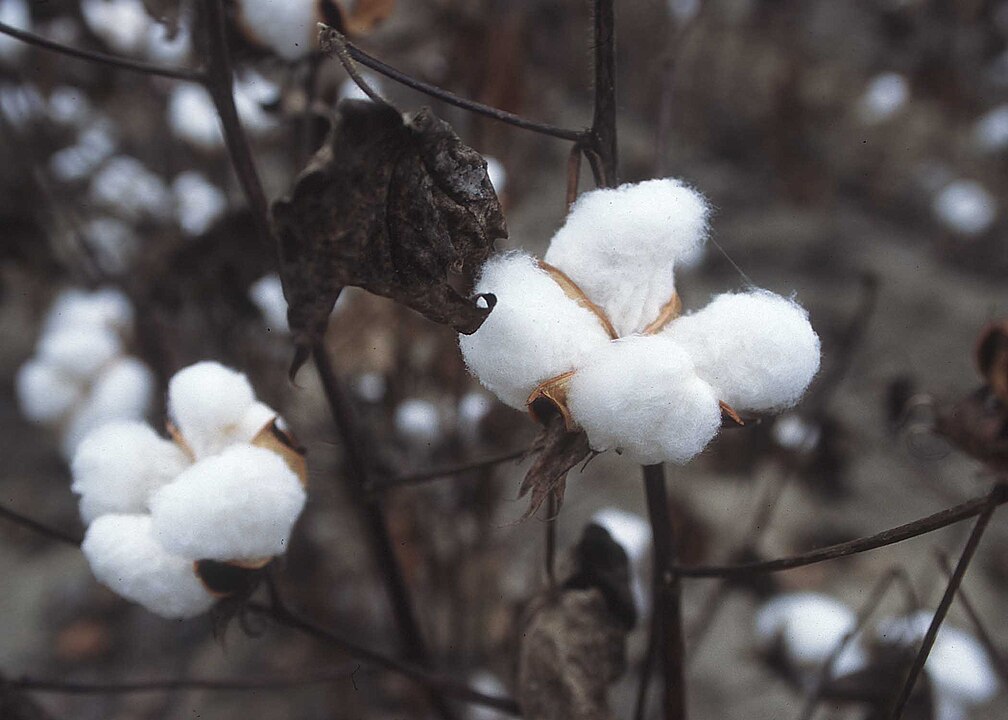


Cotton, often referred to as “white gold”, has long been regarded as a high-value crop with significant potential for agriculture. Yet production has declined even as demand rises, leaving the sector struggling to meet modern textile needs. Its potential remains largely unfulfilled.
Cotton has been cultivated for millennia, with archaeological traces found in ancient sites in both the Indus Valley and Mesoamerica dating back to around 4000 BC.
Over time, it evolved into one of the world’s most important textile fibres and remains central to the global apparel industry. Before synthetic fibres took over in the mid-20th century, cotton dominated global textile production, boosted by innovations such as the cotton gin and large-scale industrial spinning systems.
Today, cotton continues to anchor the textile economies of countries like India, one of the world’s largest producers and consumers of the fibre. Nepal, however, relies heavily on imports due to its own limited cultivation.
Globally, nearly a billion people depend on cotton for their livelihoods — from more than 100 million farmers who cultivate it to the millions who process, weave, and manufacture cotton garments.
Although Nepal remains an agricultural country, with over 60% of the population working in farming, it still imports most of what it needs. Much of Nepal’s agricultural potential remainsuntapped. Most farmers operate on small plots of land with limited access to modern tools, quality seeds, or reliable irrigation, leading to low productivity across many crops.
Cotton has been grown in Nepal since ancient times, especially perennial varieties. Modern, structured cotton farming began only in 1971 with the establishment of the Hetauda Textile Factory, set up with technical and financial assistance from China.
Between 1960 and 1990, the nation’s textile industry was expected to experience an industrial boom, with several cotton manufacturing plants operating. The sector once anticipated to boost the economy and generate thousands of jobs never realised that vision. Political instability from 1960 to 2010, compounded by the Maoist Civil War, severely weakened the industrial base.
The collapse of cotton farming is closely tied to the Maoist insurgency, which forced many farmers to abandon their fields. The Cotton Development Committee—responsible for supporting cotton growers—lost an estimated USD 411,407 (Rs 59.3 million) during the conflict due to damage to its buildings, equipment, and infrastructure. Land seizures during the insurgency further undermined the sector.
While Southeast Asian neighbours like Malaysia, Singapore, and Thailand recorded steady double-digit growth during those decades, Nepal’s GDP averaged barely 1.5% per year—an economic backdrop that left fragile sectors like cotton particularly vulnerable.
Cotton cultivation is now confined to the mid-western Banke, Bardiya, and Dang districts, covering 122.5 hectares. These areas produce 137 metric tonnes of seed cotton, with a yield of 1,118 kg/ha. The H-1098 variety has largely superseded the formerly popular Tamcot S.P. 37.
Nevertheless, approximately 400 tonnes of lint cotton remain unsold due to textile industries favouring cheaper imported raw materials.
Farmers continue to face persistent problems that keep yields low. Quality seeds are hard to obtain, fertilisers arrive late, and labour shortages peak during critical farming periods. Nepal officially registers only one cotton variety (Tamcot S.P. 37), leaving farmers reliant on the Indian variety H-1098.
Pests and diseases further threaten yields and fibre quality. Insects, including Helicoverpa, Earias, and pink bollworm, damage bolls and flowers. Fungal diseases like Fusarium and Verticillium wilt cause premature yellowing and death, while root-knot nematodes stunt growth by damaging roots.
Cotton’s high water requirement adds another challenge. With unreliable irrigation, many farmers shift to more manageable crops. Producing 1 kg of cotton can require more than 20,000 litres of water, roughly the amount needed for a single T-shirt and a pair of jeans, a daunting figure at a time when sustainability concerns are rising.
Market uncertainties deepen the struggle. Prices fluctuate unpredictably, middlemen reduce farmers’ earnings, and there are no guaranteed support prices. Expensive pesticides further cut into profits.
India and China, able to produce cotton at a lower cost and higher quality, dominate the market. As a result, Nepali textile factories prefer imported cotton and yarn. Customs data show rising imports each year, pushing domestic cotton out of the supply chain.
Farmers in Banke and Bardiya are now even more worried after the government dissolved the Cotton Development Board in fiscal year 2080/81. Many fear the absence of a coordinating institution will further weaken cotton cultivation in their region.
Land once held by the Cotton Development Committee in Bardiya has also been encroached upon. Governance issues and ongoing uncertainty make it difficult to scale up cultivation or invest in processing infrastructure.
The decline of cotton production has become an “out of sight, out of mind” issue for many urban consumers. Yet behind the statistics are disrupted livelihoods, fading skills, and communities that once depended on cotton as a viable agricultural pursuit.
Revitalising the sector would require more than new seeds or subsidies. It would demand coherent policies, reliable irrigation, market protection, and a renewed partnership between farmers, government, and industry.
Sudipa Mahato is a junior editor with Nepal Connect.