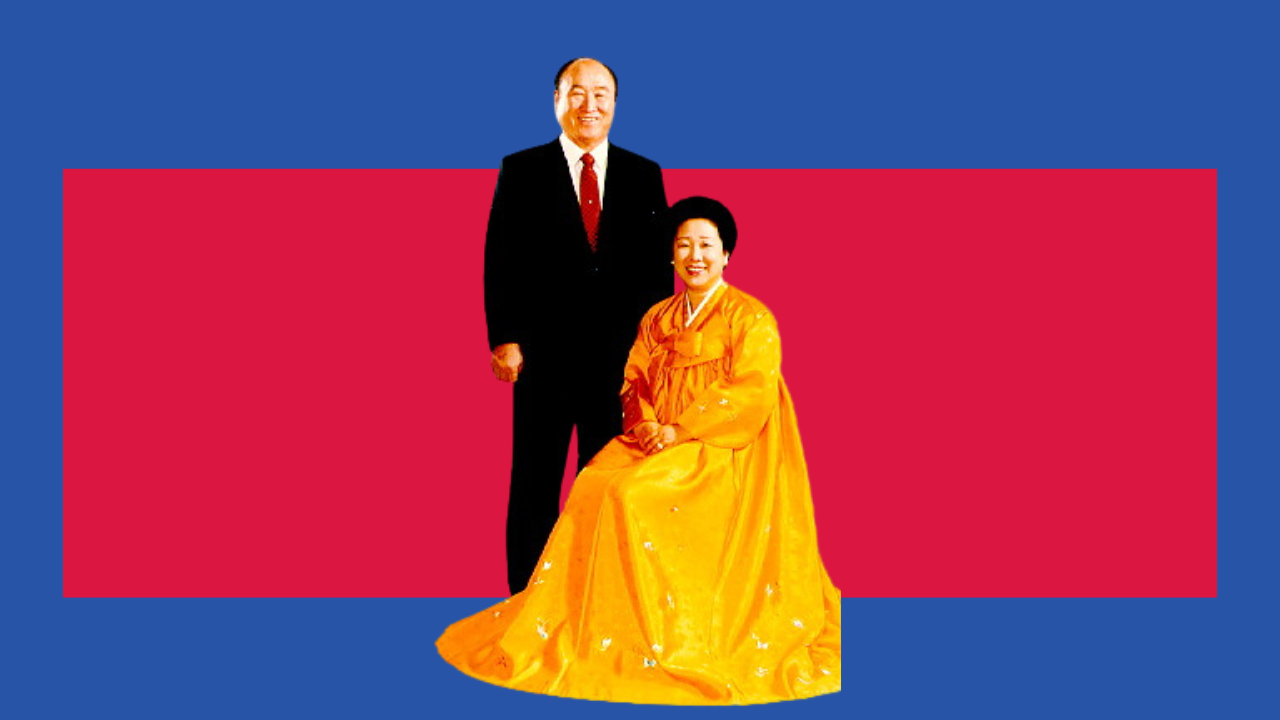

In early 2026, Nepal’s political discourse has been unsettled by a name that once felt distant: the Unification Church of South Korea, formally known as the Family Federation for World Peace and Unification. Founded in 1954 by Sun Myung Moon, the organisation began as a religious movement in post-war Korea before expanding into a global network that blends theology, diplomacy, business, and political outreach.
Its presence in Nepal has now sparked a debate that goes beyond religion. At its core are questions about transnational religious networks and their place within democratic systems.
Such movements are not new. Religions like Christianity, Buddhism, and Islam have crossed borders for centuries. But today’s networks operate differently—through conferences, political engagement, funding channels, and strategic partnerships that move quietly across countries.
Political Ties and Funding Questions
The current controversy stems from confidential files reportedly obtained by the Korean Center for Investigative Journalism, NewsTapa. Investigative reports published in South Korea suggest Nepal was among the countries where the Church sought deeper political engagement. Leaked communications point to discussions around financial support, election-related expenses, and sustained contact with Nepali political actors.
According to these reports, Ek Nath Dhakal maintained regular communication with church officials and sought both financial and strategic backing during election periods. In late 2017, he reportedly requested at least x$500,000 for Nepal’s elections, noting that a similar amount had already been spent on general expenses. Additional communications are said to have requested $20,000 per month to support the Nepal Family Party ahead of the 2022 elections.
The documents also suggest coordination with the CPN-UML. Dhakal reportedly described the party’s campaign as progressing strongly and anticipated a decisive victory. In return, UML leaders—including then prime ministers Madhav Kumar Nepal and KP Sharma Oli—are said to have assured him a position on the party’s proportional representation list. Dhakal was subsequently included in the UML’s PR list in 2017.
Bigger Questions for Democracy
Beyond electoral financing, the files point to broader ideological ambitions. The Church’s stated goal, according to the documents, was to “educate” Nepali lawmakers to help shape a constitution aligned with its Cheon Il Guk vision. One communication suggested that with a parliamentary majority, church-aligned lawmakers could influence Nepal’s legal framework over a two-year period.
In February 2018, Dhakal organised the Asia-Pacific Summit in Kathmandu, presided over by church leader Hak Ja Han. Prime Minister KP Sharma Oli attended the event but did not participate in its “blessing” ceremony. The documents also outline proposals to take Nepali lawmakers abroad for conferences and ideological training, including a plan to bring coalition MPs to Bangkok.
Other communications reportedly describe former Prime Minister Madhav Kumar Nepal as a close ally, while Baburam Bhattarai was seen as a potential figure to consolidate minority political forces under Dhakal’s platform.
Nepal’s laws prohibit political parties from receiving foreign funding. Yet the leaked materials suggest that significant financial support was at least discussed. Those named have denied wrongdoing. Dhakal and his party have dismissed the claims as politically motivated, while the Church has questioned the authenticity of the documents. No formal investigation has been initiated in Nepal.
The materials are said to be part of a 3,200-page “True Mother Special Report”, compiled by senior church official Yun Young Ho and reportedly prepared for Hak Ja Han. If verified, they indicate that Nepal was part of a broader and closely monitored strategy.
Nepal’s democratic identity rests on its secular constitution, freedom of expression, and political transition. The emerging questions, however, go deeper: how resilient is that system if external religious organisations can build influence within it? Even the suggestion raises concerns about sovereignty and public trust.
As the country approaches another election cycle, these concerns are likely to intensify. Transparency and accountability remain central to democratic credibility. Elections alone are not enough—the integrity of the processes behind them matters just as much.