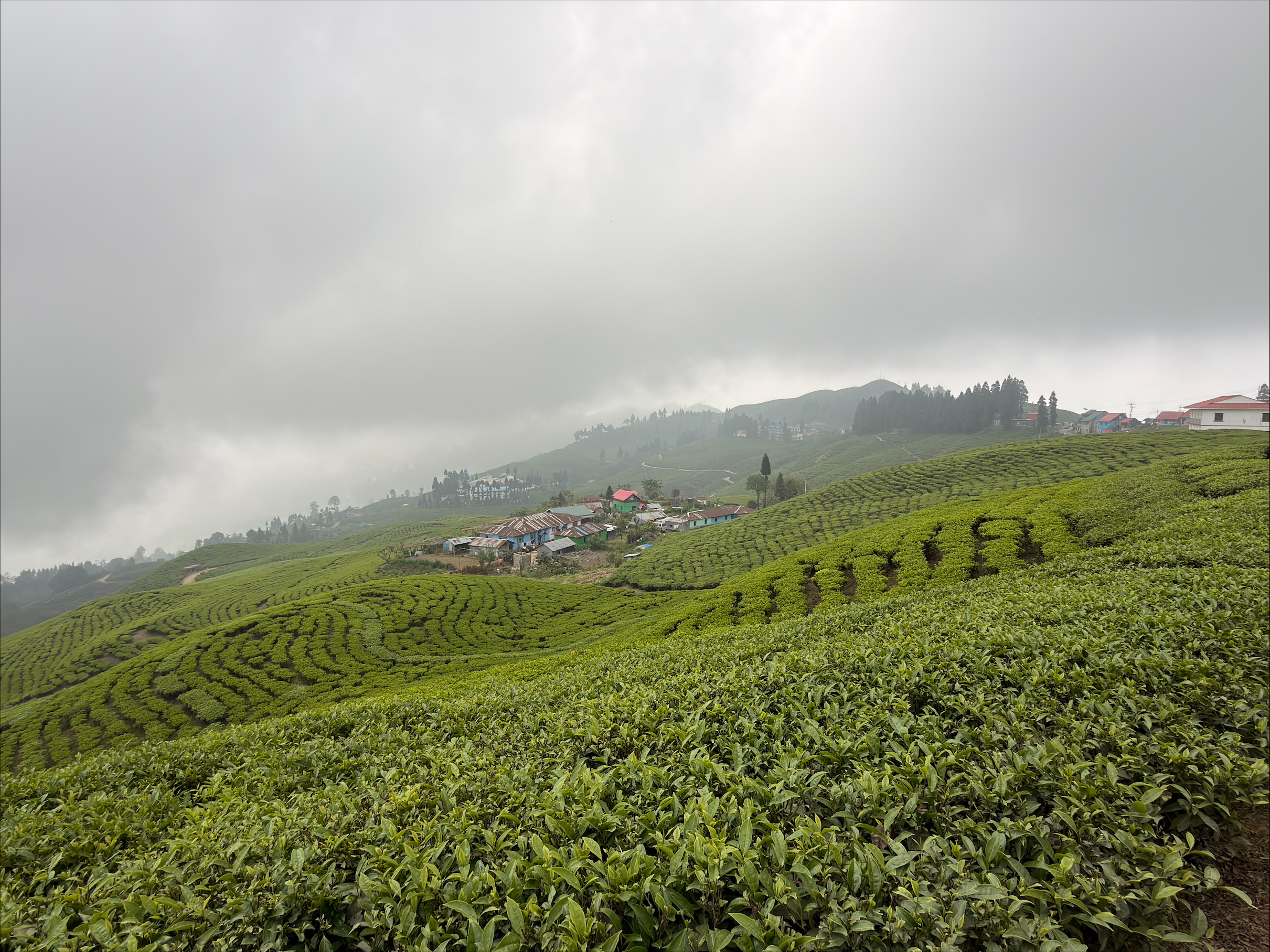

Tea is one of Nepal’s largest cash crops, and the Ilam region in eastern Nepal is one of the most productive areas. Ilam tea has a healthy reputation, but struggles economically, despite producing quality tea that competes with some of the best varieties in South Asia.
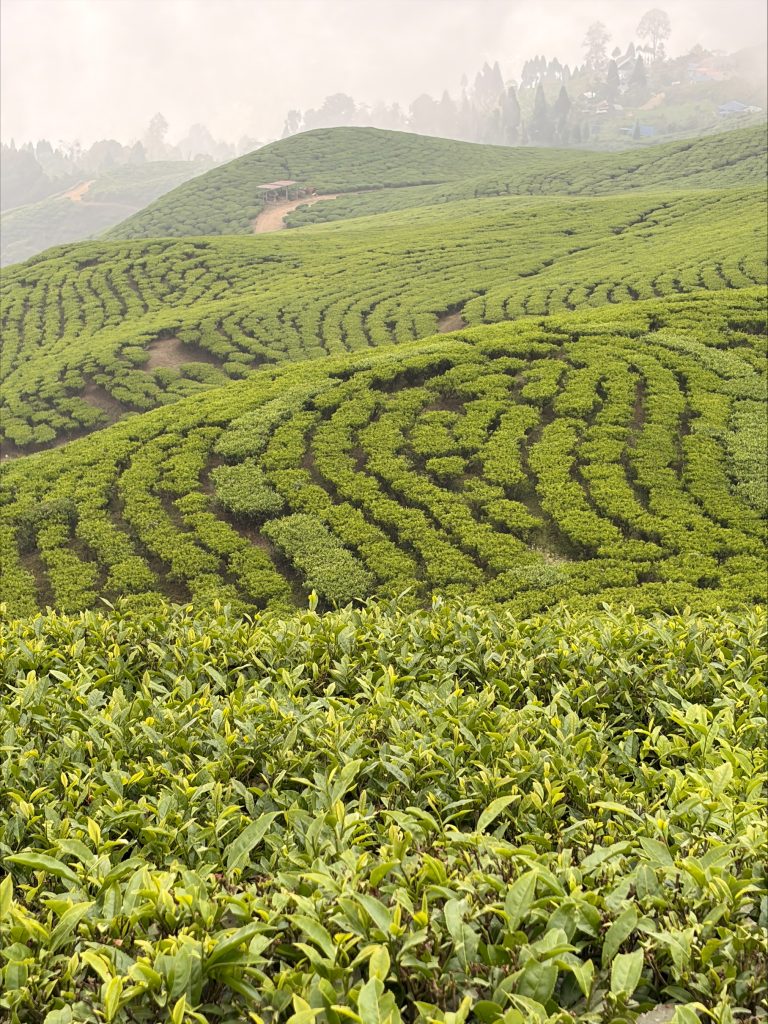
Tea gardens spread across the hillsides in green lines, with rolling mist covering the hills and travellers stopping at Kanyam for photographs. Eastern Nepal has long been marketed as one of the country’s most picturesque destinations, and Ilam sits at the centre of that narrative.
Nepal produces more than 26 million kilograms of tea annually. Ilam accounts for a large share of the orthodox tea cultivation, alongside Jhapa, Panchthar, and Dhankuta. The industry supports tens of thousands of livelihoods across the eastern hills and plains, from tea pluckers and factory workers to transport operators, traders, and roadside vendors. For many families, it is not enough on its own. Migration and remittances increasingly carry the weight that tea farming can no longer bear.
“One Bud and Two Leaves”
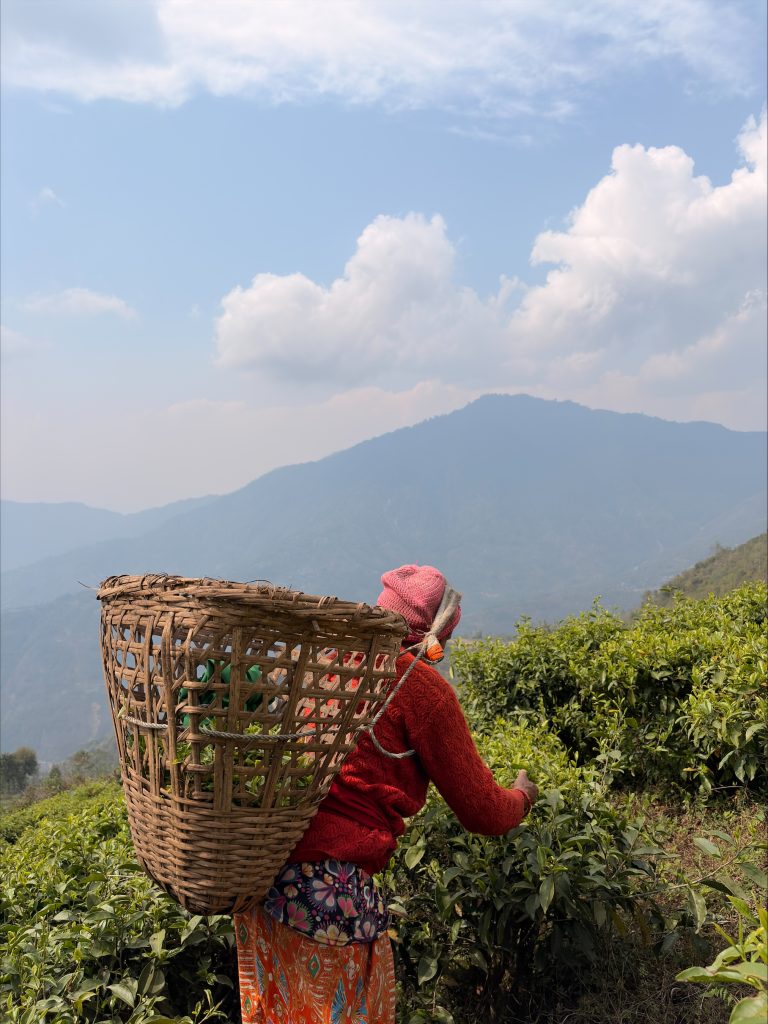
In the hills above Ranke Bazaar, workers move steadily through rows of tea bushes, baskets slung over their backs, hands moving quickly through the leaves. High-quality CTC tea depends on careful, manual plucking, and that has not changed.
“The leaves we pick are what we call one bud and two leaves,” says Muktinath Acharya, owner of Lekali Organic Tea Industry in Phalgunanda, Panchthar. “From the same tea shoot, we can make green, black, white, and golden teas. The difference lies in the processing.”
His business is located at around 2,150 metres above sea level and works with farmers in the surrounding areas, who bring freshly harvested leaves for processing. “No chemical pesticides are used here,” Acharya says. “We want people to know the tea produced here is natural and organic.”
The production process moves through multiple stages: withering, rolling, oxidation, drying, and sorting. Small changes in temperature, humidity, or timing can significantly alter the final flavour. Producers say this labour-intensive process keeps Nepali orthodox tea attracting positive attention from international buyers despite limited branding capacity.
Nepal primarily exports to India, Germany, the United States, China, and Japan. The problem is how it gets there. Much Nepali tea enters international markets through Indian distribution channels, reducing Nepal’s visibility as a producer. Some producers allege that Nepali tea has historically been blended and sold under Darjeeling labels because the Darjeeling name commands prices that Nepali tea, however comparable in quality, cannot yet match on its own.
Nepali tea is often compared with Darjeeling because of its similar climate, elevation, and cultivation methods. Both are grown under Himalayan conditions suited to producing aromatic, high-altitude tea. But Darjeeling secured geographical indication protection and international marketing infrastructure decades ago. Nepal is still building the case for its own name.
That gap in recognition compresses prices across the supply chain. Smaller producers struggle to secure competitive rates. Farmers absorb the volatility of export demand and transport costs with little cushion. Tea workers, who spend hours plucking steep terrain in changing weather, earn modest wages that have repeatedly raised concern in industry reports. Younger workers are moving away from agricultural labour altogether.
The Economy Behind the Postcard
Tourism has made Ilam one of Nepal’s most recognisable hill destinations, particularly for domestic travellers. Kanyam draws thousands of visitors during the peak season. Hotels, tea shops, restaurants, and local vendors all benefit from the traffic passing through, much of it heading further east to Taplejung via Ranke Bazaar.
At Gajurmukhi Hotel in Ranke, 52-year-old Sunil Kunwar sits outside his establishment with homemade achaar and blocks of chhurpi, the hardened cheese common across the eastern hills. He has been making chhurpi for years. Alongside several varieties of achaar, including akhbare khursani pickle and kiwi pickle, he sells two types of chhurpi: one from cow’s milk, one from Himalayan yak milk. The yak variety is harder to find and considerably more expensive. “People know the taste immediately,” he says.
He also sells what is locally known as Ilam Lollipop, a milk-based sweet with a soft, slightly chewy texture that has nothing in common with the hard candy the name suggests. Many visitors pick it up alongside other local products as a small souvenir from the region.
Climate and the Bigger Problem
Tea cultivation depends on stable rainfall, humidity, and seasonal consistency. Producers across eastern Nepal report that weather patterns have become harder to predict over the past decade. Rain arrives late or in excess. Winters feel shorter. Harvest cycles shift without warning.
Research on tea-growing regions in Nepal and neighbouring India indicates that rising temperatures and irregular rainfall are already altering productivity. Higher temperatures increase pest risk and can erode the delicate flavour profiles that make high-altitude tea distinctive. For small-scale farmers with limited financial reserves, a poor harvest is not an inconvenience but a direct blow to household income.
Despite this, production continues, largely because tea remains one of the few industries linking eastern Nepal’s rural economy to international markets. Tea has increasingly been positioned as a premium product, with its high-altitude origin and organic methods becoming selling points in a growing global market for speciality tea. But without stronger branding, investment, and policy support, Nepal risks losing ground even as the demand it could meet continues to grow.
The question, producers say, is no longer whether Nepali tea is good enough, but whether Nepal can build the infrastructure and recognition needed to protect the people who depend on it.