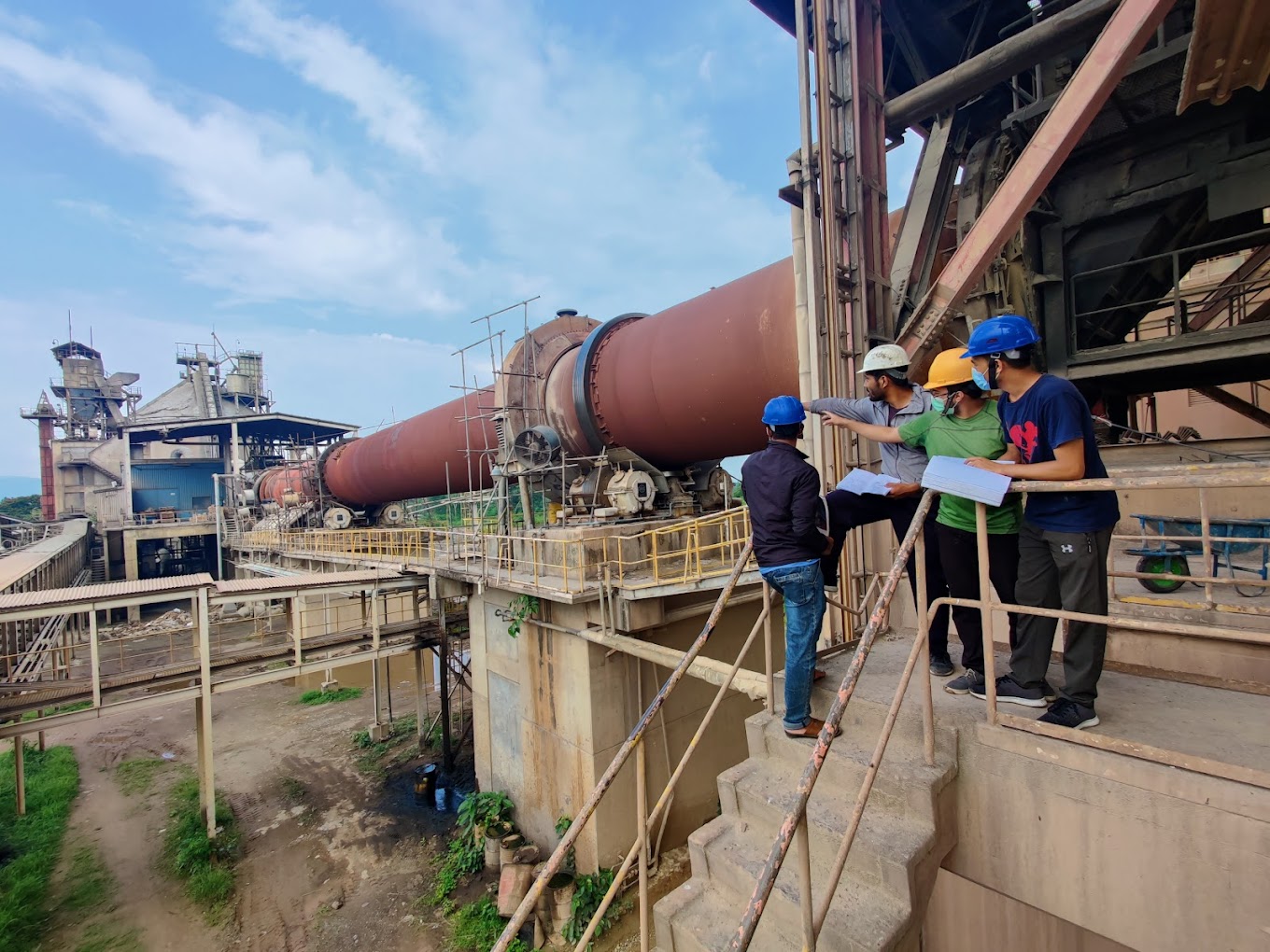

Nepal’s cement industry is one of the country’s few domestic success stories. Yet slowing demand, rising costs and the spectre of failing state factories are testing its foundations.
Few industries tell Nepal’s economic story quite like the cement sector. In a country that imports almost everything, the sector has achieved something remarkable: it largely creates its own product. Nepal’s cement industry has grown over two decades to the point where domestic production meets most of the national demand. It even exports to northern India.
Yet the industry that once seemed to prove what Nepal’s private sector could achieve is now under strain. Construction has slowed, and infrastructure projects are stalling. Factories are operating well below capacity. The government, eyeing a pair of debt-ridden, repeatedly shuttered state-owned plants, is once again asking a question that Nepal has never satisfactorily answered: whether it can run an industrial enterprise competitively.
A Private Sector Story
The growth of Nepal’s cement industry has, in most respects, been a private-sector success. Over the past two decades, more than 60 cement and clinker producers have established themselves across the country, with a concentration in limestone-rich districts such as Udayapur, Dang, Makwanpur, and Nawalparasi. Companies such as Shivam Cement, Arghakhanchi Cement, and Sarbottam Cement have invested heavily in modern plants, thereby increasing capacity and reducing dependence on imports from India.
Above all, demand fuelled the rise. The 2015 earthquake triggered a reconstruction boom that sustained road-building, hydropower development, and rapid urbanisation. The sector now accounts for roughly seven per cent of Nepal’s economy and supports employment across construction, transport, and mining. Some producers have gone further, exporting to India, a sign of how far the industry has come since it was a net importer.
But industry ambitions went beyond demand. Producers expanded aggressively during the boom years, and installed capacity which exceeds what the domestic market can absorb. With the construction sector cooling, real estate lending tightening, and major infrastructure projects facing repeated delays, many factories are operating well below capacity. Margins are being squeezed by aggressive pricing, dealer incentives and rising operating costs, particularly for coal, gypsum and industrial machinery, all of which must still be imported.
Smaller producers are feeling it most acutely. They lack the scale to absorb higher energy costs or to invest in more efficient technology, and they cannot match the commercial muscle of the larger conglomerates. The industry is quietly and uncomfortably consolidating.
The Burden of the State
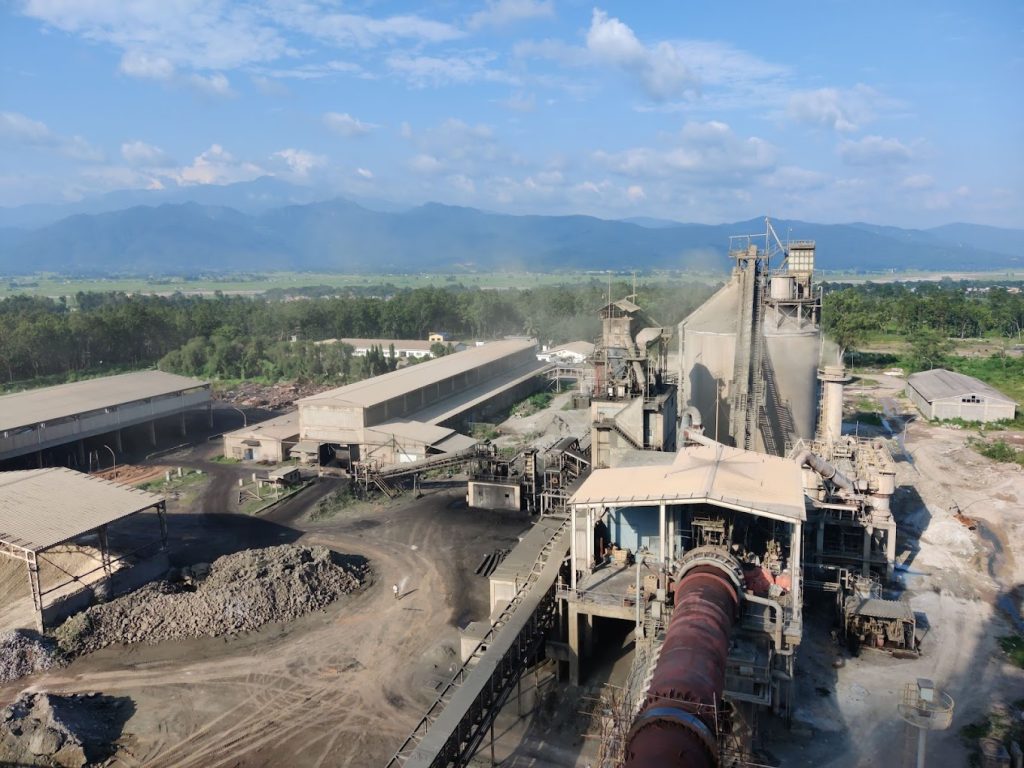
Amid this fragile moment, the government has introduced a proposal that speaks more to political instinct than to commercial logic. The new administration seeks to revive Hetauda Cement Industry and Udayapur Cement Industry, the two flagship state-owned plants that predate the private boom and have, in recent years, become prime representatives of public-sector dysfunction.
The plant at Hetauda Cement Industry has shut down repeatedly, each time for similar reasons, including its inability to procure coal, failure to pay suppliers, and poor maintenance of machinery. Reports from April 2026 described the latest halt, with production suspended, employees unpaid for months, and raw material stocks sufficient for only a few weeks even if operations resumed. A facility that once produced up to 18,000 bags of cement a day now struggles to sustain even intermittent output.
Udayapur Cement has followed a similar path. It reopened in late 2025 after months of closure, but financial and technical problems have persisted. The plant sits atop substantial limestone reserves, so the raw material is not the issue. Management, financing and institutional inertia are.
The diagnosis is not new. Critics of public enterprise in Nepal have long cited political appointments, weak governance and slow decision-making as the structural reasons for the failure of state factories. They argue that the private sector’s expansion is not merely a success story but a standing rebuke to the model the government is now seeking to revive.
But others resist the conclusion that the state should simply withdraw. Public factories, the argument goes, can act as a check on market concentration, provide employment in regions underserved by private capital, and give the government a lever to influence the price of a material central to national infrastructure. The concern is not unreasonable, as cement is not a luxury good.
What most observers agree on, including many who support some form of public ownership, is that reopening these plants without serious restructuring would almost certainly produce the same outcome as before. What is needed is genuine modernisation, professional management insulated from political interference, and real financial autonomy. Without those conditions, revival is not a policy. It is a postponement of failure.
The Competitive Pressure
Beyond the state enterprise debate, the broader industry faces pressures that will not resolve themselves quickly. Nepal’s dependence on imported coal and gypsum leaves producers exposed to exchange-rate movements and logistics costs that their Indian competitors do not face to the same extent. Energy, always a major input for cement production, has become more expensive, and smaller operators have limited ability to respond.
The real estate slowdown has compounded the situation. Stricter bank lending policies have dampened housing construction, removing one of the industry’s most reliable sources of demand. Industry associations have consistently lobbied for increased government infrastructure spending to stimulate consumption, but public investment has been uneven and often delayed.
Exports offer a partial answer, and the opportunity is genuine. Nepal’s limestone deposits are competitive regionally, and some producers have already shown that cross-border sales are viable. But logistics remain a constraint: Nepal’s distance from Indian markets and infrastructure gaps mean that Nepali cement arrives at a disadvantage in many corridors where Indian producers are closer to the customer.
Environmental pressure is also mounting. Cement manufacturing is among the more carbon-intensive industrial processes, and this is increasingly a factor in how companies attract financing and navigate regulation. Larger Nepali producers have begun investing in energy-efficient technology. Many older plants, including the state-owned ones, have not.
The Longer View
Nepal’s cement industry has achieved something genuinely difficult: building a competitive domestic sector in a country with chronic infrastructure deficits, a landlocked geography and a historically challenging investment environment. That achievement deserves acknowledgement.
But sustaining it requires more than pointing to the country’s limestone reserves. It requires consistent government investment in infrastructure to anchor domestic demand. It requires an energy policy that reduces manufacturers’ dependence on expensive imported coal. It requires a resolution, one way or another, to the question of the state’s role in production, if any. And it requires the industry itself to manage the overcapacity it built during more optimistic years.
The cement sector is, in miniature, a test of whether Nepal can move from building an industry to sustaining it. The foundations are solid. What happens above ground is the open question.