Support independent and reliable information and inspiration
about the development of Nepal at €10, €20, €30 per month

Advertisement

WORK IN PROGRESS

  • Login
  • Register
SUBSCRIBE
NepalConnect
  • DIGEST
    • CURRENT AFFAIRS
    • DEVELOPMENT
    • DISCOVERY & TRAVEL
    • IN-DEPTH
  • FEATURES
  • LIBRARY
  • TRAVEL DESK
  • DIRECTORY
No Result
View All Result
  • DEVELOPMENT
  • CURRENT AFFAIRS
  • TRAVEL & DISCOVER
  • IN-DEPTH
NepalConnect
  • DIGEST
    • CURRENT AFFAIRS
    • DEVELOPMENT
    • DISCOVERY & TRAVEL
    • IN-DEPTH
  • FEATURES
  • LIBRARY
  • TRAVEL DESK
  • DIRECTORY
No Result
View All Result
NepalConnect
No Result
View All Result
Home Digest DISCOVERY & TRAVEL Ethnic culture
From Bel Fruit to Sun God: The Sacred Marriages of Newa Women 

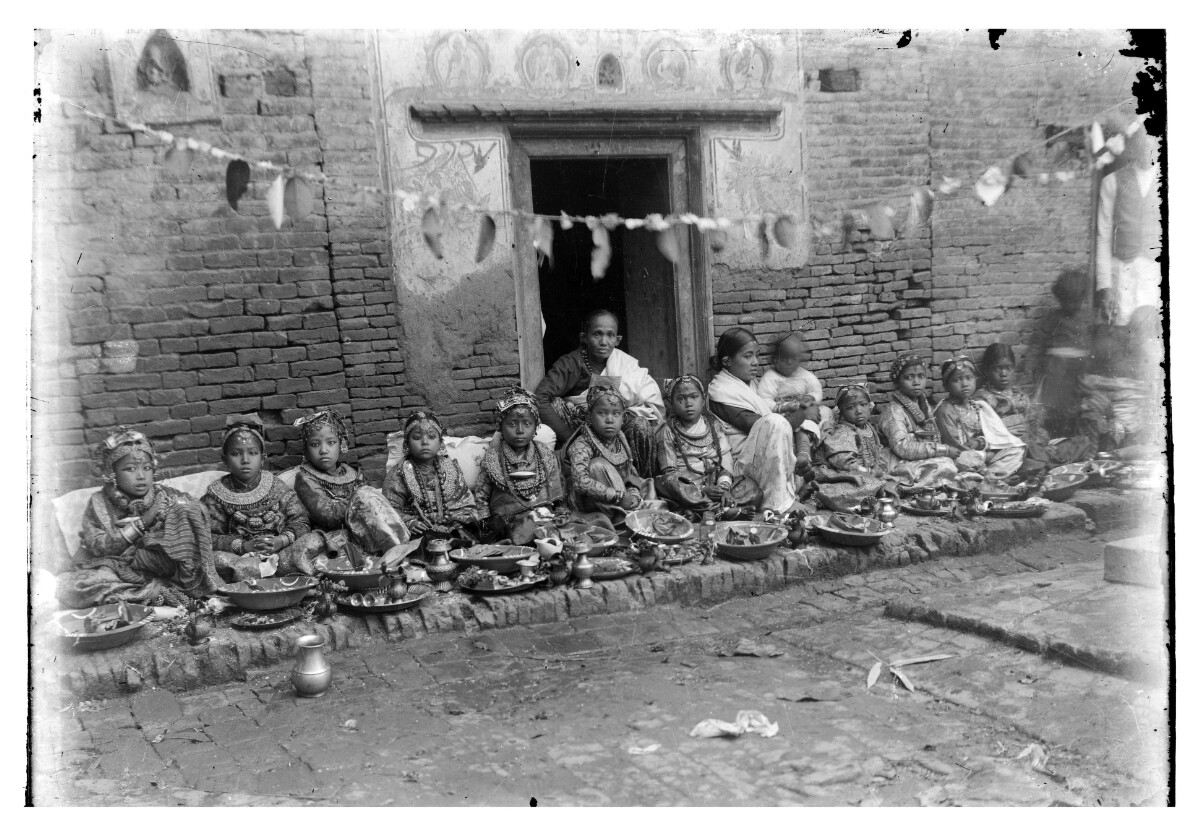
A group of Newar girls involved in the Ihi ceremony in the early 20th century. Photo: Dirghaman Chitrakar/Wikimedia Commons

From Bel Fruit to Sun God: The Sacred Marriages of Newa Women 

Pratikshya Bhattaby Pratikshya Bhatta
December 9, 2025
in Ethnic culture
0

In the Newa community, women undergo three marriages in their lifetime, but only one involves a human partner.  

The Newa community, especially in Kathmandu Valley, is known for having a vibrant tapestry of culture with unique customs and traditions. Among these is the practice of girls undergoing at least three symbolic marriages in their lifetime. 
There is no definite answer to when this tradition started. Some believe that a warlord from the 14th century raided villages and violated young girls and unmarried women. Therefore, parents believed that marrying their daughter at a young age could protect them from harm.  

Ihi (Bel Bibaha)  

The first marriage is known as Bel Bibaha-Ihi. The ceremony is performed on pre-adolescent girls when their age is an odd number.  

During the ceremony, she is married to a Bel-wood apple, which also represents Lord Vishnu. The fruit Bel is known for its unique quality of never going bad, which is one of the reasons it is chosen.  

In the new society women are allowed to remarry. It is believed that a woman can never be considered a widow because she was first married to the Bel fruit. This ceremony lasts for 2 days, during which it involves specific rituals, including dietary restrictions, especially salt. 

A Nepalese Newar girl takes part in a prayer ceremony during Bel Bibaha or Ehee rituals in Bhaktapur, Nepal. Photo: Skanda Gautam/Wikimedia Commons

The first day is called ‘dusala kriya’ – worship/offering from the mother and daughter. On this day, the girls are purified, worshipped like goddesses, and prepared for the main ritual on the second day. Among all the rituals, one features a yellow thread. The thread is draped over a bar, positioned above the girl’s forehead, and extended down to the ground.  

On the second day, known as “Kanyadaan”, the father ceremonially gives away his daughter. A pavilion or ceremonial enclosure is constructed using banana stems, with a square cloth suspended in the middle and tied to the four corners of the structure. The girl is dressed in bridal clothing and accessorised with jewellery and a red tika, and her feet and toes are painted red. 

This is a crucial day, since the procedures and traditions of Ihi are identical to those of a traditional marriage. After the ceremony is ended, the fruit is kept safely by an elder member of the family. Girls can eat Bel before their Ihi, but eating it afterward is forbidden.   

Bara Tayegu (Gufa)  

The second marriage occurs during adolescence and is known as Bara Tayegu or the Gufa ritual. This is a coming-of-age ceremony where the girl is married to the Sun God (Surya). 

This ceremony must be carried out before the girl starts to menstruate. The Sun, which lives on for eternity, protects the girl child from the bad people and omens. It is around the age of 12-14 that most girls must follow through with this ritual.  

During this ritual, the girl must reside in a secluded dark room for up to 12 days while avoiding the sun and the male members of the family. Every day, the head of the family must set aside a portion of the meal for the Bahra Khayak, a symbolic doll believed to represent a spirit. 

During this period the young girl is thought to be possessed by evil forces. She must follow certain rituals, like refraining from using oil, as she stays in a designated room.   

From the fifth day, the female and her friends’ relatives come to celebrate and play with her in the room. Her friends entertain her with folk songs and dances, lifting her spirits. On the night of the 11th day, the girl washes her own dress and changes her clothes. On the morning of the 12th day, she is finally allowed to step out into the sunlight. 

This marks the day she is symbolically married to the Sun, marking the end of her period of purification and the beginning of a new phase in her life. First, her face is covered with a handkerchief, and the light of the sun is shown through the reflection of water in a vessel. 

After that, the child sees the sun through the hole in one’s hand. Then the child is shown direct sunlight above the sky. After the puja, the deity is performed with Sinhamu (a traditional vessel for keeping vermilion powder) and the Nhaykan mirror.  

The Mortal Marriage 

The third and final marriage is the conventional wedding ceremony with a human spouse. The marriage happens as per the beliefs of the family. It is often said that there is no direct equivalent for ‘widow’ in the Newari language. They believe that a woman is not considered a widow even if her husband passes away later in life since they would still be married to the gods Vishnu and Sun.  

So, by marrying a divine entity first, a Newari girl is safeguarded against societal stigmas, such as widowhood.   

These sacred marriages are more than just rituals; they reveal a culture that used tradition to protect its young girls and women from the uncertainties of the world. While such practices may not be necessary in modern times, they remain a powerful reminder of how communities have relied on culture to care for and safeguard their people.  

Pratikshya Bhatta is a junior editor with Nepal Connect. 

Related Posts

Sikali Jatra: The Festival That Replaces Dashain in Khokana 

Sikali Jatra: The Festival That Replaces Dashain in Khokana 

October 17, 2025
328
Echoes of Dhime Baja: A Timeless Tune

Echoes of Dhime Baja: A Timeless Tune

September 5, 2025
332
Ethnic culture

Gunlā Festival Keeps Devotion and Community Alive

July 25, 2025
334
Pratikshya Bhatta

Pratikshya Bhatta

Leave a Reply Cancel reply

Your email address will not be published. Required fields are marked *

Nepal Connect
SECTIONS
  • Digest
  • Features
  • Library
  • Travel Desk
  • Directory
NEPAL CONNECT
  • Mission
  • Colophon
  • Profile
  • Foundation
  • Executive organization
  • Ambassadors
  • Workshops
PARTICIPATION
  • Volunteer/ Intern
  • Research
  • Guest writer
  • Work With Us
  • Test Readers
  • Study Group
SUPPORT
  • Nepal Patrons
  • Project Support
  • Support Journalism
ACCOUNT
  • Sign Up
  • Subscribe
  • Manage My Account
  • Directory
  • Gift Subscriptions
  • Group Subscriptions
  • Gift Articles
  • Email Newsletters
  • Email Alerts
  • Advertiser
  • Customer Service
  • Directory Deal
  • Contact Us
  • Terms & Policy
  • Site Map
FOLLOW US

Welcome Back!

Sign In with Facebook
Sign In with Google
OR

Login to your account below

Forgotten Password? Sign Up

Create New Account!

Sign Up with Facebook
Sign Up with Google
OR

Fill the forms below to register

All fields are required. Log In

Retrieve your password

Please enter your username or email address to reset your password.

Log In
  • Login
  • Sign Up
  • DIGEST
    • DEVELOPMENT
    • CURRENT AFFAIRS
    • DISCOVERY TRAVEL
    • IN-DEPTH
  • FEATURES
  • LIBRARY
  • TRAVEL DESK
  • DIRECTORY
  • MISSION
  • COLOPHON
  • PROFILE
    • Participation
    • Support
    • Accounts
    • Advertisers
    • Contacts us
  • FOUNDATION
  • EXECUTIVE ORGANIZATION
  • AMBASSADORS
  • WORKSHOPS
  • VOLUNTEER/ INTERN
  • RESEARCH
  • GUEST WRITER
  • WORK WITH US
  • TEST READERS

Copyright © 2023 NepalConnect. All rights reserved.