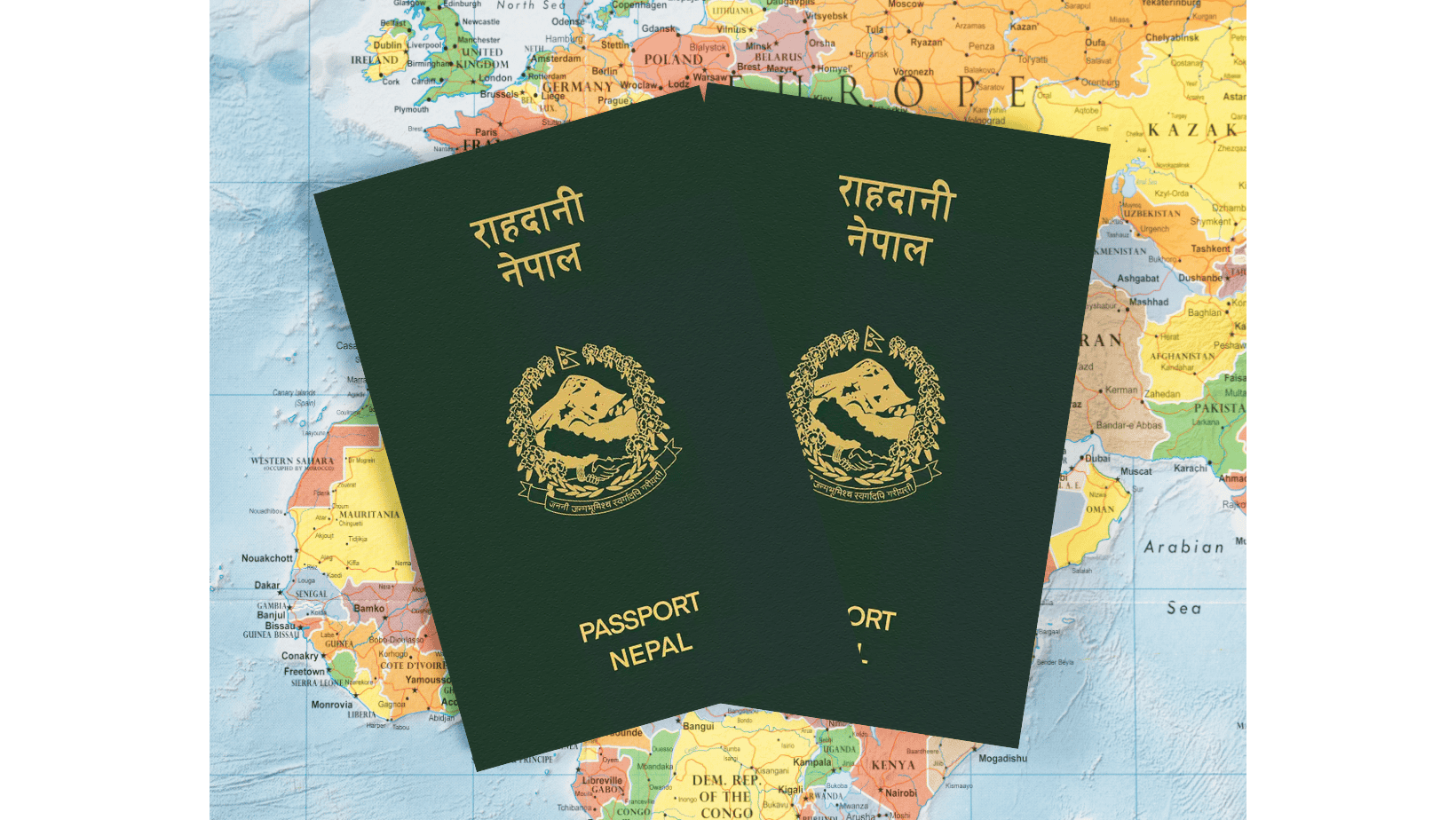

For many citizens, travelling abroad does not begin with excitement. It begins with stress. Even in 2025, travelling on a Nepali passport feels less like a privilege and more like a test, one that comes with delays, scrutiny, and, at times, the risk of deportation.
The country holds one of the weakest passports globally. As of 2024, passport holders had visa-free or visa-on-arrival access to just 40 countries and territories, ranking 101st worldwide on the Henley Passport Index.

By comparison, Indian passport holders can travel to around 60 countries without prior visas, while citizens of many Western nations enjoy access to more than 190. These rankings matter because they shape mobility long before an application is even filed.
Visa processes rarely feel straightforward. Students seeking to study abroad often face long wait times and rising rejection rates, particularly in Europe and the UK. Authorities frequentlyask for large bank balances, detailed travel histories, and strong proof of return. Even when applicants meet every requirement, approvals remain uncertain, and rejections often arrive without clear explanations.
Business travel and family visits pose similar challenges. Professionals miss conferences due to delayed decisions, while families face refusals based on overstay concerns. Over time, a broad presumption has taken hold, one that treats travellers as risks rather than visitors.
Mainali, a graduate of Northwestern University in Qatar, secured visas for the US and Qatar without difficulty due to strong university documentation. Her planned trip to Austria, however, feels far more intimidating, shaped by the breakup and the complexity of the European visa system.
Challenges extend beyond entry visas. Transit rules often create unexpected barriers. Travellers passing through Hong Kong on certain airlines must obtain a separate visa, even without leaving the airport. Routes involving two Chinese cities require pre-approved Chinese visas before departure. Many only learn this at the airport.
Transit through the US or Canada also remains restricted. Passport holders cannot transit without a visa, regardless of destination. Some travellers with US refugee visas cannot transit through London. Most transit stays are limited to 24 hours, shrinking route options and driving up ticket prices.
Despite these obstacles, overseas travel continues to rise. Immigration data shows that around 1.5 million people travelled abroad in 2023 for work, tourism, study, and other purposes. Over 800,000 left for employment, while hundreds of thousands travelled for tourism, pilgrimage, or education. In 2024, visitor visa travel rose sharply, with nearly 275,000 departures under this category.
Women now make up a growing share of travellers. In 2024, they accounted for 42 per cent of visitor visa travel, a notable shift from previous years. While this reflects increased independence and mobility, it has also led to greater scrutiny. Many women report questioning, delays, or denial at departure points, often justified as anti-trafficking measures.
This scrutiny has precedent. In 2021, authorities proposed requiring women under 40 to seek family and local approval for solo travel. Public backlash forced the withdrawal of the rule, but profiling persists in practice.
At the same time, destination countries continue to tighten their own rules. The UK now demands stronger proof of income and employment ties. Several European states issue shorter visas and limit multiple-entry permits.
In Gulf countries, officials question visitors more closely due to concerns about overstaying for work. These changes rarely appear as formal announcements. Instead, they surface as longer checklists, tougher interviews, shorter visa validity, and higher rejection rates.
Following unrest linked to youth-led protests in September, several countries began viewing the country as higher risk. The UAE, for instance, tightened visit visa rules, leading to increased rejections. While no formal notice reached the embassy, officials and travel agencies confirm stricter enforcement, particularly for Dubai-bound travellers.
In December 2025, the Canadian government advised its citizens to avoid non-essential travel to the country due to political unrest, transport disruptions, power cuts, and safety concerns. Though aimed at Canadians, such advisories shape international perceptions and indirectly affect how travellers are treated abroad.
In the past, access to several European destinations was easier. Short-term visas on arrival were common. That changed as cases of overstaying, fake documentation, and irregular migration increased. Officials have acknowledged that these patterns weakened trust in the passport.
History continues to influence present-day decisions. During and after the civil conflict from 1996 to 2006, many sought refuge abroad using temporary visas. Immigration systems still view applicants through that lens.
In a world where borders grow stricter and mobility remains unequal, travel requires constant caution. The barriers may not be labelled as sanctions, but they function similarly, slowing movement, narrowing choices, and placing entire groups under suspicion.
For many, travel means explaining yourself, proving your intentions, and hoping the system believes you this time.
Sudipa Mahato is a junior editor with Nepal Connect.

