
Soon, Nepal will have a new government led by a ministerial team from a relatively new dominant party. The change demanded by the Gen Z revolt has occurred through fair and peaceful elections.
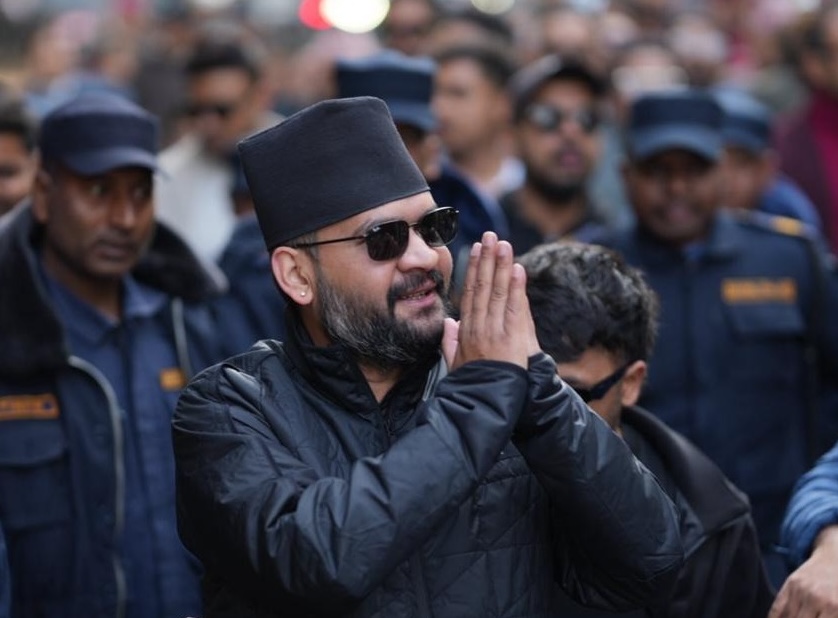
The entry of Kathmandu mayor and rapper Balen Shah into the Rastriya Swatantra Party (RSP) has secured a significant victory for the party. While conventional wisdom held that no party could secure a majority under the prevailing electoral system, the public has wholeheartedly supported the party and its prime ministerial candidate, Shah. This seismic shift indicates that Nepal’s silent majority, unlike the party cadres, decided the elections. The RSP has won 182 seats in a 275-member House of Representatives—a clear majority and only one seat short of a two-thirds majority.
The Old Guards Rest
The RSP victory has overshadowed all other parties, including the Nepali Congress, the Unified Marxists-Leninists (UML), and the Nepali Communist Party (NCP), which formed a coalition government that was overthrown by the Gen Z protests last September 2025.
The fall of the three-party syndicate signals a pause, if not an end, to the legacy politics they practised.
Nepali Congress is down to 38 seats from 89 in 2022. Likewise, UML has slumped from 79 to 25. The NCP, led by Pushpa Kamal Dahal ‘Prachanda’, has won 17 seats, compared with 42 from the Maoists and Unified Socialists, parties that merged to form the Nepali Communist Party (NCP). The election also saw the royalist Rastriya Prajatantra Party (RPP) shrink from 14 to 5 seats.

Not only the parties but also their leaders faced wide-margin defeats, except for Nepali Communist Party (NCP)’s Prachanda, who resorted to the former Maoist headquarters in East Rukum. UML chair KP Sharma Oli lost to Balen Shah at Jhapa-5. Congress president Gagan Thapa lost to Dr Amresh Kumar Singh, a former Congress leader now in the RSP, at Sarlahi-4. RSP chair Rabi Lamichhane won again from Chitwan-2, although it’s not clear whether he will get to enter the parliament or not, because of the charges he is facing in a cooperative fraud case.
A Small but Meaningful Opposition
With such a large majority, opposition in parliament will be weak, potentially paving the way for the Congress and the UML to mobilise street resistance against the government. Their loyal base appears to remain largely intact.
Balen Shah is not very familiar with handling such resistance. He tended to skip city council meetings whenever he was pressed. Can Balen Shah and the RSP develop a credible anti-corruption policy? That was the main demand of the Gen Z protesters, and they will closely monitor progress in this area.
The emergence of the Shram Sanskriti Party (SSP), led by the former mayor of Dharan and securing five seats, was a surprise. Had the party not gained status as a national party, the RSP would hold a two-thirds majority. Their frontman, Prakash Sampang, is recognised as a pioneer of ‘labour culture’ and community-led infrastructure projects, and as a vocal critic of Balen Shah.
Nepal now has a young House of Representatives, with 54 members under 40. The upper house is still dominated by the Nepali Congress, the UML, and the Nepali Communist Party (NCP).

as mayor. Photo: Harka Sampang/Facebook
A Stable Government and the Madhesh Sweep
The country is looking forward to a stable government, which has not been possible in recent history. Not a single prime minister has served a full five-year term. The RSP is now forming a one-party majority government for the first time since the constitution was promulgated.
Another noteworthy outcome is RSP’s sweeping victory in Madhesh, a province that had been dominated by regional parties since 2008. The party won 30 out of 32 first-past-the-post (FPTP) seats while securing 1.1 million votes in the Proportional Representation (PR) category from the province alone. RSP succeeded in winning Madhesh primarily because Balen Shah, who is of Madheshi origin, was presented as a prime ministerial contender.
RSP not only won Madhesh. It managed to wipe out all Madhesh-based parties, including Upendra Yadav’s Janata Samajbadi Party (JSP) and Dr CK Raut’s Janmat Party. The two parties lost their ‘national party’ status after failing to cross the 3 per cent vote threshold in the PR category. Another reading is the endorsement of the will of the Gen Z protest of September 2025, which the RSP has largely adhered to. People did not believe in the reformation of the Nepali Congress, the country’s oldest party, under the new leadership of Gagan Thapa.
Miles to Go
The country is now eagerly waiting for the formation of a new government. The RSP is excited, of course, but also faces challenges. It is a relatively young and inexperienced party, suddenly tasked with forming a credible government and providing many skilled lawmakers.
The new government must address significant domestic issues and persuade most of the population that it merits ongoing electoral backing. The immediate challenges include rescuing migrant workers stranded in Gulf countries, affected by the escalation of the Iran-Israel war. Another is managing the economy amid declining remittances and surging inflation. With the brain drain surging every day, the government has a responsibility to create an environment for retaining youth in the country.
The party, which has broadly promised to open the country, faces the challenge of attracting sustainable international investment over the long term to fund infrastructure projects and the production economy.

Will Balen Shah, as Prime Minister, act diplomatically towards Nepal’s neighbours, India and China? How prominent, or not, will Rabi Lamichhane be positioned? Can Lamichhane shake off the doubts surrounding his alleged mishandling of cooperative funds in the past? These questions do not have immediate answers, but they will determine how the new party navigates the country’s political landscape. An initial exchange between Balen Shah and India’s Prime Minister Narendra Modi indicates a positive collaboration.
Endorsement of Gen Z Voice
The people have given their verdict through the election. But there’s more to it. The election is a direct outcome of the Gen Z protests that toppled the UML-Congress government led by Oli, paving the way for an interim government under former Chief Justice Sushila Karki.
After the fall of the government, elections became a regular necessity. In the view of Gen Z, the government also had a duty to investigate the suppression of protests on September 8, 2025, along with the arson and vandalism on the following day. The fact-finding commission established to examine the alleged government repression and violence during the Gen-Z revolt in September 2025, known as the Karki Commission, submitted its report to Prime Minister Sushila Karki on 8 March 2026.
The commission, chaired by former judge Gauri Bahadur Karki, included ex-AIG Bigyan Raj Sharma and legal expert Bishweshwar Bhandari as members. The commission submitted its report, based on evidence, testimonies, and expert opinions, only after the elections had taken place due to concerns about disrupting election peace. Upon receiving the report, Prime Minister Karki stated that the government would review it and then take the necessary measures.
There is a discourse about whether the summary or the full report should be made public, or whether the recommendations should be implemented straight away. Commission chair Gauri Bahadur Karki has warned the prime minister that there may be an uprising like the Gen Z uprising if the report is not made public.
Early revelations suggest that the panel has recommended pursuing criminal investigations against former Home Minister Ramesh Lekhak, former Inspector General of Police Chandra Kubera Khapung, and the then chief district officer of Kathmandu, Chhavi Lal Rijal, among others.
There is mounting pressure on the interim government to release the report, as there have been past incidents in which such investigation reports were concealed by the government.