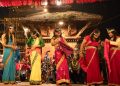

Lhosar means new year, celebrated by different communities at various times of the year depending on their traditions, geography, and calendars.
With each Lhosar, the old year ends, and the new one begins. The rituals and the dates change, but the goal is similar: to embrace a new year, full of hope. Tamu, Sonam, and GyalpoLhosar are the main Lhosar festivals celebrated in Nepal.
Tamu Lhosar
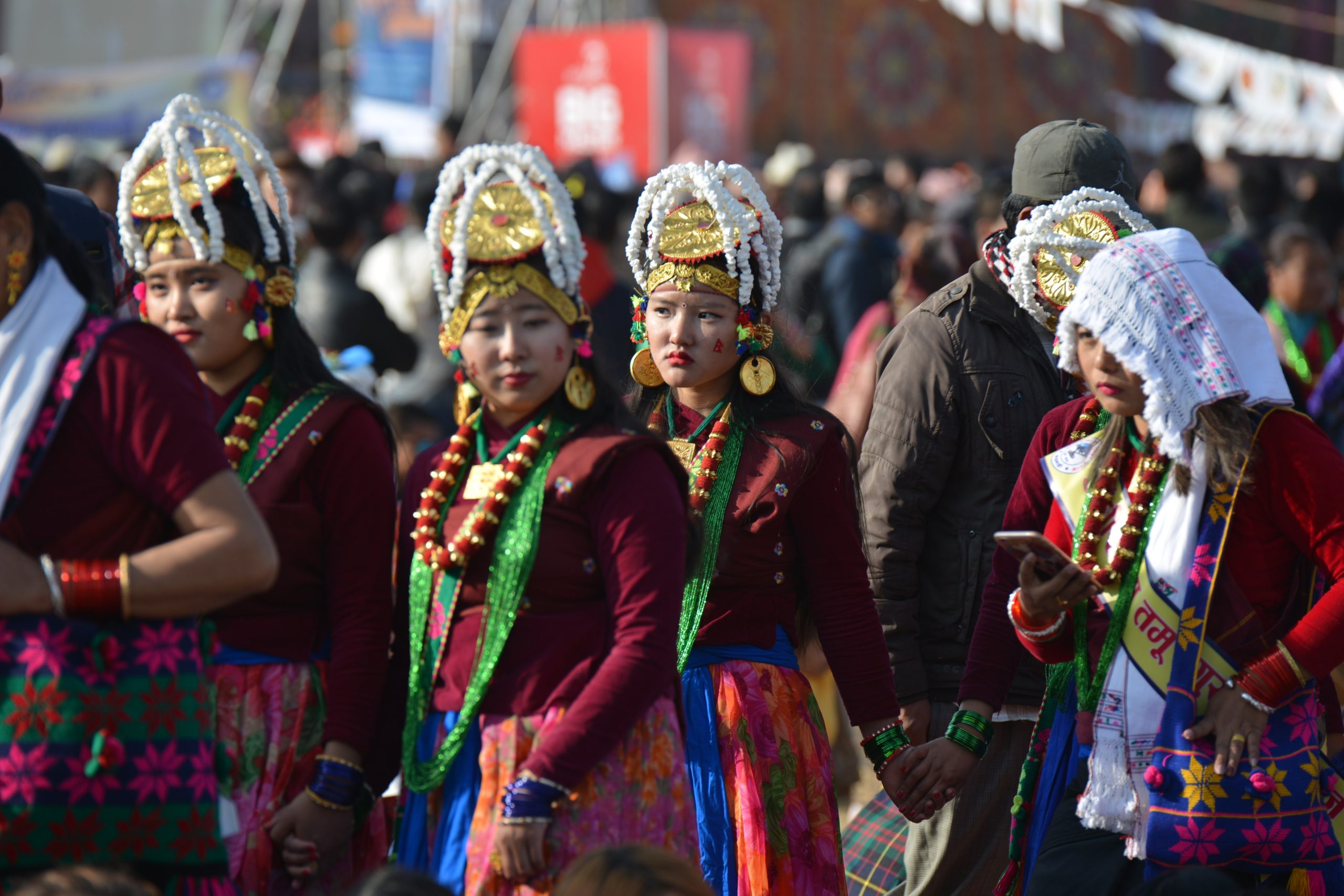
Tamu Lhosar marks the Gurung New Year. ‘Tamu’ is a term that is used to denote the Gurung people, ‘Lho’ is used to denote the year, and ‘Sar’ is used to denote ‘new’ or ‘change’.
The Gurung calendar is based on a twelve-animal year cycle. Like the Tibetan zodiac, the Tamu Lhosar follows a 12-year cycle of animals: eagle, serpent, horse, sheep, monkey, bird, dog, deer, mouse, cow, tiger, and cat, celebrating the transition from one animal year to the next. In the past, people used this calendar to calculate age, when most people did not have their own formal calendars.
Though the celebration was officially standardised in the 1960s, the origins of the celebration are not very clear. Other historians go as far as the 7th century, when Gurung ancestors are said to have left Tibet. During those primitive times, the animal cycle was a useful and cultural gauge of time.
This festival is also connected with nature. It is widely celebrated in other districts like Lamjung, Gorkha, Tanahun, Syangja, Manang, Kaski and Parbat, where there are many Gurung people. This is why the festival has always been observed on the 15th day of the Nepali calendar, known as Poush, which usually falls at the end of December.
On this day, a national public holiday is declared by the government. A colourful cultural procession, in Kathmandu, leads to Tundikhel, where dances, songs and food stalls are set up in the open space. Pokhara is where shows are held at the Exhibition Centre, and in towns such as Hatkhola in Biratnagar, Gurung people gather in music and ceremony that will prove to be very late.
Sonam Lhosar
The Tamang community celebrates Sonam Lhosar, which coincides with the Chinese New Year. It is believed to have come into Nepal by the Tibetan culture, which was influenced by the ancient Chinese culture.
Sonam Lhosar is a period of purification, physical and spiritual. Houses and the inner yards are cleaned and replastered. Individuals take baths, wear customary attire and go to monasteries and gumbas to worship ancestors, clans and nature. The rituals are also aimed at sweeping away the burden of the past year and preparing for the future.
During the celebration, people from the community gather to celebrate by dancing and singing together. In Kathmandu, the Tamang people assemble at the Tundikhel, wear their cultural attire, eat traditional food and celebrate together.
Outside of the capital, the festival is celebrated in places such as Langtang, Rasuwa, Dhading, and Nuwakot. This year it falls on January 19th, 2026.
Gyalpo Lhosar
The Tibetan New Year, also known as Gyalpo Lhosar, is celebrated mainly by the Sherpa people in Nepal and in Tibet, India and Bhutan. It is the longest of the three Lhosars, extending to fifteen days with pre-festivities. The first three days are considered as one of the main days devoted to the major rituals.
Before the 15 days of the Lhosar, various preparations are made. Wheat, barley, maize, and millet seeds are grown in little pots to produce fresh sprouts called chyang or jamara. These green shoots are offered in prayer rooms on the day of Lhosar and are used to represent renewal, harvest, and continuity.
Homes, monasteries, pilgrimage sites and resting places are well cleaned and occasionally refurbished. Prayer flags are also hung on rooftops and hills, so the blessings are carried by the wind. Families brew jaand, a ritual liquor, for offerings and beneficial rites.
Gyalpo Lhosar has several legends regarding its origin. One Buddhist belief associates it with the period when Shakyamuni Buddha lived. When he performed miracles to overcome six non-Buddhist teachers, many of them became his followers. There is also a story about an old astrologer called Belma, who introduced the idea of timekeeping by the lunar cycle, something new that ushered in the Gyalpo Lhosar.
Like other Lhosars, Gyalpo Lhosar is based on a twelve-year cycle of animals: mouse, ox, tiger, rabbit, dragon, snake, horse, sheep, monkey, bird, dog and boar. Time is gone, but it comes back; this is the trend as the cycle is repeated with the conclusion of each cycle.
Originally celebrated in the Himalayan areas by the Buddhists, it is now celebrated in any part of the world where the Buddhists have found settlement. It is not merely a religious celebration anymore, but it is also a powerful aspect of Sherpa culture.
Tamu, Sonam and Gyalpo Lhosar are different in time and tradition, yet all of them are similar in the human need to stop, to reminisce and to start anew. In a culturally stratified country like Nepal, Lhosar is not simply a New Year; it is thousands of New Years, which occur one after another.
Pratikshya Bhatta is a junior editor with Nepal Connect.