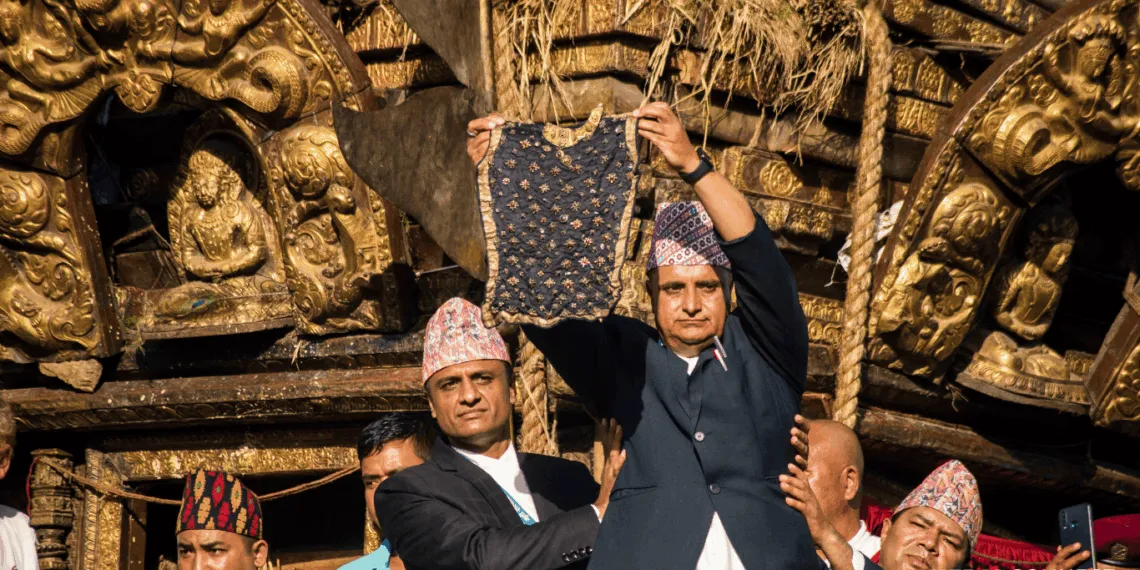
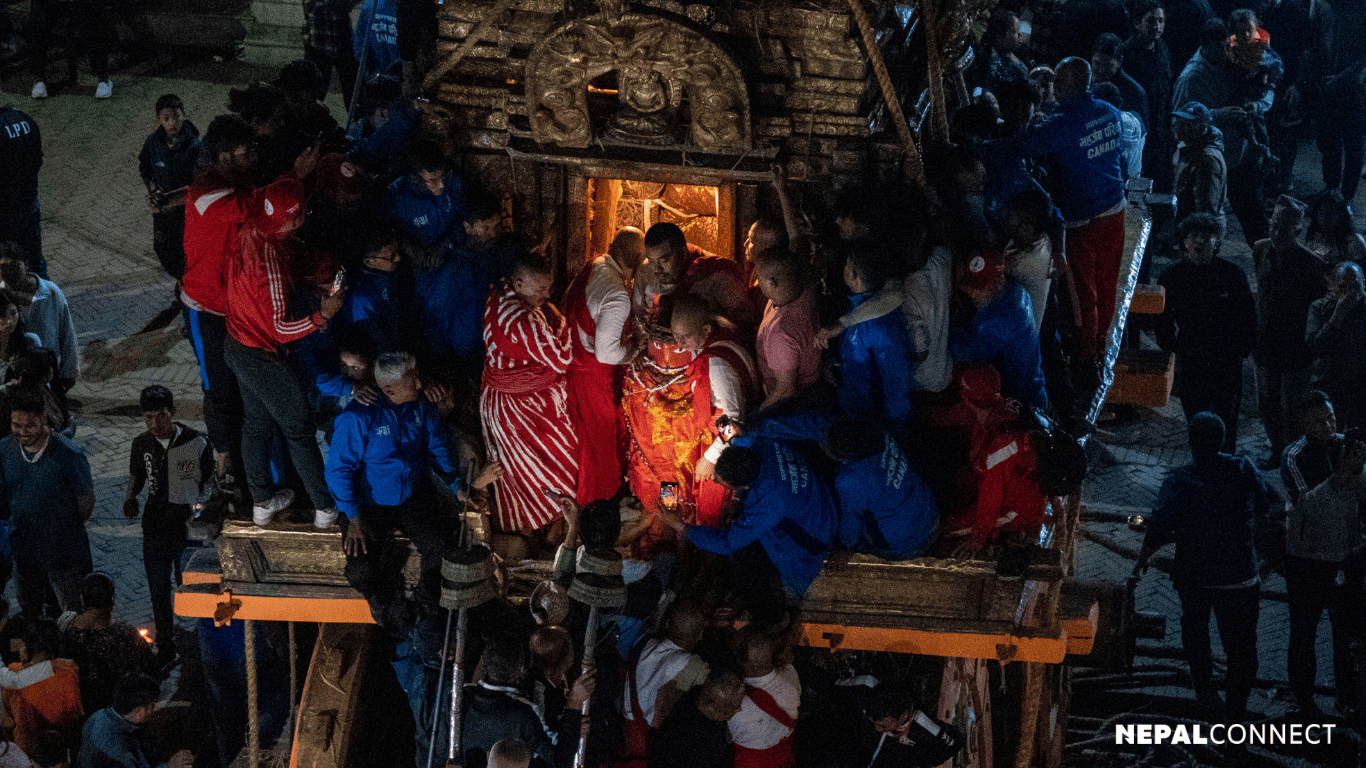
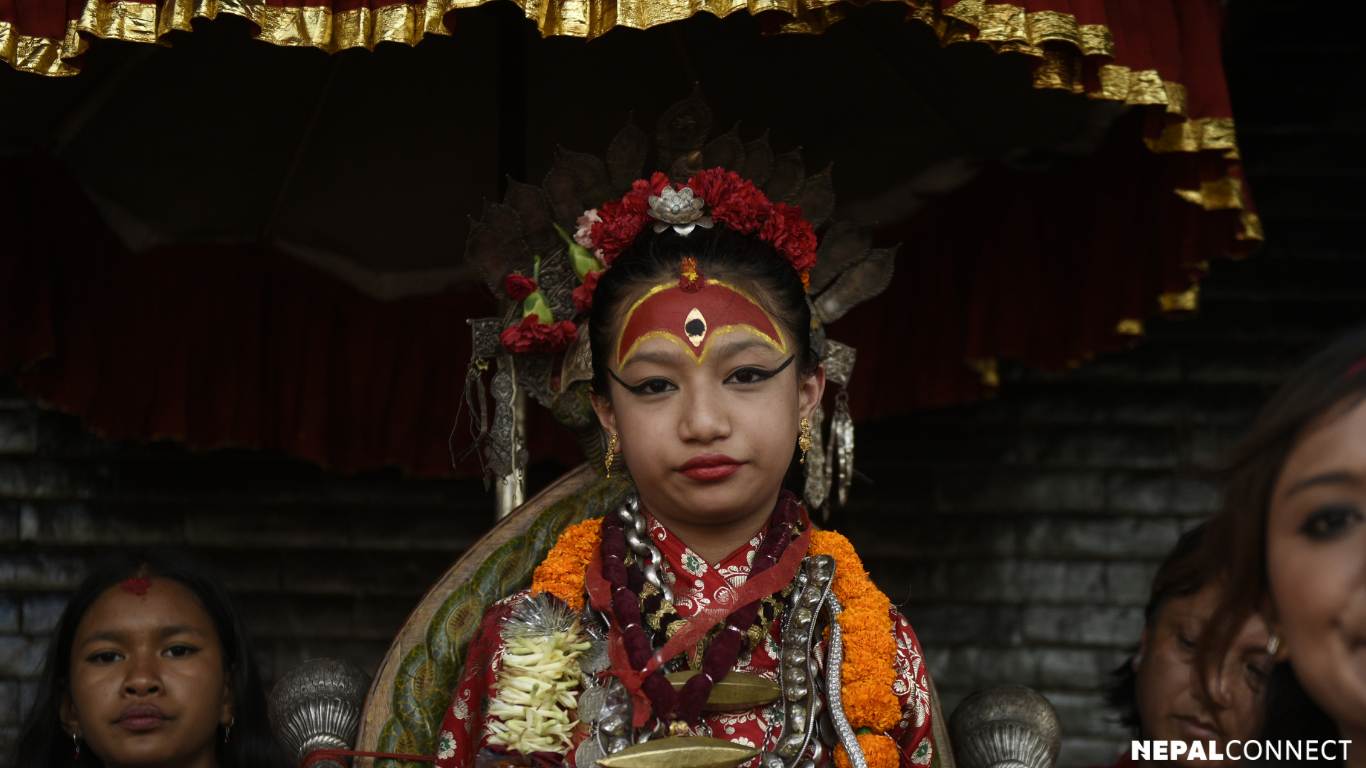
Every year, on a single afternoon in Jawalakhel, a city of hundreds of thousands falls quiet. A Guthi official climbs to the top of a sixty-foot wooden chariot, lifts a jewel-studded vest into the air, and calls out into the crowd, asking three times whose it is. The President of Nepal is watching. So is the Prime Minister. So is the living goddess Kumari of Patan, seated in her palanquin, and so are the hundreds of thousands of people packed into the square around them.
No one ever answers.
The vest goes back into the temple’s keeping, exactly as it has for centuries, and the city exhales until next year. This is Bhoto Jatra, the final and most anticipated rite of the Rato Machhindranath Jatra, one of the longest-running chariot festivals in Nepal.
A Pond No One Could Fully See
To understand why a vest can hold an entire valley’s attention for hundreds of years, you have to go back to a pond.
Taudaha, on the outskirts of the Kathmandu Valley, was small but oddly impossible to take in at a glance. No matter where you stood, legend says, its depth and shape kept some part of it hidden from view. Beneath its surface lived Karkotaka, king of the serpents, ruling over a kingdom no human eye had ever fully mapped.
When the serpent king’s wife fell seriously ill, conventional remedies failed her. In one version of the story, it was an eye ailment that no medicine in the valley could touch. Desperate, Karkotaka sought out a farmer in Bhaktapur known for his healing skill, and the farmer cured the queen almost as soon as he arrived.
Karkotaka was overjoyed, and gratitude among serpent kings, it turns out, comes with serious weight behind it. He showered the farmer with treasures, but one gift outshone everything else: a black vest, dense with jewels, fit for a king rather than a man who worked fields for a living.
The Farmer, the Vest, and the Thief Who Wouldn’t Give It Back
The farmer never took the vest off. He wore it to the market, wore it in the fields, wore it to festivals, and in doing so turned himself into the most envied man in the valley. Among those watching with growing resentment was a demon, sometimes named in local tradition as a Lakhe, the masked spirit-figures who still appear in Kathmandu Valley festivals today.
One day, while the farmer was absorbed in his work, the demon seized its chance and stole the vest outright. The farmer searched for it without luck and went home in despair, the trail gone cold.
It picked back up, of all places, at the Rato Machhindranath festival itself. Wandering through the crowds at Jawalakhel, the farmer spotted the thief openly wearing his vest, apparently confident enough in the chaos of the festival to risk being seen. The two men fell into a furious public argument, loud enough that royal soldiers stepped in and dragged both of them before the king.
A King Who Refused to Guess
Accounts differ on exactly which king issued the ruling. Some traditions credit Guna Kamadev, a tenth-century king also tied to a separate origin story in which a twelve-year drought ended only after a sandalwood idol of the deity was brought into the valley. Other versions point to Narendra Deva, the Licchavi-era ruler whose seventh-century reign is more commonly credited as the festival’s true starting point. The names shift depending on who is telling the story, but the outcome never does. The king heard both sides and found he simply could not tell who was telling the truth.
So rather than guess, he handed the problem to someone with more patience than any mortal ruler: the deity himself. The vest would be held by Rato Machhindranath until either claimant returned with solid proof of ownership.
No one ever has. The dispute that no king could settle has now stretched across more than a thousand years, with the same unresolved question raised, and met with the same silence, every single year.
Why a Vest Outranks the Chariot Itself
It would be easy to assume the chariot is the main event. It is an extraordinary piece of engineering on its own: a tower of wood and bamboo, built without a single nail, that can rise more than sixty feet and is dragged by thousands of devotees through Patan’s narrow medieval lanes over the course of roughly a month, stopping at Pulchowk, Gabahal, Mangal Bazaar, Sundhara, Lagankhel, and Kumaripati before reaching Jawalakhel. Along the route there are Dhimay drums, three ceremonial gunshots to signal each day’s stop, coconuts thrown from the chariot at Lagankhel, and entire neighbourhoods erupting into feasts the moment the structure comes to rest for the night.
But locally, the festival is sometimes called Pwaklo Jatra, a name that translates roughly to “vest festival,” because the bhoto, not the chariot, is what the whole procession has been building toward. The chariot gets the crowds moving. The vest is why they stay.
That dual pull also reflects something rarer: the festival is shared, without friction, between two religious traditions. Rato Machhindranath is worshipped simultaneously as Matsyendranath, a Hindu yogic saint, and as Karunamaya, the Buddhist Bodhisattva of compassion known elsewhere as Avalokiteshvara. Hindus and Buddhists turn out for the same chariot, pray to the same deity under two names, and stand shoulder to shoulder for the same unresolved question about the same vest.
Where the God Goes When the Festival Ends
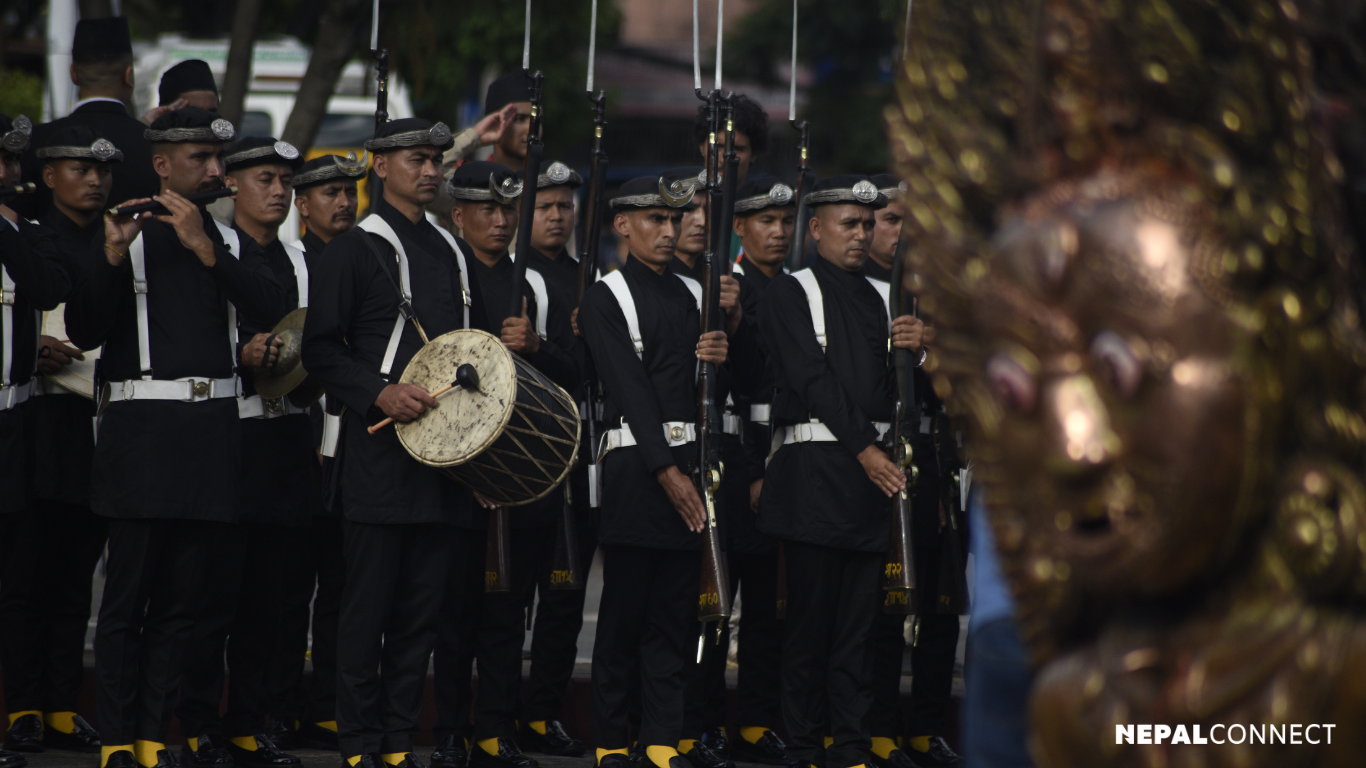
Once the vest is displayed and the crowd disperses, the real work begins. Priests move the idol of Machhindranath out of the chariot and into a smaller palanquin, accompanied by chanting and traditional music, for the journey to Bungamati, a village a few kilometres south of Patan where the deity spends the next six months before returning to Tabahal for the other half of the year.
The handover at Nakkhu Bridge has its own quiet ceremony. Residents of Bungamati and Khokana gather along the path holding straw-lit torches, lighting the god’s way home through the dark. The custom predates electric streetlights in the area: before there was any other way to light the route, the community simply did it themselves, and they have kept doing it long after they no longer needed to.
Pratikshya Bhatta is a junior editor with Nepal Connect.