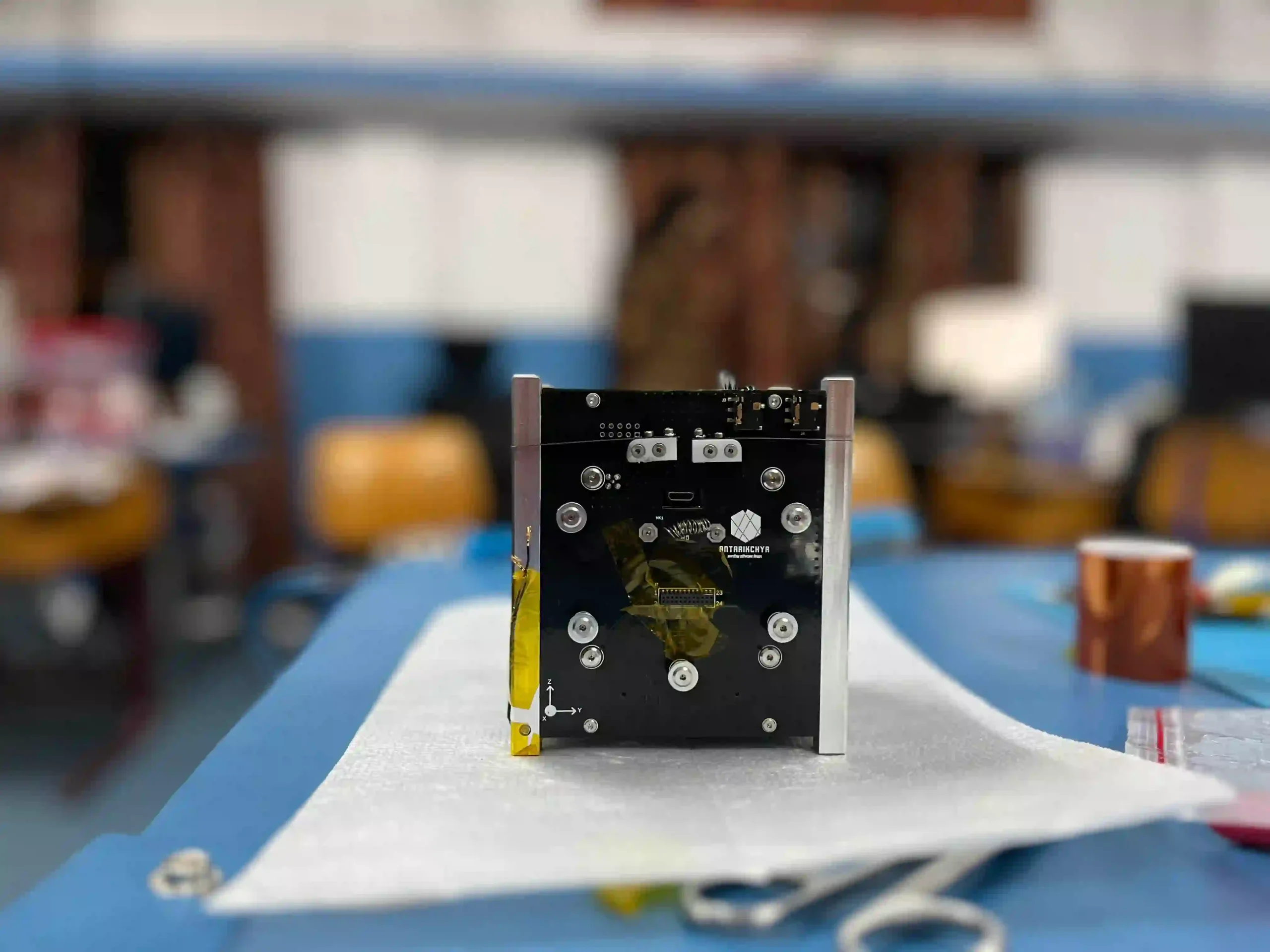
On December 10, a historic moment for Nepal unfolded: a nanosatellite built by Chepang students from Nepal was launched from China. The satellite, named “Slippers to Sat,” has already reached space. The students of the community learned this skill under the guidance of Dr Abhas Maske and engineers from the Nepal Space Foundation. They received training, understood the technology, and helped assemble the components themselves.
The Chepang are a marginalised Indigenous community in Nepal. They traditionally live a semi-nomadic life in the districts of Chitwan, Makwanpur, Dhading, and Gorkha. Their involvement is a major transition for the nation. For decades, they have lived in difficult conditions, including steep settlements, limited food, poor access to services, and very low incomes. Even today, many Chepang families live below the poverty line. But in recent years, more children from the community have started attending school and learning new skills.
The satellite is a 1.2-kilogram nanosatellite shaped like a tube. It carries two high-capacity cameras that can take real-time images of the nation. These images will help track vegetation, water resources, and environmental changes. Another important feature is its earthquake early-warning system, which can detect tiny electromagnetic waves released before an earthquake. The satellite can also adjust its orbit from Earth through an electromagnetic control system.
Originally, the team expected the satellite to function for around five years. But the Sun follows an 11-year activity cycle, and it is currently at its peak phase. So, the satellite’s lifetime may be reduced to about one and a half years.
The mission has technical support from amateur radio digital communication groups. Children from the Chepang community in Chitwan were directly involved in the work. All data from the satellite will be freely available to licensed amateur radio users and institutions worldwide. This is Nepal’s third privately coordinated satellite.
The mission theme, “Slippers to Sat,” represents their journey from a community where even buying slippers was once difficult, to building a satellite that now orbits Earth.


