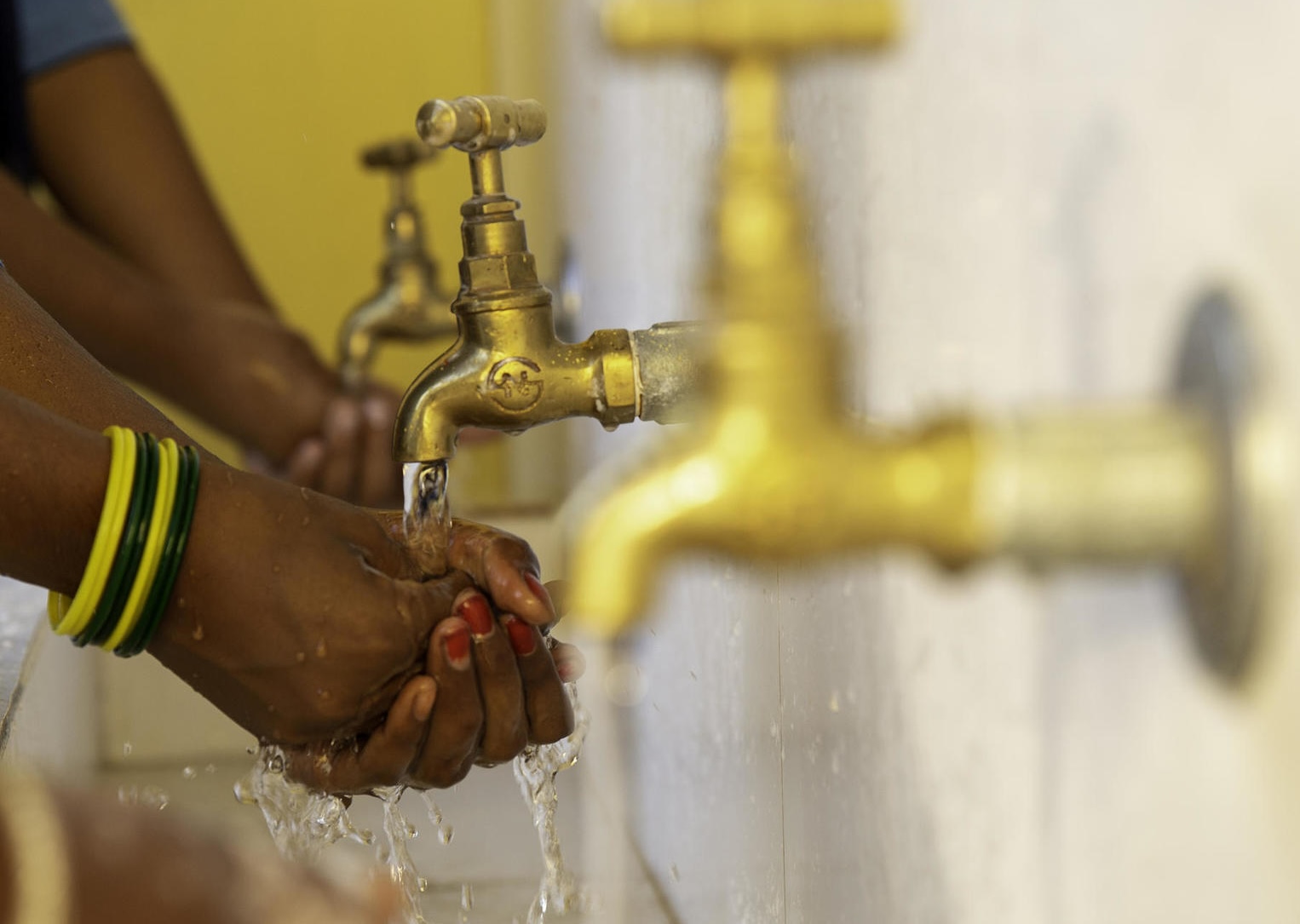

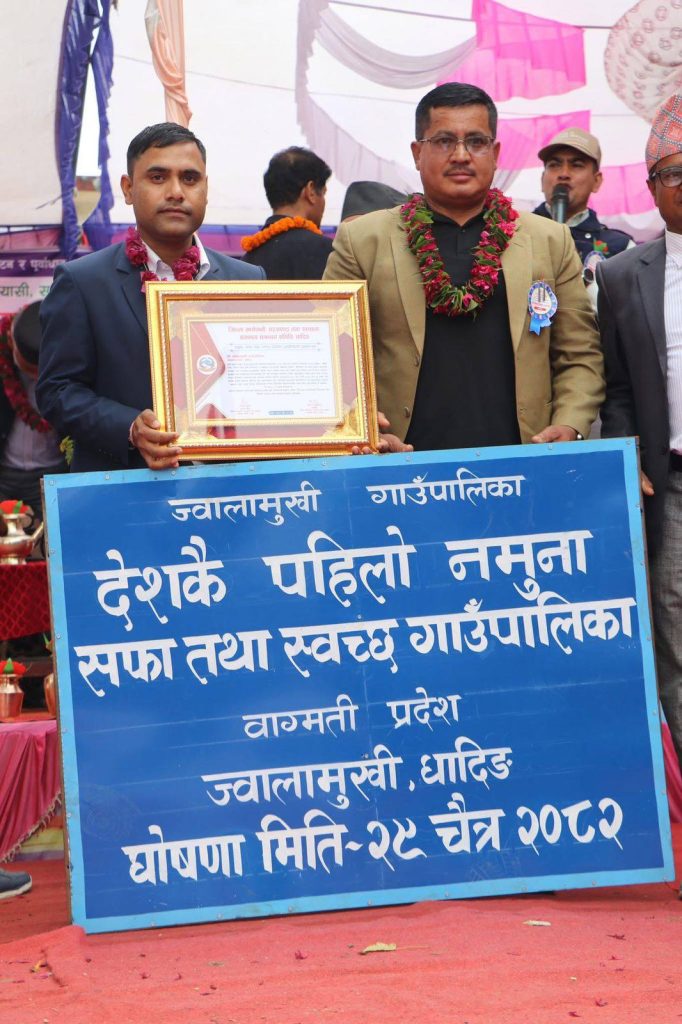
The community of Jwalamukhi has been declared as Nepal’s first hygienic Rural Municipality. This achievement stands as a potent proof of what local government can accomplish when the constitutional division of powers is effectively integrated with local political will and community mobilisation.
When reading this declaration aloud, the Speaker of the House of Representatives wasn’t just celebrating clean streets but also validating the constitutional distribution of power between the federal and state governments over environmental and sanitation matters.
From Policy to Practice
With the promulgation of the Constitution of Nepal in 2015, the country transitioned from a unitary system to a federal democratic republic, indicating a radical restructuring of power. The Constitution grants 22 explicit powers to the federal government, ranging from regulating interstate commerce to providing basic health and education.
Local governments are entrusted with managing basic sanitation and waste, protecting the environment, biodiversity, and watersheds, and overseeing water supply and rural roads. More importantly, the Constitution has elevated sanitation and a clean environment from policy goals to fundamental rights. Every citizen has the right to live in a clean, healthy environment, and the law ensures access to clean drinking water and sanitation. The Constitution has placed responsibility for human dignity squarely in the hands of those closest to the people.
The success of Jwalamukhi is built on a total sanitation framework. While the federal government provides the overarching total sanitation guidelines, implementation remains a local prerogative. Jwalamukhi’s administration accelerated its sanitation drive to promote a hygienic culture, moving beyond basic infrastructure such as toilets and taps.
What started with a defecation-free campaign is now shifting towards a holistic, behaviour-driven hygiene culture, comprising six critical pillars: universal toilet use, handwashing with soap, safe drinking water treatment, food hygiene, personal cleanliness, and comprehensive environmental waste management.
The federal framework empowers local governments to act as primary drivers of change, utilising Water, Sanitation, and Hygiene Coordination Committees (WASH-CCs) to align efforts across the health and education sectors.
Municipality Roadmap
Rather than relying on external subsidies, the strategy emphasises Community-Led Total Sanitation (CLTS) to foster local ownership and social accountability. This bottom-up approach is increasingly digitised via the N-WASH portal, enabling granular, household-level monitoring. The framework is evolving to address emerging challenges, including faecal sludge management and climate-resilient infrastructure. Ultimately, it seeks to institutionalise hygiene as a permanent social value, ensuring that initial health gains are sustained through inclusive local governance and continuous behavioural reinforcement.
The municipality’s roadmap involved meeting several stringent indicators, including 100% toilet coverage, the use of safe drinking water (point-of-use treatment), handwashing with soap at critical times, food hygiene, and maintaining clean surroundings.
Because the rural municipality is small enough to maintain direct contact with its citizens, Jwalamukhi could employ social mobilisation techniques that a central ministry in Kathmandu never could. Mobilising Community Development Committees, mothers’ groups and school sanitation clubs enabled the municipality to become an exemplary model of local-level government.
The Power of Local Resources and Authority
At the heart of the story is proactive local leadership, combined with external technical support, focused on community-level behavioural change. Establishing a sustainable and inclusive sanitation model through effective mobilisation of political, social, and religious leaders offers useful lessons for other municipalities. More importantly, targeted programmes to mobilise young people and women for skills development training (e.g., kitchen gardening) helped generate income for tap connections.
Local governments receive fiscal equalisation grants, conditional grants, and revenue-sharing grants. The municipality allocated its internal revenue to sanitation. Authority over the local budget allows a municipality to prioritise a sanitation wing over a decorative view tower—a choice that reflects the actual needs of the residents.
By drafting local sanitation by-laws, Jwalamukhi could institutionalise hygiene. Within the scope of the law, issues ranging from waste-management rules for local businesses to the mandatory inclusion of sanitation facilities in building permits could be addressed. This legislative power ensured that progress is not dependent on the whim of a single leader but is woven into the local legal fabric.
Several media outlets reported that promoting positive behavioural change in public health was crucial. Through social mapping of every household, health volunteers could visit homes to ensure that safe drinking water wasn’t just a slogan but a practice of boiling or filtering it. The proximity of the government to the governed created a strong feedback loop of accountability.
Constant Vigilance
Local levels manage health, education, and water supply under one roof. Jwalamukhi could ensure that the water project being built by the infrastructure department was tested for quality by the health department and promoted in schools by the education department. This synergy is visibly lacking in other local-level governments, including federal ministries and departments, where ministries often operate in silos.
When a local government ensures that no woman must practise open defecation and that no child dies from waterborne diseases, it is fulfilling the highest form of constitutional duty.
Maintaining this status requires constant vigilance. Faecal sludge management, the growing challenge of plastic waste in rural areas, and the climate-induced drying up of water sources are the next frontiers.
Other local governments continue to struggle amid a lack of the right combination of resources and authority. Many lack environmental engineers or dedicated public health officers and over-rely on the federal government for a major portion of their budgets, limiting avenues for innovation. Some prioritise roads over soft development components like sanitation and hygiene.
Transformative Impact
The success of Jwalamukhi Rural Municipality in Dhading is a striking example of how local governance can catalyse social change. By elevating sanitation from a routine administrative task to a high-priority flagship project, Jwalamukhi has not only branded itself a national pioneer but also ignited a profound sense of collective ownership among its citizens.
This achievement provides a scalable blueprint for Nepal’s remaining 752 local levels. It serves as a powerful rebuttal to sceptics of Nepal’s federal model of governance. When a local government operates as a State in its own right, fully exercising its devolved powers, the impact is transformative.
Replicating this model requires proactive local leadership driven by a vision for change. Success begins with identifying the specific sanitation needs of every household. Equally important is balancing the hardware (pipes and toilets) with the software (awareness and behavioural change campaigns). In the Nepalese context, this means moving beyond mere construction to address deep-seated cultural taboos and hygiene practices through sustained community engagement.
Sustainability is ensured only when planning and decision-making processes are democratised. By actively involving women, youth, and marginalised community groups, local governments can draw on diverse perspectives and ensure that sanitation solutions are culturally appropriate and locally maintained
Fostering healthy competition between wards or clusters can accelerate progress towards hygiene milestones. When local units compete to achieve total sanitation status, they set new benchmarks for development. If managed well, this internal rivalry creates a race to the top that benefits both public health and environmental conservation.
Jwalamukhi Rural Municipality is a hilly administrative unit of the Dhading District (Bagmati Province), with a population of 21,338. Established in 2017, it is recognised as a pioneering, hygienic, and clean municipality.