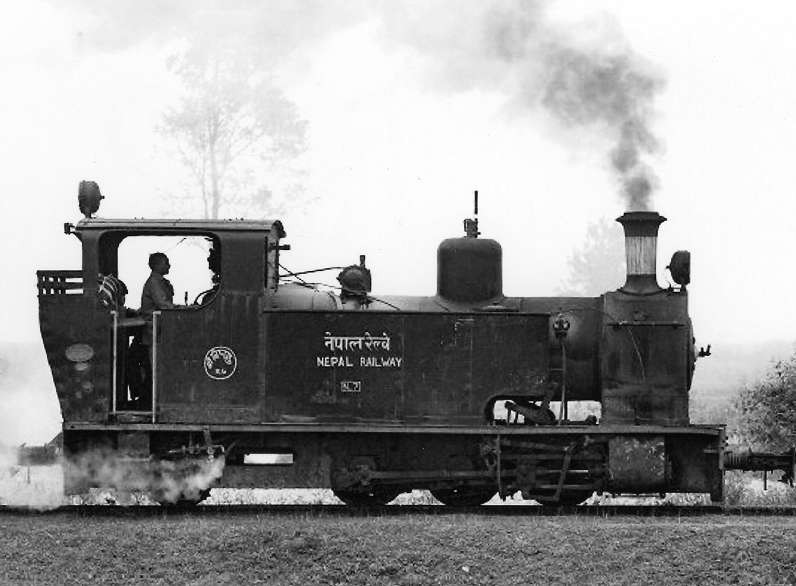

Nepal’s only operational railway runs 52 kilometres through the eastern Terai, connecting the Indian border at Jaynagar to Bijalpura via Janakpur, and it is structurally operating at a loss. Running a railway in Nepal is not easy.
The country’s century-old relationship with rail infrastructure has followed a consistent pattern: ambitious construction, brief utility, prolonged neglect, and eventual collapse.
A History of False Starts
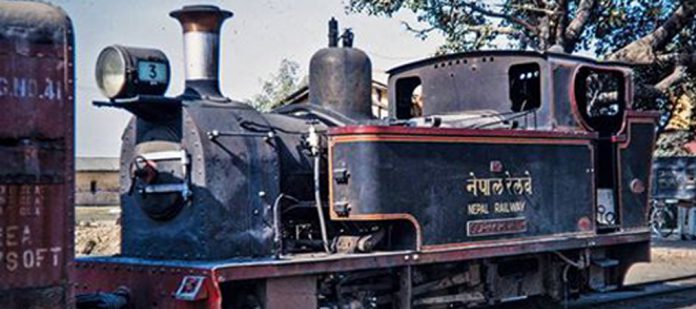
Nepal’s first railway, the Nepal Government Railway, opened in 1927. A 29-mile narrow-gauge line running from Raxaul on the Indian border to Amlekhganj, it was built to supply Kathmandu and ease pilgrim travel across the Terai. During the Second World War, it served as a busy freight corridor. By the 1960s, it was running at a loss. Passenger service was suspended in 1965, and the line closed entirely by 1968.
The second line, the Janakpur-Jayanagar Railway, opened in 1937 and was later extended to Bijalpura. It became deeply embedded in local life, running at 15 kilometres per hour through sugarcane fields and villages, carrying pilgrims to the Janaki temple, with passenger numbers peaking at around 1.4 million in the 1970s.
King Tribhuvan travelled by this train in 1951. By the same decade, engineers warned that the infrastructure was ageing and required urgent rehabilitation. Little was done. Monsoon floods repeatedly washed out tracks and bridges. By the mid-1980s, the line was running at a loss, limping along on minimal maintenance until it was finally closed in 2014 for gauge conversion.
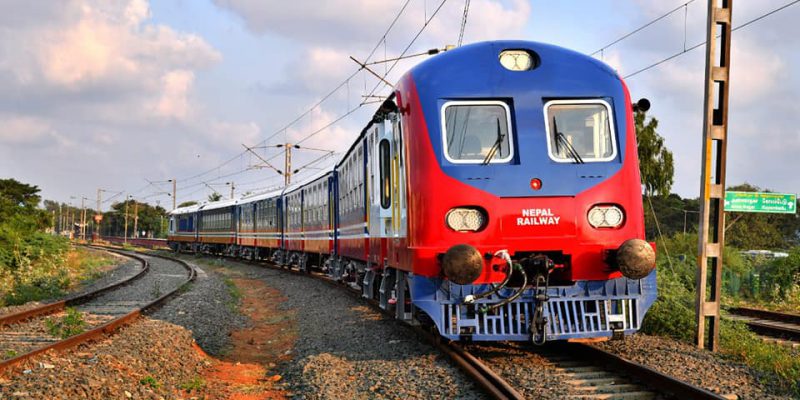
It partially reopened in 2022. Nepal Railway Company now operates three daily round-trips on this route, serving communities across the Dhanusha and Mahottari districts. For these communities, the train matters. Traders have called for freight services to be expanded. Pilgrims are again travelling to Janakpur by rail. On the platforms, families photograph themselves beside locomotives, their expressions suggesting genuine surprise.
The Numbers Behind the Revival
The financial picture is far less encouraging. Nepal Railway Company has lost approximately USD 5 million since 2019, and this figure is rising.
The company has no permanent managing director or chief administrative officer. Routine decisions require sign-off from officials in Kathmandu. Staff morale is low. Around 100 employees earn between 3 and 7 USD per 14-hour shift. Meanwhile, the company relies on an expensive team of technicians from India’s Konkan Railway to keep operations running.
The company has proposed ways to diversify its revenue: leasing 28 acres of land in Raxaul for commercial development and establishing a railway museum in Janakpur to display century-old steam engines. These measures are haphazard and do not address the structural issues.
Unless the management vacuum is filled, wages are made competitive enough to attract Nepali rail workers, and the operating model is fundamentally rethought, the railway will remain in what officials themselves call a debt trap with no visible exit.
The Bigger Promise, and Its Cost
The Janakpur line’s difficulties might be easier to absorb if they existed in isolation. They do not. Nepal’s broader railway ambition, the East-West Railway Project, a 945-kilometre line running the full breadth of the country from Mechi to Mahakali across the Terai, has been declared a national priority since 2005 and has spent the intervening two decades demonstrating how thoroughly political will and administrative capacity can diverge from stated intent.
The case for the line is straightforward. More than half of Nepal’s 30 million people live in the Terai. A rail backbone across the plains would reduce freight costs, ease pressure on congested roads, expand market access for smallholder farming communities, and reduce the country’s near-total dependence on Indian road networks for freight. Some projections suggest that a completed line could move passengers from Kathmandu to Dhangadhi faster than air travel and at a fraction of the cost.
The reality on the ground is different. Since 2020, approximately 5,400 landowners along the Kakadbhitta-to-Inaruwa stretch have been caught in legal limbo. Their land has been earmarked for rail acquisition. They cannot farm, sell, mortgage, or develop it. Compensation has not arrived. A budget of around 15 million USD was allocated for compensation payments, against an estimated requirement of 188 million USD. The Department of Railways deemed this insufficient to pay anyone and returned the funds unspent. Families wait. Children grow up in households where the primary asset is not to be touched.
Construction began in 2008 and has advanced in fits and starts. Work on the Bardibas-Simra section, covering 70 kilometres, is close to complete. The remaining 875 kilometres are largely unbuilt. Cost estimates have risen from 7.2 billion USD to over 11.3 billion USD as alignment shifts, local protests, and environmental concerns over national parks have led to repeated redesigns. Nine sub-projects have been approved, but progress on most of them is not visible.
What the Railway Reveals
Nepal’s railway problem is a governance problem dressed up as an infrastructure issue. The Janakpur line shows that demand exists, since passengers use the train, and communities have reorganised around it. Its absence between 2014 and 2022 was genuinely felt. What the line cannot show is that the institutions managing it can sustain it.
The East-West project illustrates a related point: that Nepal can designate infrastructure as a national priority, issue land-acquisition notifications, attract survey teams, and produce decades of policy documentation without meaningfully advancing the work. The gap between announcement and delivery has become so habitual that affected communities regard government timelines as fiction.
Both lines, one struggling to stay solvent and the other struggling to be built, point to the same deficiency. Nepal has not lacked railway proposals. It has lacked the administrative consistency, funding discipline, and political coordination to see them through.