
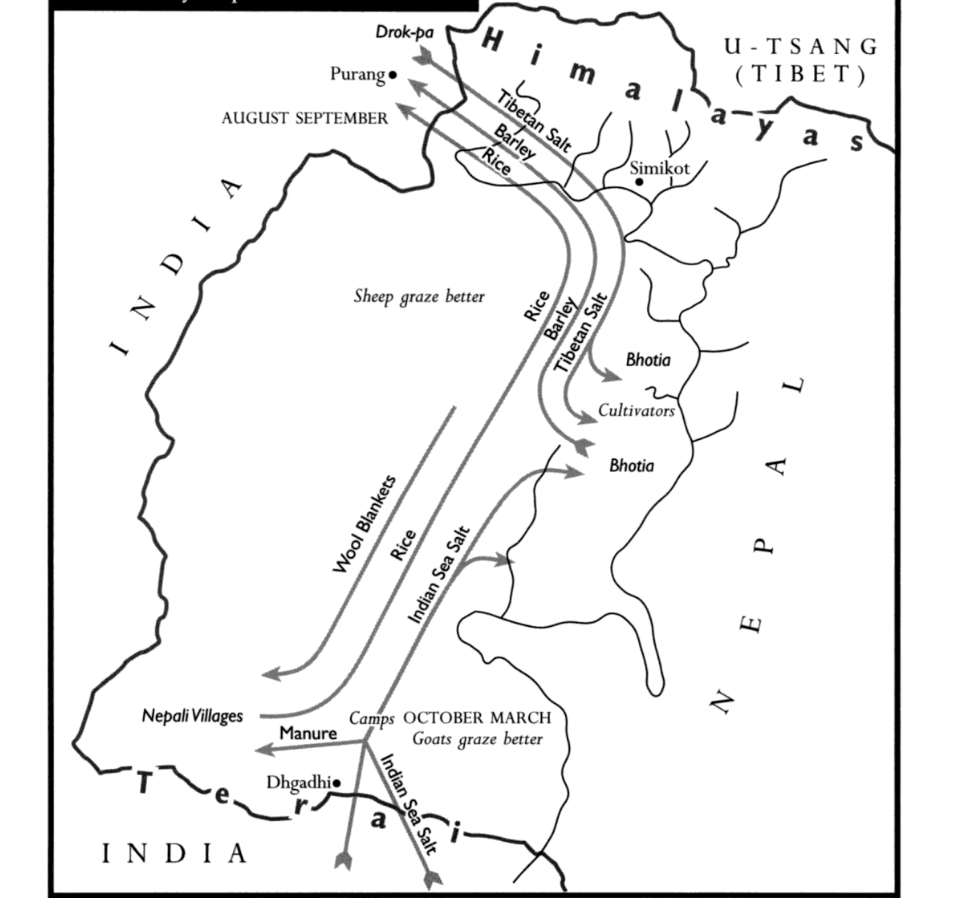
Have you ever heard salt called white gold? Centuries ago, salt was more valuable than gold; this mineral led to the paths that people still follow. It was carried across trails alongside rice and other necessities long before appearing in the supermarkets. The network is historically known as the Tibet-Nepal salt trade route.
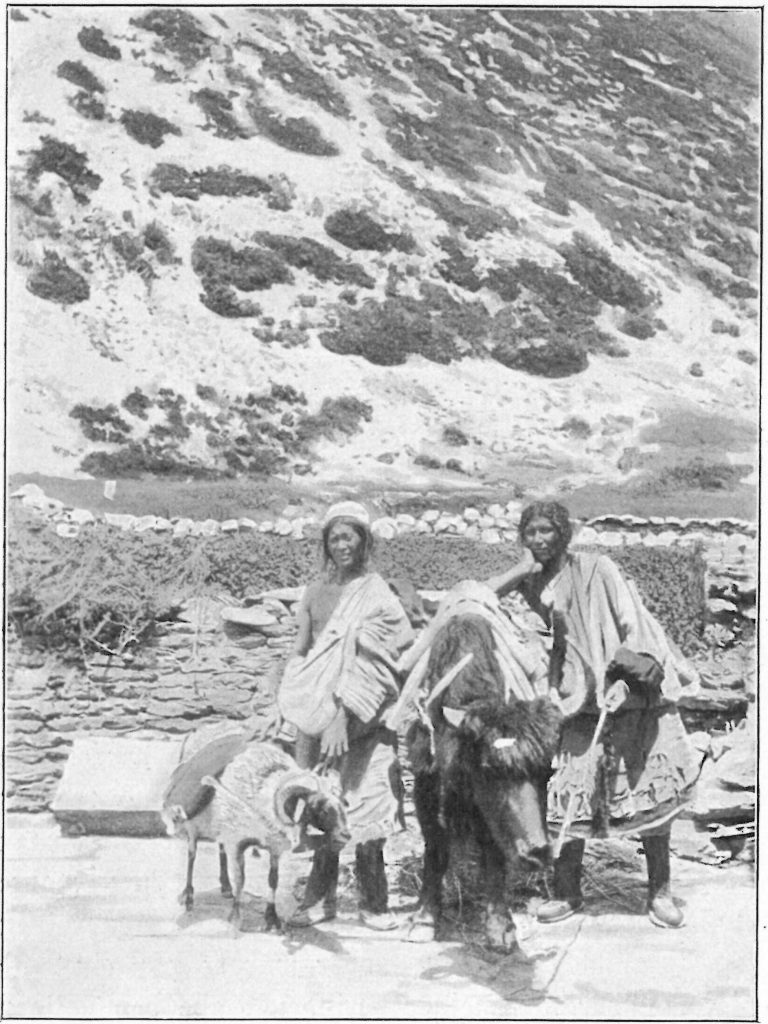
Tibet had abundant salt but little rice, while Nepal had plenty of grain but limited salt. Some Tibetan-speaking people used yaks, sheep, and goats to transport salt south, trading it for rice, wool, and other goods. This barter economy, also known as the salt economy, sustained the lives of communities.
After China colonized Tibet in the 1950s, the stricter borders led to a decline in trade. The Sino-Indian War in 1962 and the availability of the cheap iodised salt from India also played a vital role.
As of now, the nature of trade has changed, and borders are now stricter, but trails remain active. The people of Karnali, who once exported grain to Tibet, now depend on China for rice, flour, ghee, and daily necessities. In other rural areas where roads do not reach, like Upper Dolpo, Humla, and parts of Mustang. The communities still rely on seasonal border crossings. Salt, food items, and other essentials continue to move along the same trails, sometimes officially, sometimes informally.
Dolpo Trek
This region has been used for hundreds of years; it’s also called the Dolpo Caravan Trade. It is believed that by the 1700s, more than 2,000 taks caravans crossed these routes every year.
This trek is a 20-27-day trail tracing part of the ancient salt trade routes between Dolpo and Mustang. It begins either by road from Juphal or with the flight to Talcha. On the way, trekkers reach Saldang (3,800 m), which was once used as a caravan stopover by traders in winter, and their wool blankets were made there.
The journey ranges between 10 and 15 kilometres daily. The number of teahouses in the mountains is very small, and therefore, camping is the only option for villages above 4,000 metres. The best time to visit these places is during spring (April-May) and fall (October-November). Prices typically vary from USD 4,000 to USD 6,000 per individual, including USD 500 permits.
Humla
One of the most important trade routes passed through Humla. Its salt lakes, mostly in the Limi Valley, were a source of salt as well as landmarks for travelling. Trekking along the Limi Valley was only available to foreigners from 2002, as this area marks the border with Tibet in the far west of Nepal. The trek begins in Simikot and traverses the high passes such as Limi La and Lapcha La, which are over 4,900 m. Avalanches and extreme weather conditions made these passes hazardous.
On the trail, the trekkers cross glacial moraine and isolated villages like Til village, where there are still Khas and Tibetan influences. Traders used monasteries as resting places. Trekkers are likely to meet people who herd yaks or provide homestay services. Small-scale exchanges are made between Hilsa through seasonal border openings.
Kali Gandaki and Upper Mustang
The Kali Gandaki and Upper Mustang trek uses a salt trade route through Nepal’s “Last Forbidden Kingdom. Places like Tukuche and Dana were major salt porter destinations in the past. The trek begins from Jomsom, which lasts for 14-18 days.
Some routes go on to Upper Mustang, passing Kora La (4,660 m) on to Tibet. There are also plenty of teahouses, which makes logistics in this area easier than in Dolpo or Humla, and the area can accommodate a greater variety of trekkers. There is a special permit that is needed to travel in Upper Mustang, and it is approximately USD 500 at the moment.
These trails are not just a part of the history. They continue to sustain lives and movement in the present, just as they did in the past.
Pratikshya Bhatta is a junior editor at Nepal Connect.