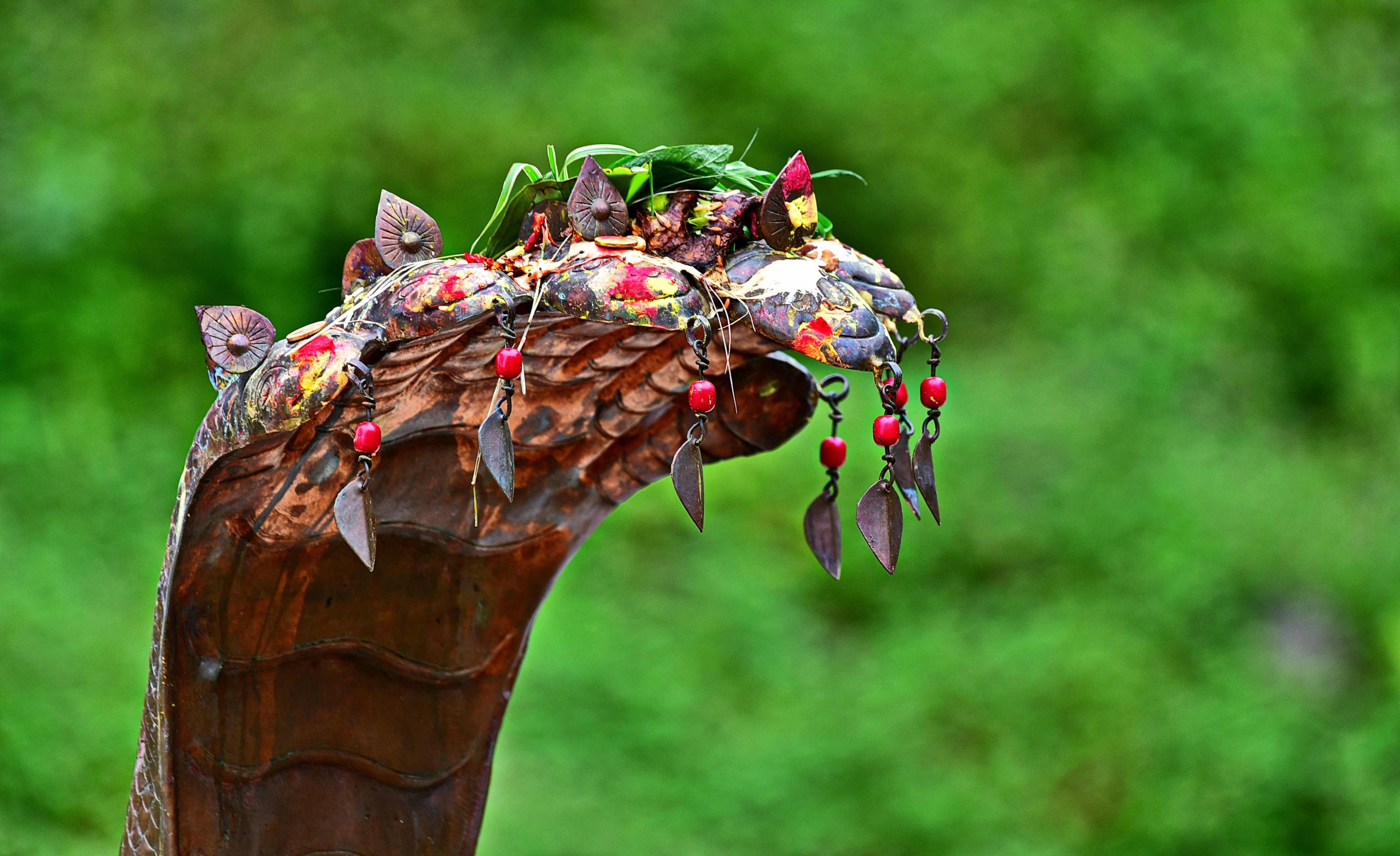
Coexisting with snakes is rooted in both fear and devotion. They appear in our rituals, folk stories, and religious symbols, yet they also trigger instinctive worry when we see them. We worship them, yet we fear them. As a result, they remain misunderstood, and the significance of the role they play in nature is often overlooked.
According to local legend, Kathmandu Valley used to be a massive lake. When people decided to drain it to make the valley habitable, the snake deities, known as nagas, were said to have become furious and stopped the rain, causing a severe drought. The locals reportedly turned to a powerful tantric king to bring the rain back. The king is said to have calmed the nagas and convinced them to restore the rain. To honour these deities, the fifth of Shrawan is celebrated as Nag Panchami, and places like Taudaha in Kathmandu and Nagdaha in Lalitpur are set aside as shelters for serpents.
Nagdaha Lake in Dhapakhel, Lalitpur, is steeped in myth and natural beauty. Local stories say a female serpent lives here, while her male counterpart resides in Taudaha. The male serpent is said to visit Panauti during the rainy season to take part in a jatra festival. According to folklore, these nagas bring prosperity and rainfall. Beyond the myths, Nagdaha is an ecological refuge, home to numerous fish species and over 50 types of birds, including migratory species like the garganey.
In Hindu mythology, Lord Shiva, the god of destruction, is often depicted with a snake coiled around his neck, commonly identified as Vasuki. The serpent symbolises Shiva’s conquest over fear and death and his mastery over vanity and ego. The three coils are described as representing the past, present, and future, highlighting Shiva’s transcendence over time. In some interpretations, Vasuki also acts as a guardian against evil, adding to Shiva’s aura of indestructibility.
People’s relationship with snakes in Nepal is complex, combining fear and reverence. Snakes are seen as protective deities, their venom has been used in traditional medicine in ritualistic or therapeutic contexts, and they play important roles in agriculture and ecosystems. During Nag Panchami, snakes are worshipped with devotion. Yet, they are often killed when encountered due to fear.
Snakebites are a real concern in some regions. Studies indicate that in the Terai plains, roughly 250–300 people per 100,000 may be bitten annually, with a fatality rate around 5–8%, meaning many communities have lost someone to snakebite. Snakes in areas like Chitwan or Bardia are generally elusive and mostly active during the monsoon season. While fear often leads people to harm them, not all 89 species of snakes in Nepal are dangerous; only about 21 are venomous.
Snakes play a vital role in ecosystems. They control rodent and insect populations, helping to protect crops and reduce the need for chemical pesticides. By preying on toads, rats, and other small animals, they also help maintain healthy water sources. These creatures are integral to the balance of nature, sustaining biodiversity while indirectly supporting human livelihoods.
Snakes are more than myth and fear. They are essential to our environment and understanding them can help reduce conflict while protecting both people and wildlife.
Snakes play a critical role in ecosystems, controlling pests and supporting biodiversity.
Pratikshya Bhatta is a junior editor with Nepal Connect.
