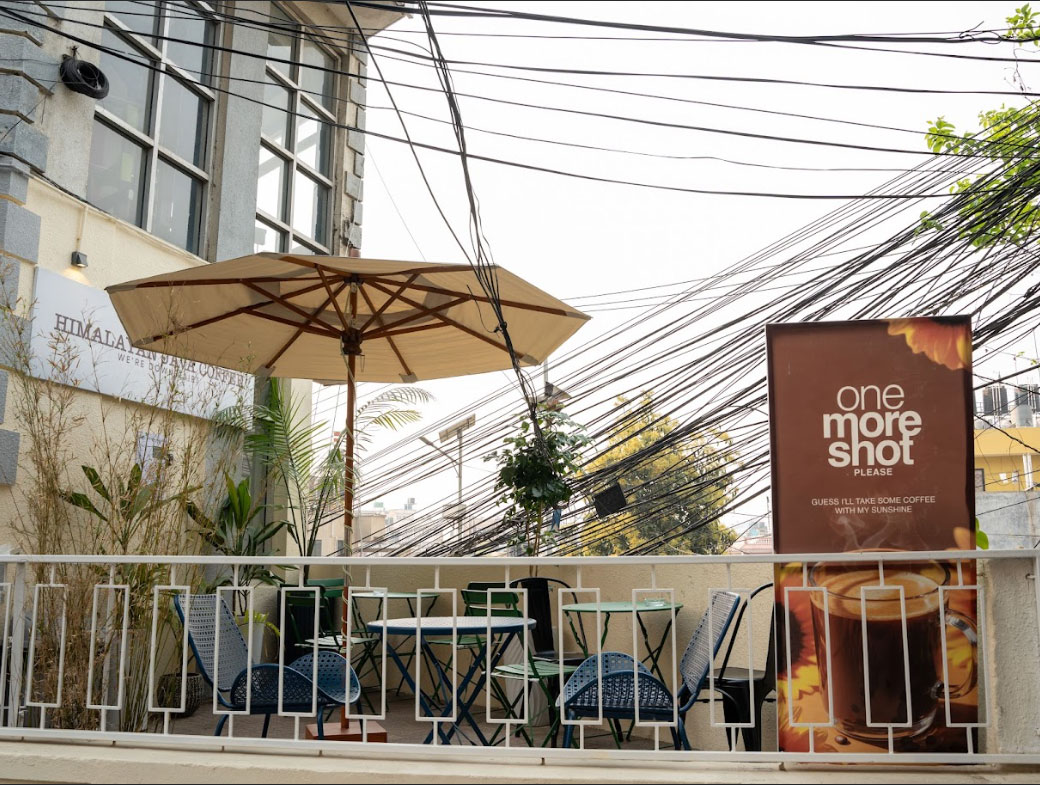

25 years ago, Kathmandu did not know what a coffee machine was, but now supports multiple roasteries, cupping sessions, and barista competitions. That trajectory is largely due to the presence of the Himalayan Java brand. It is, to a significant degree, its product
When the first Himalayan Java outlet opened in 1999, Kathmandu was a tea city. It always had been. The idea that coffee might become woven into the fabric of urban life, that a generation would mark their daily routine and small personal rituals around a cup of espresso, seemed implausible to most people. Gagan Pradhan was not like most people.
When Pradhan and his business partner Anand Gurung opened the first Himalayan Java outlet in Kamaladi at Heritage Plaza, they were not simply launching a café. They were introducing a completely new concept. The interiors, with all-leather sofas, warm lighting, and considered design, confused people. Tourists and locals alike wandered in, assuming they had entered a furniture showroom. Some thought it was a computer laboratory. Few recognised it as a place to sit and drink coffee.
Pradhan had spent time in Australia, where café culture was part of daily life. He wanted to bring that experience back to Kathmandu. He imported the country’s first commercial espresso machine and waited for the city to catch up to the idea.
Building a Customer Base
It did not happen overnight. The early years relied heavily on word of mouth among expatriates, tourists, and Nepalis who had lived abroad and recognised what Himalayan Java was attempting. Pradhan was closely involved in the café’s day-to-day running, working alongside his staff, troubleshooting problems, and, on occasion, sharing a ride home with them at the end of a shift. The atmosphere he was trying to create inside the café extended, in those early days, to how the business itself was run.
Within a year, the outlet relocated to Thamel, where the steady flow of international tourists provided a more reliable customer base and greater exposure. The move proved decisive. From that foothold, Himalayan Java began to grow and shape the terms on which coffee culture would develop in Nepal.
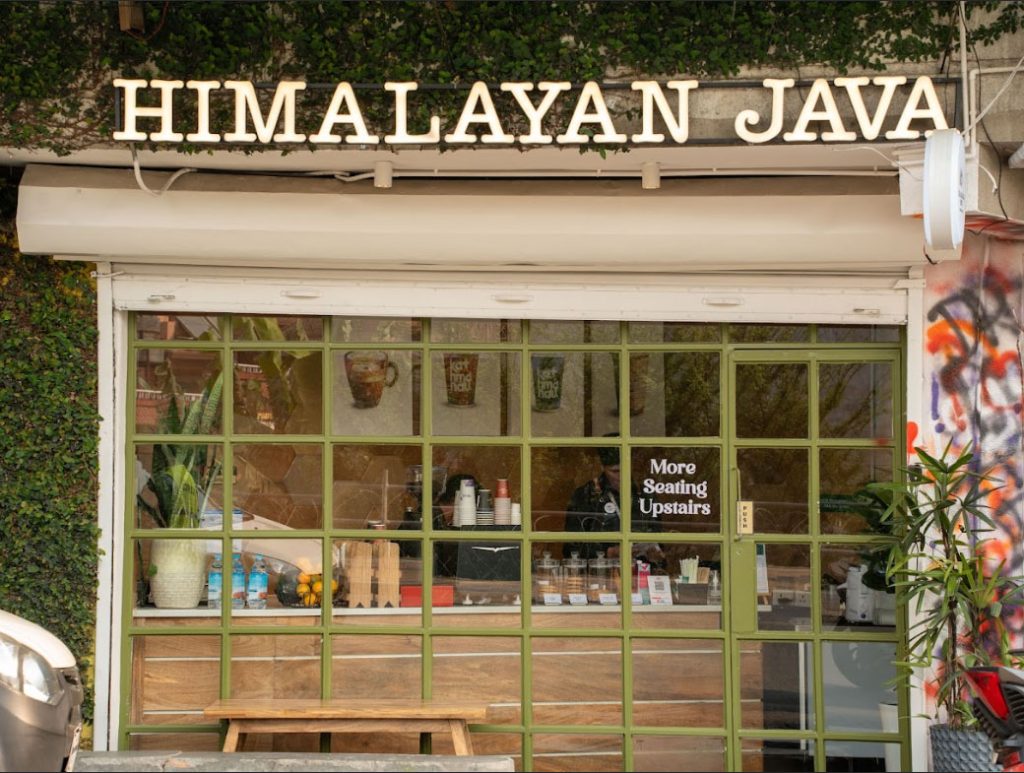
The cafés that followed were not carbon copies of one another. Each branch developed its own character while retaining a recognisable identity. The Bikers Café in Naxal is built around a motorcycle theme, with an indoor display of bikes and an interior that feels nothing like a conventional coffee shop. The outlet near Fire and Ice Pizzeria became known for its vivid interiors and its collection of Nepali crafts and art. The Bluebird Mall branch houses the company’s main roastery and bakery, with a design that lets customers watch the roasting process directly. The Gallery by Himalayan Java, situated near Boudhanath Stupa, operates as both a café and a cultural venue, hosting art exhibitions, live music, and community events. The company built not one kind of space but several, held together by a shared commitment to the coffee itself.
Sourcing Nepal
As the business expanded, so did its investment in the supply chain. Himalayan Java sources Arabica coffee from growers across Nepal, a country whose altitude and climate are well suited to producing quality beans. Pradhan has been publicly vocal about the structural difficulties facing Nepali coffee farmers: limited government support, the long wait between planting and the first harvestable crop, and the persistent challenge of building reliable income from a product with a lengthy growing cycle.
To strengthen its supply and support the sector more directly, Himalayan Java established its own coffee plantation in Ilam, eastern Nepal, and built partnerships with smallholder farmers and cooperatives across the country. These arrangements aim to provide growers with fairer prices, technical training, and long-term commercial relationships that make investment in quality worthwhile. Once harvested, green beans are transported to Kathmandu and roasted at the Bluebird Mall facility, where the company’s roasters use different profiles depending on the intended blend, from darker, smokier roasts to lighter, more delicate preparations. A dedicated research and development unit, operating under the name Brewshala, tests new processing methods and evaluates micro-lots to keep the product offer current and competitive.
Recently, the company expanded its presence beyond the Kathmandu Valley to Pokhara, Kurintar, and Itahari. Internationally, franchise outlets had opened in Toronto, Lhasa, and Omaha, Nebraska, serving Nepali diaspora communities and introducing the Himalayan Java brand to customers who had never visited Nepal.
Training the Industry
In 2012, the company launched the Himalayan Java Barista School, described as South Asia’s first dedicated coffee training institution. The school offers courses covering the technical aspects of brewing, café operations, and sensory evaluation, providing a formal pathway into the industry for aspiring baristas at a time when the broader café sector in Nepal was beginning to grow beyond Himalayan Java itself.
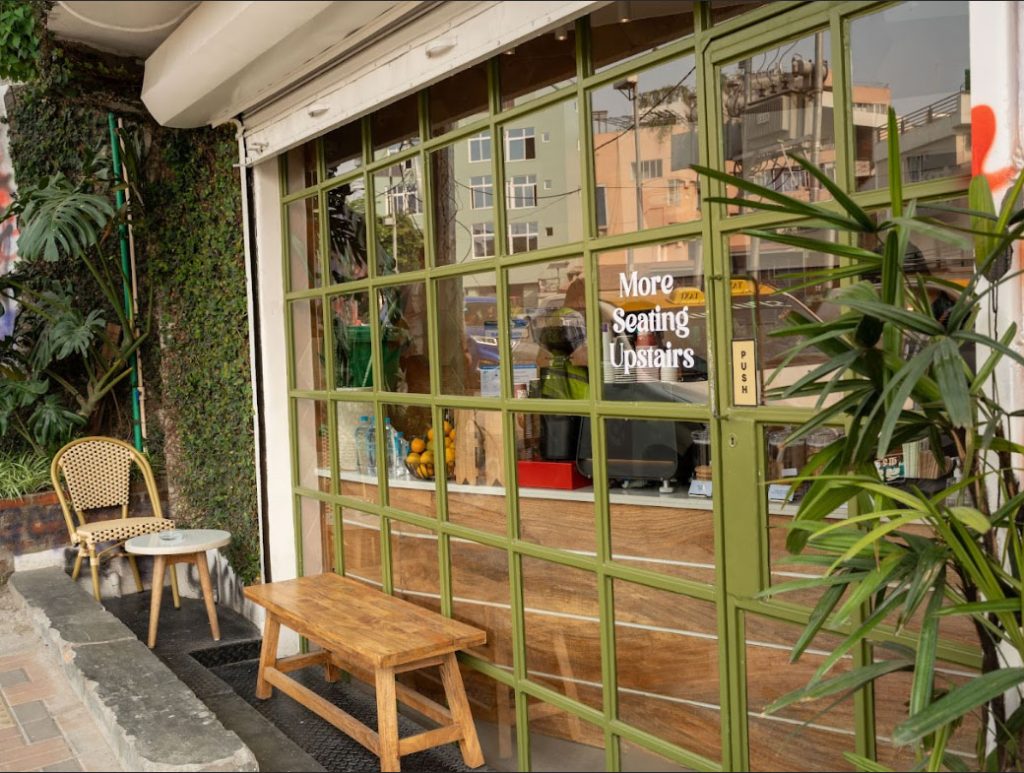
As independent coffee shops and small roasters have multiplied across Kathmandu in recent years, many of those running them have received their foundational training at the school. The company that seeded the culture has, in this sense, also trained much of the workforce sustaining it.
The Space as Much as the Coffee
What Himalayan Java created was not only a market for speciality coffee. It created a type of public space that had not previously existed in Nepal: somewhere that was neither a home, nor a workplace, nor a restaurant in any conventional sense, but a place where people could be in public without obligation, where time could pass without anyone asking them to leave or order more. Students, freelancers, writers, and professionals moved through these spaces and, gradually, made them part of the rhythm of their weeks.
“I treat myself to coffee here once a month for all my hard work,” says Nikita Sharma, a medical student in Kathmandu. “It encourages me to keep pushing myself.” The sentiment is modest yet telling. For a segment of urban Nepali life, a visit to Himalayan Java has become a small ritual of self-recognition, a way to mark and reward effort.
The cafés have not escaped criticism. For many young Nepalis, coffee remains a luxury rather than an everyday option, with prices set well above typical daily spending on food and drink. “Coffee at Himalayan Java is so expensive that it is often associated with luxury,” says Kurinji Ale, a student in Kathmandu. The company’s response, that prices reflect the genuine costs of sourcing, roasting, and supporting Nepali farmers, is accurate as far as it goes. But accessibility remains a pressing issue in a market where incomes vary sharply, and café culture is still, for many, associated with a particular kind of urban privilege.
Rapid growth has also created internal pressures. Maintaining consistency across dozens of branches, each with its own layout and character, requires investment in training and supervision that does not scale automatically. Quality control across a network of this size is an ongoing management challenge rather than a problem that is solved once.
The Third Wave and What Comes Next
In recent years, a new wave of small, independent cafés and roasters has emerged across Kathmandu, bringing single-origin offerings, unconventional interiors, and a sensibility that treats coffee as seriously as wine. The so-called third-wave coffee movement, which has reshaped café culture in cities across Asia and Europe over the past two decades, has arrived in Nepal later but with genuine momentum.
Himalayan Java does not appear to view these establishments as a competitive threat, and there is a reasonable case that they are not. The independents that have opened in its wake are, in many respects, the downstream consequence of what Himalayan Java built: a market educated to seek out complexity and specificity in the cup.
What began as a single café in Kamaladi, puzzling to almost everyone who walked through the door, has, over a quarter of a century, become something harder to categorise: a business, a brand, a training institution, a supply chain, a cultural reference point, and, for a generation of urban Nepalis, a place that helped define what it means to spend time together. One cup, it turns out, was a reasonable place to start.