
The armed conflict between Iran, the United States, and Israel has spread like wildfire across a large stretch of the Middle East. Although the battlegrounds are thousands of miles away, Nepal is affected through strong economic links to the conflict zone, via migrant labour and energy imports. A prolonged conflict would reshape labour markets, put pressure on household incomes, and increase the cost of living in Nepal, even though the country has no influence at all over the conflict.
What began as a struggle among three countries has escalated into a major crisis, possibly prompting ongoing military action. Damage to critical infrastructure and trade blockades have hurt the energy market, triggering an international energy crisis that also affects Nepal.
Drop in Remittance
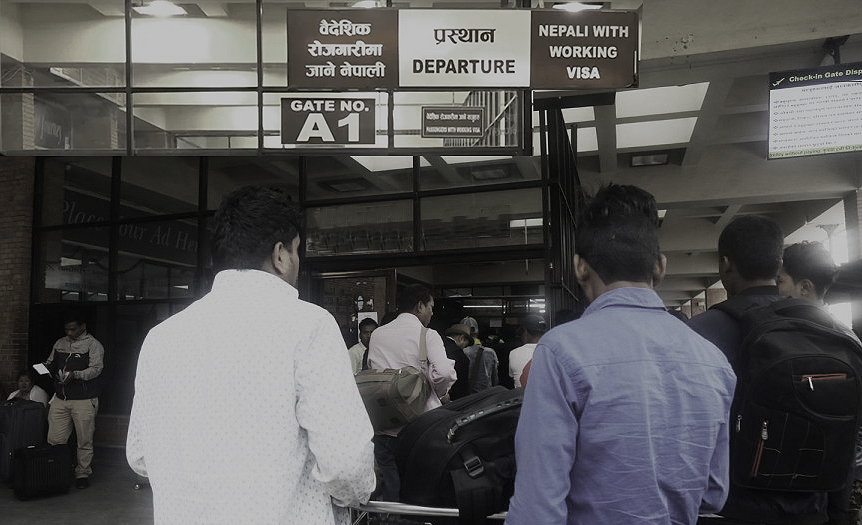
Roughly 1.2 million Nepali workers are employed in the Middle East, with a high concentration in the Gulf countries, drawing hundreds of thousands of Nepalis into the turmoil. At least one Nepali worker was killed, and 20 others were injured in recent attacks. Many are now living with constant anxiety and uncertainty. Some 2,300 workers have returned home since the escalation, and more than 72,000 have registered with authorities in case the situation worsens.
Nearly 40 per cent of Nepal’s total remittances, or about 1,5 billion US dollars per monthi, come from Gulf countries. Any threat to this flow looms large over Nepal’s economy. Remittances may not fall immediately, as workers often send more money home during uncertain times by drawing on savings or taking out loans. However, if instability persists, job losses, reduced working hours, and return migration could reduce inflows, creating a double problem: falling remittances and growing pressure to provide jobs for returning workers in Nepal.
A sharp drop in remittances would have wide-ranging effects, reduce household income and affect spending, education, healthcare, and small businesses across the country. Rural areas, which depend heavily on remittances, would be especially at risk.
Energy Markets
The conflict area also plays a key role in the global oil supply. Many oil-related facilities are damaged, and major shipping routes, especially the Strait of Hormuz, are disrupted. This has already pushed global prices higher and increased price volatility. Iranian control over the Strait of Hormuz is prompting the US to retaliate.
For Nepal, which relies entirely on imported petroleum products, this creates immediate challenges. Higher fuel costs affect the whole economy by raising transport costs, increasing the price of food and essential goods, and pushing up business expenses. Although authorities have tried to reduce the impact, fuel prices set by Nepal Oil Corporation (NOC) have not yet matched international levels, and supply pressure is becoming evident, including reports of cooking gas shortages.
Rising fuel prices are worsening inflation. The cost of imported and locally produced goods is rising due to higher transport and production costs. Basic items such as edible oil, sugar, and other essentials have already become more expensive, making it harder for households to manage their budgets. The burden is especially heavy for low-income groups and daily wage earners, whose incomes remain unchanged while living costs continue to rise.
The Overall Economic Picture
If the crisis continues, the wider economic effects would be severe. Nepal’s import bill will rise, foreign exchange reserves will be depleted, and overall economic growth will slow. Even a small rise in global crude prices can increase inflation and weaken the economy. Key sectors such as construction, trade, tourism, and agriculture are at risk, as fuel costs affect everything from transport to fertiliser production. Long-term instability in the conflict zone could affect remittances and labour migration, adding further pressure on the economy.
The cost of imported goods may also rise as higher shipping and insurance costs are driven by both fuel price increases and broader supply chain problems. Although Nepal produces most of its electricity through hydropower, it is not fully insulated from the crisis. Fuel remains necessary for transport, cooking, and industry, so rising oil prices continue to affect the economy. Sustained high prices could also strain government finances and widen the trade deficit.
The overall economic picture will become increasingly complex. Rising fuel prices are eroding people’s purchasing power, and if this is compounded by slower remittances, the impact could be significant. Globally, the conflict is already affecting growth, as higher energy costs usually slow economic activity, increase inflation, and create uncertainty in financial markets. Nepal, being dependent on external factors, is affected by even slight global developments.
The potential economic consequences are clear. A distant geopolitical conflict may affect non-resident jobs abroad, reduce remittances, and jeopardise the livelihoods of people who have no stake in the conflict.